
Cell division is one of those ideas in IB Biology that feels simple until you imagine the stakes. One copied letter wrong, one chromosome pulled to the wrong side, and suddenly the “two identical daughter cells” story turns into cancer risk, cell death, or genetic disorders. So cells do what cautious people do before a big decision: they pause, check, and only then move forward.
That pause is the point of checkpoint controls. In IB Biology, checkpoints are the quality-control gates of the cell cycle. They stop progression when something looks off, trigger repair, and sometimes initiate apoptosis when the damage is too severe.
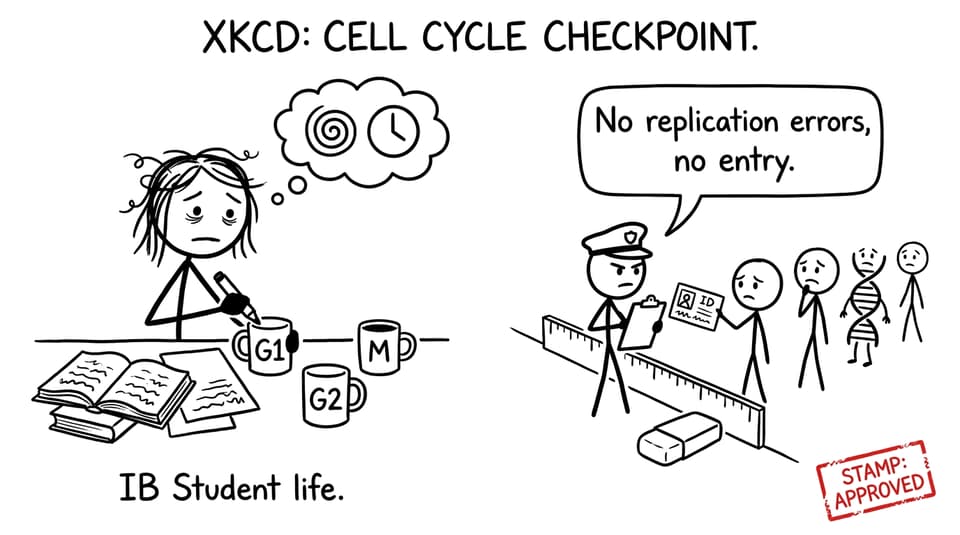
Quick checkpoint checklist (exam-ready)
Use this quick list when you answer structured questions in IB Biology:
-
G1 checkpoint (restriction point): Is the cell big enough, well-fed, and DNA undamaged?
-
S phase monitoring: Are replication errors being detected and repaired?
-
G2 checkpoint: Is DNA replication complete and accurate before mitosis?
-
Spindle assembly checkpoint (M checkpoint): Are all chromosomes attached to spindle fibers via kinetochores?
-
Key regulators: cyclins, CDKs, and inhibitors (including p53 pathway).
For the syllabus wording and surrounding context, pair this with D2.1 Cell and nuclear division Notes.
Why checkpoints matter in IB Biology (and real life)
A helpful way to think about checkpoints in IB Biology is that the cell cycle is not a timer, it’s a permission system. The cell doesn’t move from G1 to S because “time passed.” It moves because the internal signals say, “safe to proceed.”
This is why exam questions often link checkpoints to:
-
Genomic integrity (accurate DNA inheritance)
-
Mutations in control genes (loss of regulation)
-
Tumour formation and uncontrolled division
If you want the broader cell-cycle sequence clear in your head, start with D2.1.13 Phases of the cell cycle (HL) Notes and then revisit checkpoints.
G1 checkpoint: the “should we even do this?” moment
The G1 checkpoint (often called the restriction point) happens before DNA replication. In IB Biology, you’ll describe it as a stage where the cell checks:
-
Nutrients and energy availability
-
Cell size and readiness
-
DNA damage status
If conditions aren’t right, the cell can exit into G0, a non-dividing state. This is a protective decision: it prevents replication of damaged DNA and stops resources being wasted on division that shouldn’t happen.
To connect G1 properly to the rest of interphase, review the overview in 1.6 Cell division Notes.
S and G2 checkpoint controls: proofread, then proofread again
DNA replication happens in S phase, and it’s not a single “copy-paste” event. Enzymes continuously check for mismatches and strand problems. IB Biology questions often reward you for stating that errors trigger repair pathways and can pause progression.
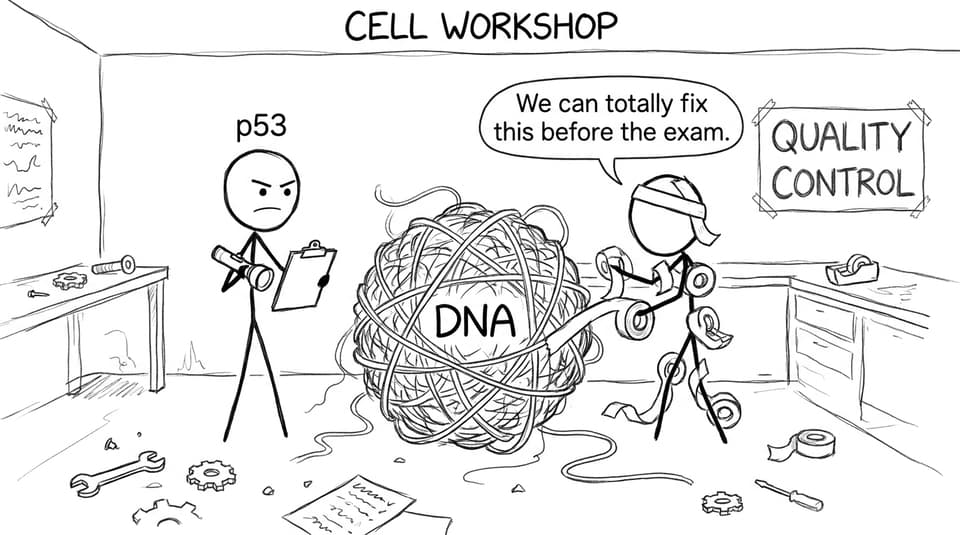
Then comes the G2 checkpoint: the cell asks whether replication is finished and accurate before entering mitosis. If replication is incomplete or damage remains, the cycle arrests to allow repair. Without G2 checkpoint controls, the cell might enter mitosis with broken or partially copied DNA, and that error becomes permanent in daughter cells.
For a tight syllabus-aligned phrasing around replication and sister chromatids, see D2.1.5 DNA replication prerequisite Notes.
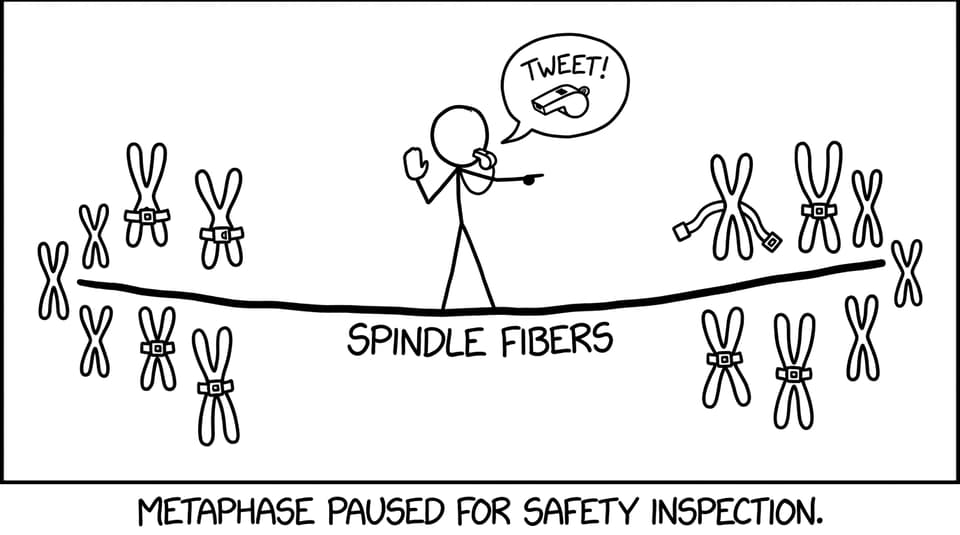
Spindle assembly checkpoint: the last line of defence in mitosis
The most visual checkpoint in IB Biology is the spindle assembly checkpoint (during M phase). It ensures every chromosome is correctly attached to spindle fibers through its kinetochore before anaphase begins.
If even one chromosome is unattached or misaligned, the cell arrests in metaphase. This prevents aneuploidy (an incorrect chromosome number), which can contribute to developmental problems and cancer.
If you struggle to identify mitosis stages in diagrams, practise with D2.1.8 Identification of phases of mitosis Notes and reinforce recall using D2.1.7 Phases of mitosis Flashcards.
Cyclins, CDKs, and p53: how checkpoint controls actually “stop” the cycle
In IB Biology, it’s not enough to name checkpoints; you should explain the mechanism. Checkpoint controls rely on cyclins and cyclin-dependent kinases (CDKs). Cyclin levels rise and fall through the cycle, and when cyclins bind CDKs, the complex phosphorylates target proteins that push the cell into the next phase.
When damage is detected, inhibitor pathways reduce cyclin-CDK activity. The protein p53 is central: it can pause the cycle for DNA repair or trigger apoptosis if the cell is too risky to keep alive.
For clear, mark-scheme-friendly language, use D2.1.15 Control of the cell cycle using cyclins (HL) Notes.
How to revise checkpoint controls fast with RevisionDojo
A practical IB Biology routine is:
-
Read the linked notes once for structure.
-
Drill terminology with Flashcards until the words “restriction point” and “spindle assembly checkpoint” feel automatic.
-
Then switch to targeted practice in the IB Biology Topic Cell Biology Questionbank and use AI Chat to fix the exact sentence where your explanation becomes vague.
RevisionDojo also helps you keep the bigger picture straight with Study Notes, Flashcards, Mock Exams, Predicted Papers, Grading tools for written responses, and Tutors when you want quick feedback on your reasoning.
Conclusion: treat checkpoints like the cell’s exam strategy
The best students don’t rush a question they haven’t checked. Cells don’t either. In IB Biology, checkpoint controls are the reason accurate cell division is usually the norm, not a lucky outcome: G1 screens readiness, S and G2 protect DNA accuracy, and the spindle assembly checkpoint prevents chromosome chaos.
If you want to lock this topic down quickly, combine RevisionDojo’s Study Notes and Flashcards with Questionbank practice, then use AI Chat and Grading tools to refine your explanations until they sound like a mark scheme. Explore more in the IB Biology Resources hub.