


Stakeholder pressure rarely arrives as one loud demand. It shows up as a slow drip: a key customer asking harder questions, an employee survey turning blunt, an investor call that suddenly cares about risk, a regulator changing the rules. In IB Business Management, that drip matters because long-term strategy is basically the art of choosing what to take seriously today so the business can still win tomorrow.
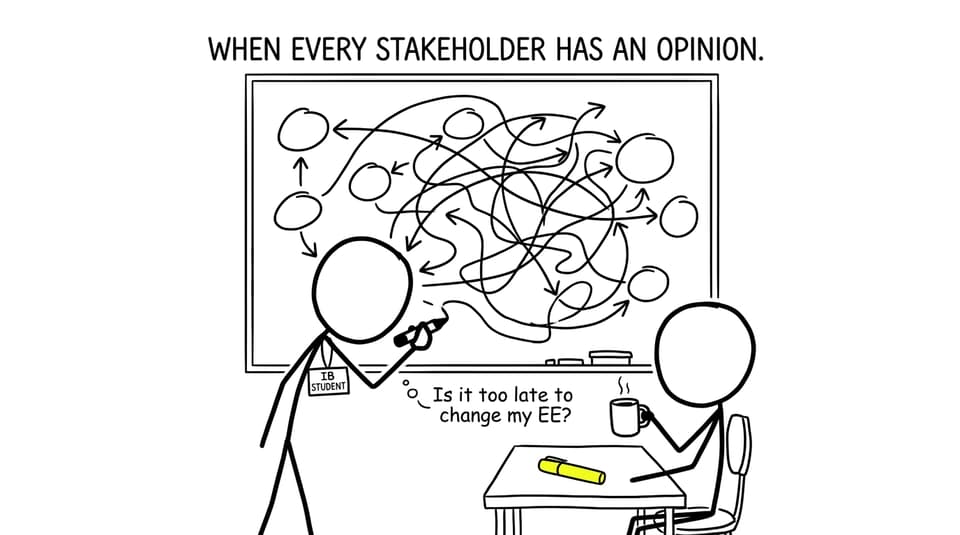
What makes this topic exam-friendly is that it’s realistic. Companies don’t plan in a vacuum. They plan inside a web of expectations.
IB Business Management overview: the stakeholder pressure checklist
Use this quick checklist when you’re writing long-term decisions in IB Business Management:
-
Identify the stakeholder group (internal vs external).
-
Name the pressure (ethical, financial, legal, operational, reputational).
-
Explain the long-term decision it triggers (strategy, investment, HR, operations, sustainability).
-
Add conflict (who loses if another group “wins”?).
-
Evaluate (short-term cost vs long-term stability).
For syllabus-aligned definitions and structure, revise 1.4 Stakeholders and the companion 1.4 Stakeholders notes.
Customers: pressure that hits revenue first
Customer pressure is powerful because it changes demand patterns. When preferences shift toward sustainability, safety, or transparency, firms are pushed into long-term choices: switching suppliers, redesigning packaging, investing in cleaner processes, or changing the product portfolio entirely. In IB Business Management, this links directly to market orientation and brand equity.
If you need to tighten your terminology on who counts as a stakeholder and why, use 1.4.1 Internal and external stakeholders notes and then test yourself with the 1.4.1 Questionbank.
Employees: the long-term cost of being “good enough”
Employee pressure often looks like “soft” issues: culture, training, workload, flexibility, development pathways. But over time, these shape productivity, retention, and the ability to innovate. A business that ignores employee expectations might save money this quarter, then lose capability for years.
That’s a useful evaluation angle in IB Business Management: employee satisfaction is not only ethical; it’s strategic risk management.
Shareholders and investors: pressure that sets the speed limit
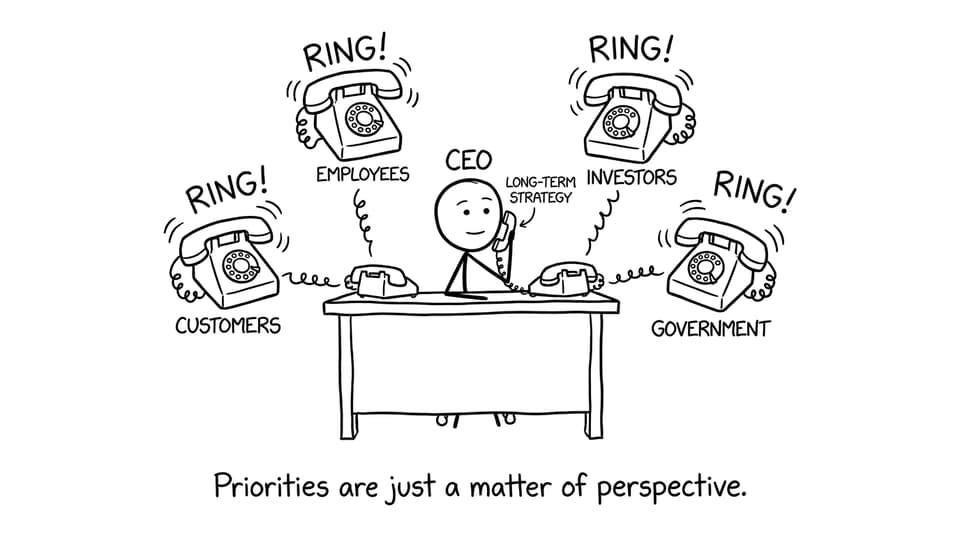
Investors push long-term decisions through capital and expectations. They might demand higher dividends, lower risk, or faster growth. Equally, some investors increasingly reward sustainability and innovation because reputational risk can become financial risk.
In exams, connect investor pressure to strategic choices like expansion, R&D investment, or cost leadership. If you want a concrete case-style example of stakeholder tension under sustainability pressure, read Abraca (ABC) Summary: IB Business Management 2026 case study facts.
Governments and regulators: pressure that becomes non-negotiable
Regulators shape the long term because compliance isn’t optional. New labor rules, safety standards, or environmental limits can force businesses to redesign operations and invest in new technology. The decision is often framed as a cost, but in IB Business Management you can evaluate it as legitimacy: permission to operate is an asset.
Communities and pressure groups: reputation is a strategy variable
Community pressure can influence location decisions, operating hours, environmental practices, and hiring policies. Social media accelerates this: a local issue can become global in a day. Long-term, companies may adopt CSR targets not only for ethics but because trust is easier to maintain than to rebuild.
Stakeholder conflict is where your evaluation marks live. Revise 1.4.2 Conflict between stakeholders notes and drill recall with 1.4.1 Flashcards.
Conclusion: turn stakeholder pressure into exam-ready strategy
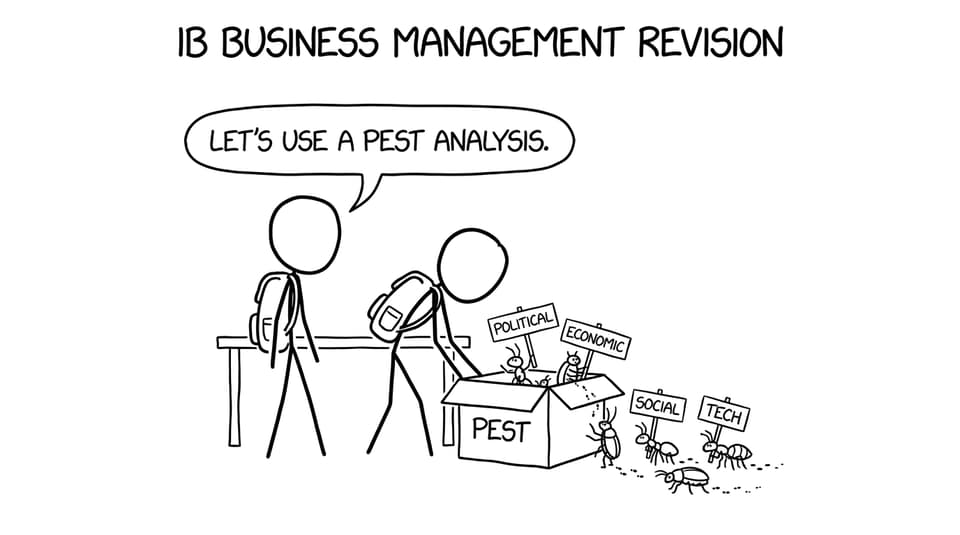
Stakeholder pressure shapes long-term decisions because it shapes what a company can afford to ignore. In IB Business Management, your job is to show how pressure travels from stakeholder expectations to strategic change, and then evaluate the conflicts it creates.
If you want to revise this topic fast, start at the IB Business Management hub and use RevisionDojo’s Questionbank, Study Notes, Flashcards, AI Chat, Grading tools, Predicted Papers, Mock Exams, Coursework Library, and Tutors to turn stakeholder theory into confident exam writing.


