
When the shock hits, what stays standing?
A flood, a price spike, a power outage, a pandemic, in IB Geography, the scary part is never the hazard itself. It’s what happens when everyday systems fail at the same time. One road closes and suddenly food deliveries stop. One hospital is overwhelmed and health outcomes spiral. Resilience is the quiet skill communities practice before anything goes wrong.
This is why IB Geography treats resilience as more than a definition. It’s a lens for seeing how local choices connect to global systems, and how small buffers (knowledge, trust, savings, wetlands) can prevent big collapses.
A quick exam-ready checklist (use this in any 10-mark)
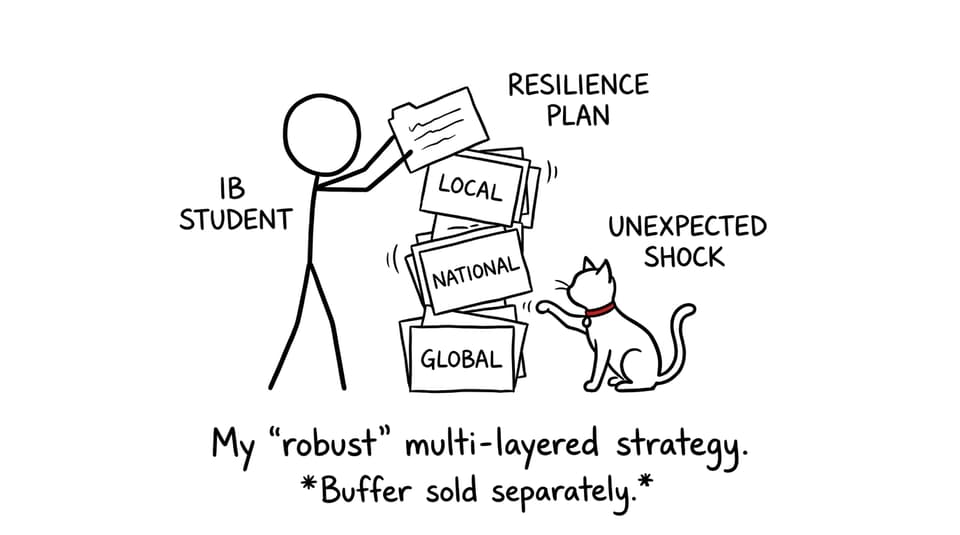
When you’re asked how communities build resilience in IB Geography, scan for:
-
Preparedness: risk awareness, drills, early warning systems
-
Infrastructure: safer buildings, drainage, green/blue infrastructure
-
Economic diversity: multiple livelihoods, microfinance, safety nets
-
Governance: trust, transparency, coordination
-
Global links: aid, knowledge-sharing, technology transfer, networks
For syllabus-aligned practice on these ideas, use 6 Global Risks and Resilience and the focused 6.3 Local and global resilience page.
Building local resilience in IB Geography: the “close-to-home” layers
Risk awareness that turns panic into procedure
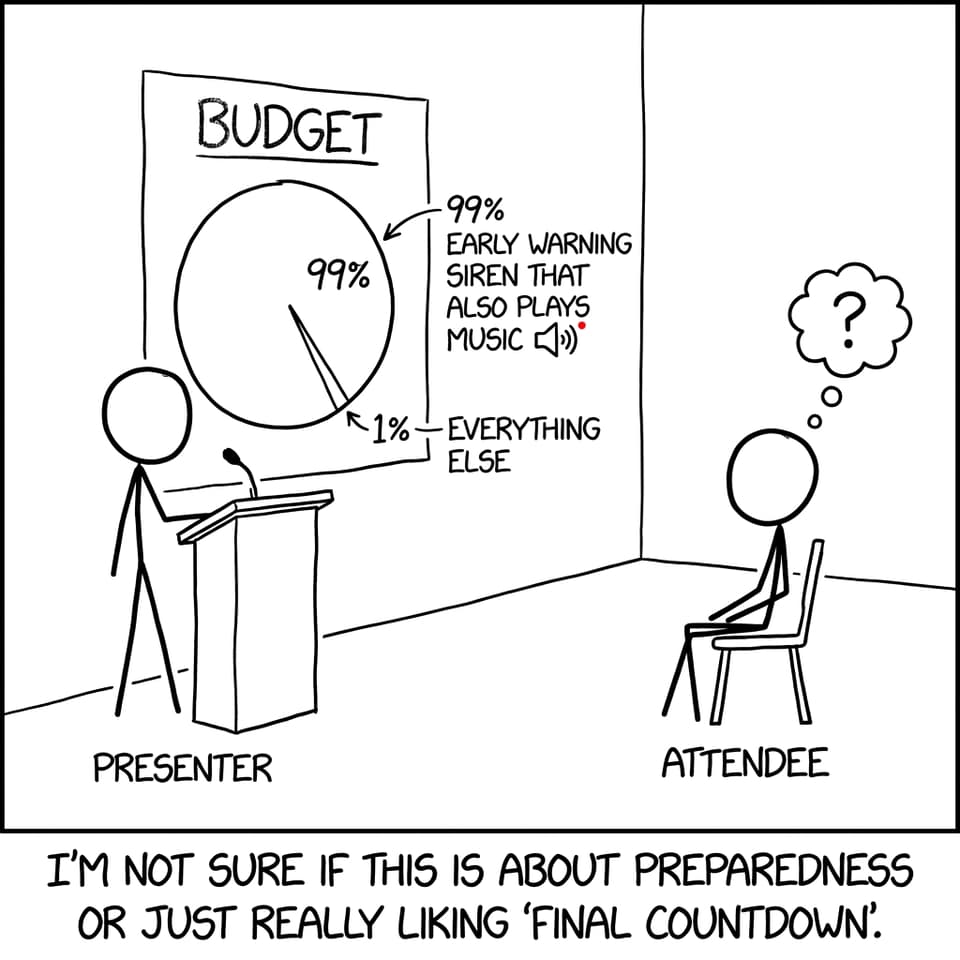
The simplest resilience gains often come from routines: hazard education in schools, disaster drills, clear evacuation routes, and alerts people actually understand. In IB Geography, this is your “capacity to cope” evidence. Early warning systems for floods or storms reduce mortality because they buy time, and time is the most under-rated resource in any crisis.
Want to link this to vulnerability? Pair it with disparities in exposure and capacity from Vulnerability and risk disparities notes.
Infrastructure and nature-based solutions
Community-led upgrades matter because they are specific: raising houses in flood zones, improving drainage, protecting dunes, restoring mangroves, or creating “sponge city” features that store stormwater instead of fighting it. These strategies reduce risk while supporting ecosystems and local livelihoods.
If you want a strong urban example angle, connect to Resilient city design notes.
Economic resilience: don’t let one income source become one point of failure
A community that depends on a single employer, crop, or tourism season is efficient, until it isn’t. In IB Geography, economic resilience shows up as diversified livelihoods, skills training, support for small enterprises, and access to savings or microcredit. Safety nets also matter because recovery speed often depends on whether households can survive the first month after a shock.
You can add global economic context with How do economic crises affect global resilience?.
Building global resilience in IB Geography: scaling up without losing the human story
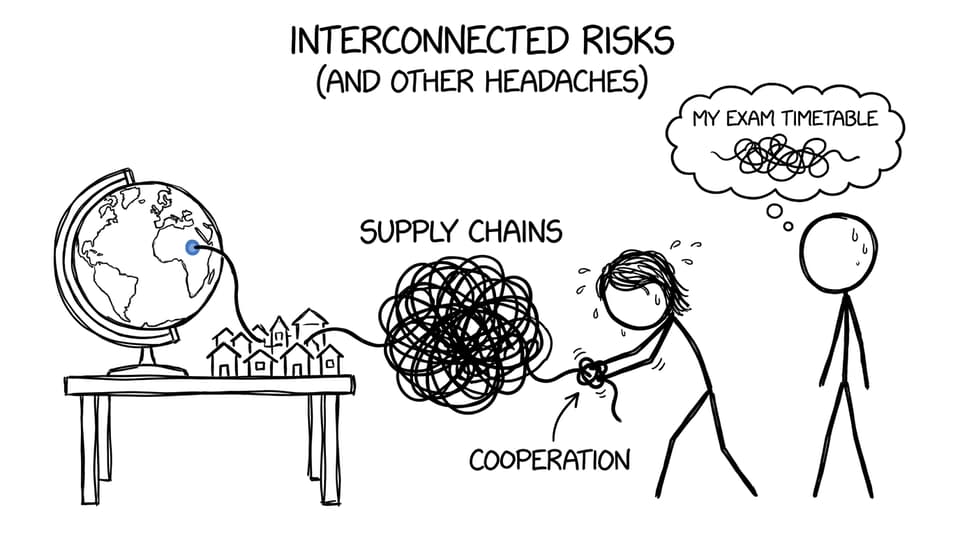
Global resilience is what happens when risks travel: supply chains, migration pressures, disease diffusion, shared oceans, shared atmosphere. Cooperation works when it moves knowledge, technology, and finance toward places with the highest vulnerability.
A good IB Geography answer shows the two-way relationship:
-
Local projects need global resources (funding, expertise, satellite data, vaccines, engineering)
-
Global systems need local implementation (trust, community leadership, cultural fit)
To practise writing this at exam standard, build a timed set from the IB Geography Questionbank or go straight into targeted practice with 6.3 Local and global resilience Questionbank.
How to turn this into marks (fast)
In IB Geography, structure wins. Try:
-
Define resilience in one line (withstand, adapt, recover)
-
Explain two local strategies + why they reduce vulnerability
-
Explain one global strategy + why cooperation is needed
-
Evaluate: limits, trade-offs, inequality, or governance barriers
Then refine with RevisionDojo: use Study Notes to clarify concepts, Flashcards to lock in key terms (Global Risks and Resilience flashcards), and AI Chat to test your explanation under pressure. When you’re ready, build a realistic timed set with Mock Exams and check quality using the Grading tools.
Closing: resilience is built before it’s tested
Resilience is rarely dramatic in the moment you build it. It looks like a drill that feels unnecessary, a mangrove project that takes patience, a second income stream that seems small, or a global partnership that quietly funds better data. But in IB Geography, that’s the point: the best resilience is the kind you barely notice until the shock arrives.
If you want to turn these ideas into consistent marks, revise resilience with RevisionDojo’s Questionbank, Study Notes, Flashcards, AI Chat, Mock Exams, and Tutors so your next essay reads like a system, not a scramble.