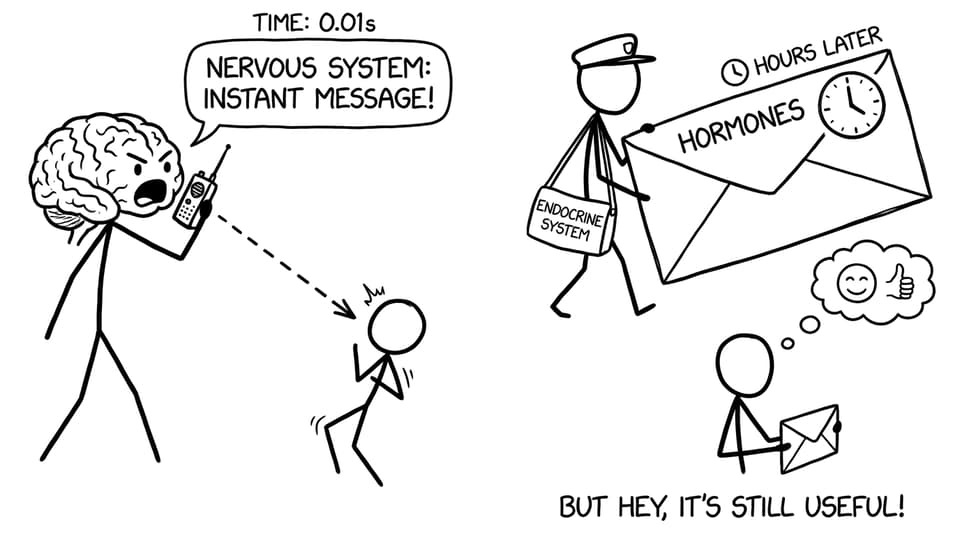
The weirdest moment in training isn’t the first sprint. It’s the fifth--when you’re not scared anymore, but your heart is still racing, your hands feel shaky, and you suddenly want sugar. In IB SEHS, that lagging wave is the endocrine system doing its job: hormonal responses to exercise that arrive slower than nerve impulses, but stick around longer.
Hormones are your body’s broadcast messages. Instead of a quick electrical signal, a gland releases a chemical messenger into the blood, and multiple organs adjust at once. For IB SEHS exam answers, that “slower but longer-lasting” contrast is gold.
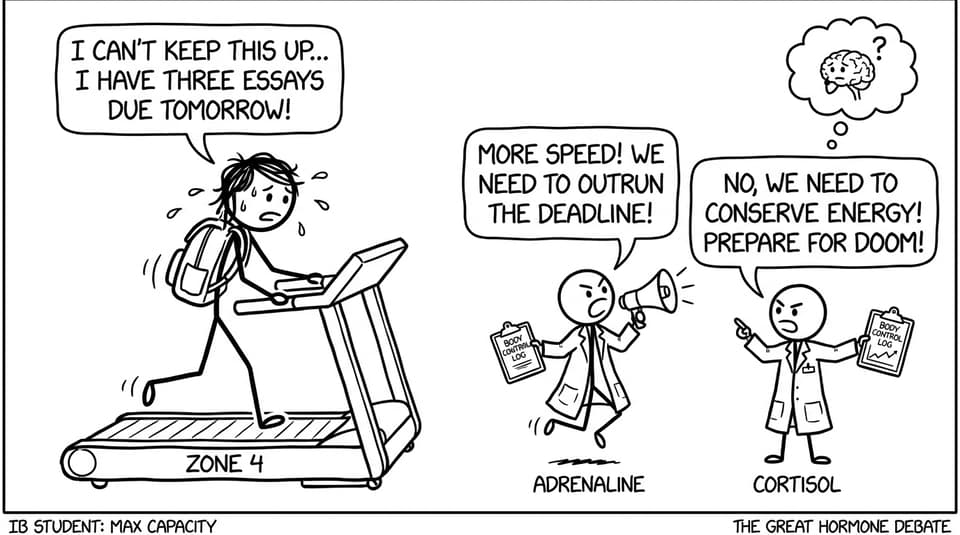
Stick-figure hormones arguing over a treadmill
IB SEHS quick checklist: what examiners look for
Define hormonal control: hormones travel in blood to target tissues.
Compare to nervous control: slower onset, longer duration, widespread effect.
Link hormone release to exercise intensity and duration.
Name key hormones and describe clear performance effects.
Adrenaline (epinephrine) is released from the adrenal glands and ramps up readiness for higher demand. In IB SEHS, keep it simple and specific:
increases heart rate
redirects blood flow toward working muscles
stimulates glycogen breakdown to glucose (rapid energy supply)
A strong exam line connects cause to outcome: “Adrenaline increases heart rate to raise cardiac output, improving oxygen delivery to active muscles.” For extra practice on the whole endocrine theme, use the Endocrine System (HL) Questionbank or the Endocrine System topic hub.
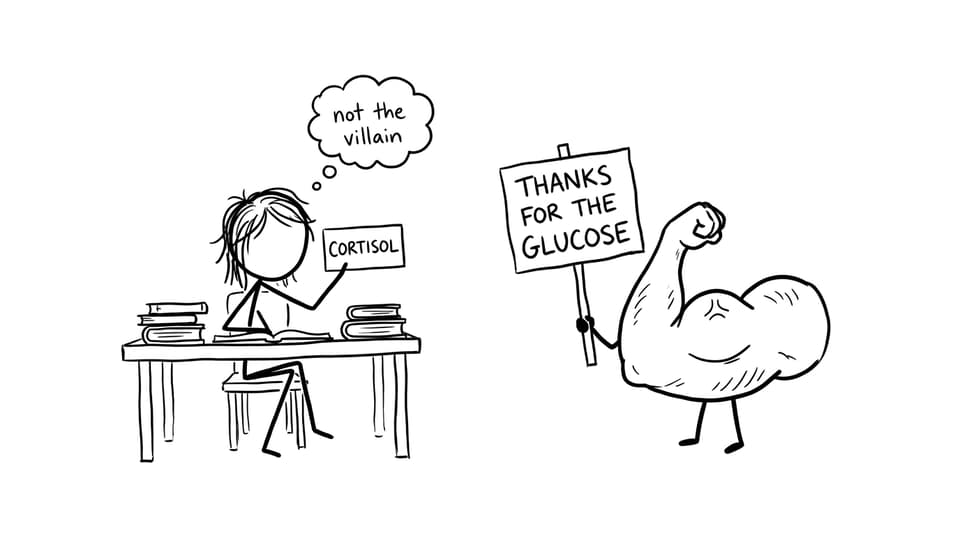
Cortisol: not the villain, the endurance manager
Cortisol rises more noticeably in prolonged and/or high-intensity exercise. Its core role is energy regulation:
mobilizes stored fuels
helps maintain blood glucose
supports ongoing exercise demands
In IB SEHS, avoid calling cortisol “bad.” In normal exercise it’s a useful response; the problem is chronically elevated cortisol (like overtraining stress) rather than the hormone existing at all.
Cortisol flashcard joke: “not the villain”
Why intensity and duration change the hormonal response
As intensity and duration rise, your body needs tighter control of fuel and circulation. That’s why hormonal responses become more pronounced in longer sessions and harder efforts--they help preserve performance by stabilizing internal conditions.
A high-mark IB SEHS response usually does three things: names the hormone, states the stimulus (exercise intensity/duration), and links to a physiological effect and performance outcome. Then you finish with one sentence comparing endocrine vs nervous control.
RevisionDojo makes this easier with Study Notes for concepts, Flashcards for definitions, a Questionbank for exam-style application, plus AI Chat to fix misunderstandings fast. When you’re ready to test like it’s the real thing, use Mock Exams, Predicted Papers, and Grading tools to tighten structure. If you’re stuck, the Tutors and Coursework Library help you keep moving.
Bring it home: make IB SEHS marks predictable
Hormonal responses to exercise aren’t random “biology noise.” They’re a coordinated strategy: adrenaline helps you meet the moment, cortisol helps you sustain it. If you can explain that clearly, IB SEHS endocrine questions become a place to gain marks, not lose them. Keep your revision tight, practice application, and use RevisionDojo’s Questionbank, Study Notes, Flashcards, AI Chat, and Mock Exams to make your next answer feel inevitable.
IB SEHS goal setting in sport made simple: goal types, SMART targets, common mistakes, and exam-ready tips using RevisionDojo practice tools.