


Green chemistry sounds like the kind of phrase that belongs on a poster in a science hallway: Be nice to the planet! But in IB Chemistry, it’s much more practical than that. It’s the difference between a reaction that merely “works” and a reaction that works without quietly creating a new problem (toxic waste, huge energy costs, dangerous solvents, hard-to-degrade plastics). In exams, green chemistry is often where real-world context meets core skills: atom economy, catalysis, kinetics, energetics, and data interpretation.
And the best part? You don’t need to memorize a massive list to score well. You need to think like a chemist who cares about outcomes.
Green chemistry in IB Chemistry (a simple definition)
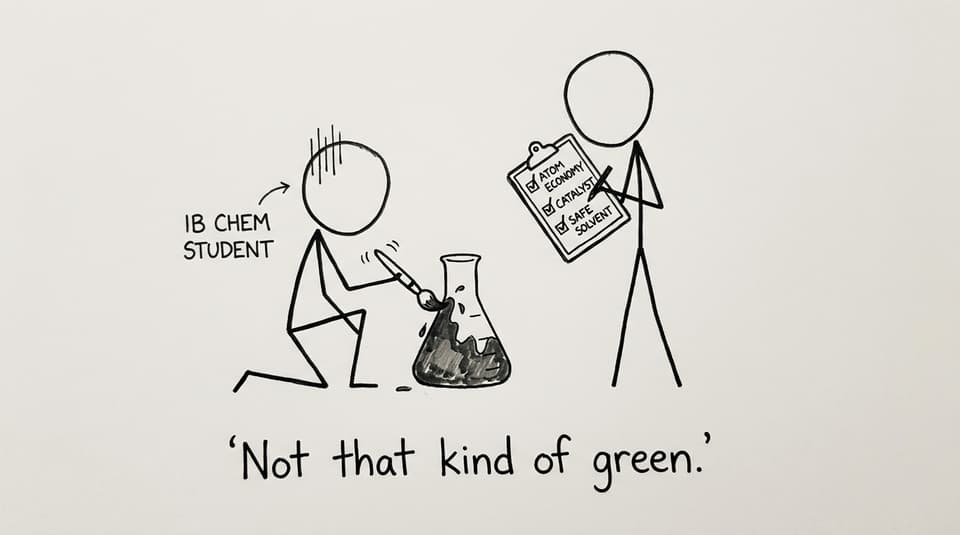
In IB Chemistry, green chemistry means designing chemical products and processes that reduce or eliminate hazardous substances, minimize waste, and use energy and materials efficiently.
The exam-friendly mindset is: prevent the mess instead of cleaning it up later. Environmental chemistry often studies pollution after it happens. Green chemistry asks: how do we stop it being produced in the first place?
If you want a quick syllabus roadmap for where these ideas sit, keep the IB Chemistry Syllabus guide open while you revise.
A fast green chemistry checklist (what examiners love)
Use this checklist whenever an IB Chemistry question describes an industrial process, a solvent choice, a yield problem, or a “new material” with environmental claims:
-
Waste: Is waste prevented or just treated later?
-
Atom economy: Do most atoms end up in the product?
-
Catalyst: Is a catalyst used instead of excess reagents?
-
Energy: Are temperature/pressure demands reasonable?
-
Solvent: Is the solvent safer (or avoided)?
-
Renewable feedstock: Are raw materials sustainable?
-
End-of-life: Does it degrade safely or persist?
To practice turning this checklist into marks, build drills with the RevisionDojo Questionbank and tag mistakes so you see the same pattern before the exam does.
The 12 principles of green chemistry (simplified for IB Chemistry)
You may see “12 principles” mentioned in IB Chemistry contexts. You rarely need to recite all twelve perfectly. But you do need to recognize the big ideas and apply them.
Prevent waste and avoid unnecessary steps
Green chemistry prefers reactions that don’t create lots of by-products. That includes avoiding “extra” steps that require protecting groups or produce derivative waste.
Design safer chemicals and safer synthesis routes
If two products work equally well, the greener choice is the one with lower toxicity and fewer hazards in production.
Choose catalysts over stoichiometric reagents
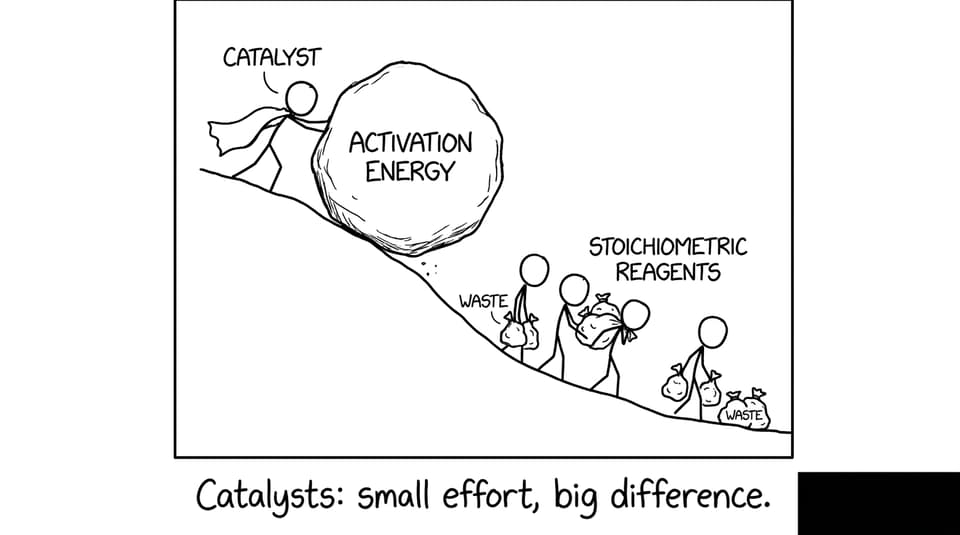
Catalysts are a classic green chemistry win: smaller quantities, less waste, often lower energy requirements.
Use safer solvents (or none)
Solvents are easy to overlook in IB Chemistry questions, which is exactly why they’re tested. Water-based systems or alternative solvents can reduce volatile organic compounds and hazards.
Improve energy efficiency
A process that needs extreme temperature and pressure is often less green. Tie this back to kinetics and energetics when you evaluate feasibility.
Use renewable feedstocks and design for degradation
Renewable raw materials (like plant-based sources) can reduce reliance on finite resources. Design for degradation asks: when this product is discarded, does it break down into harmless substances?
A useful supporting concept is biodegradability. If you want a clear definition and mechanisms, see What is a biodegradable material?.
Green chemistry examples you can use in IB Chemistry answers
Exams reward specific, grounded examples. Here are a few that map nicely onto common IB Chemistry themes:
Biodegradable plastics (with a caution)
Bioplastics like PLA can reduce persistence if they’re sourced responsibly and actually degrade in real conditions. A “biodegradable” label isn’t automatically a green chemistry guarantee.
Supercritical CO₂ as a solvent
Using supercritical CO₂ can replace more toxic organic solvents in extraction processes (for example, decaffeination). This hits the “safer solvent” principle.
Catalytic converters
Catalysts increase efficiency and reduce harmful emissions. If a question mentions gases or pollution, look for opportunities to discuss catalysis.
Water-based paints and coatings
Water-based systems reduce emissions associated with solvent evaporation. This is a straightforward “safer solvent” application.
Renewable fuels and feedstocks
Bioethanol and biodiesel are common examples of shifting away from petroleum-based sources, linked to sustainability trade-offs.
To strengthen recall, pair each example with a short definition using IB Chemistry Cheatsheets and then test yourself with mixed questions.
Green chemistry vs environmental chemistry (the exam trap)
In IB Chemistry, students often blur these terms:
-
Environmental chemistry: studies pollutants, cycles, effects, monitoring.
-
Green chemistry: redesigns chemistry so pollution is less likely to be created.
If a question asks you to “evaluate” a process, you’ll often earn higher marks by stating this difference and then applying one or two green principles (atom economy, catalysts, safer solvent, energy efficiency).
Where green chemistry shows up in IB Chemistry exams
Green chemistry threads through multiple topics and question styles:
-
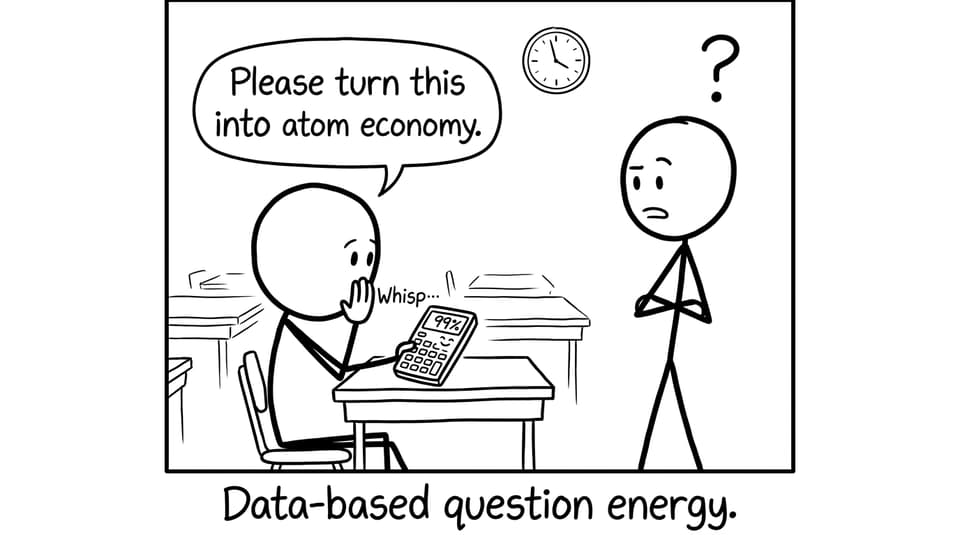
Atom economy and yield (often short calculations plus interpretation)
-
Catalysis (industrial processes, rates, conditions)
-
Energetics (energy demands, feasibility)
-
Polymers and materials (biodegradability, disposal)
-
Data-based questions (spot the greener route from evidence)
For topic-by-topic practice, use IB Chemistry resources and reinforce weak areas with targeted notes like Collision theory and rates of reaction.
Conclusion: use green chemistry to think like an examiner
Green chemistry in IB Chemistry isn’t a separate unit you cram at the end. It’s a way of judging reactions with the same tools you already revise: atom economy, catalysis, energetics, and sensible design choices. When you answer questions with that mindset, your responses sound more like science and less like slogans.
If you want to turn these ideas into consistent marks, build a weekly loop: revise with IB Chemistry resources, condense with Cheatsheets and Flashcards, then test with the Questionbank and AI Chat feedback. Add in predicted papers and mock exams when you’re close to exams, and use the grading tools to spot patterns quickly. RevisionDojo keeps it all in one place so your IB Chemistry revision stays calm, structured, and sustainable, just like the chemistry you’re learning to defend.


