



The first term IB Computer Science experience usually combines programming fundamentals, computational thinking, and introductory systems theory. You will write small programs, trace algorithms, learn technical vocabulary, and discover that debugging often takes longer than typing the original code.
The exact order varies by school. Some teachers begin with Python or Java, while others establish computer fundamentals first. Either way, the term is less about building an impressive application and more about learning to think precisely, explain decisions, and turn vague problems into logical steps.
First term IB Computer Science at a glance
A realistic opening term often includes:
- Computational thinking, including decomposition, abstraction, pattern recognition, and algorithmic thinking
- Programming fundamentals such as variables, data types, input, output, conditions, loops, and functions
- Debugging and code-tracing exercises
- Introductory theory covering hardware, data representation, logic, or operating systems
- Short tests, practical programming tasks, or both
- Early discussion of the computational solution
- Additional depth and faster progression for HL students
For the syllabus first assessed in 2027, IB Computer Science is organized around Theme A, Concepts of Computer Science, and Theme B, Computational Thinking and Problem-Solving. Students work in Java or Python. The wider course also includes databases, machine learning, object-oriented programming, a case study, a collaborative sciences project, and a computational solution.
You will not cover everything in one term. The purpose is to build habits that make later material manageable.
The opening weeks: learning precision
During weeks 1-3, many classes establish a shared starting point because students arrive with different levels of experience. One person may have built small games; another may never have written code.
You might define a problem, separate inputs from outputs, write an algorithm, and trace each variable. Programming lessons may involve simple calculators, quizzes, or menu-based programs. These tasks look easy until a condition points the wrong way, a loop runs once too often, or a variable contains text when the program expects a number.
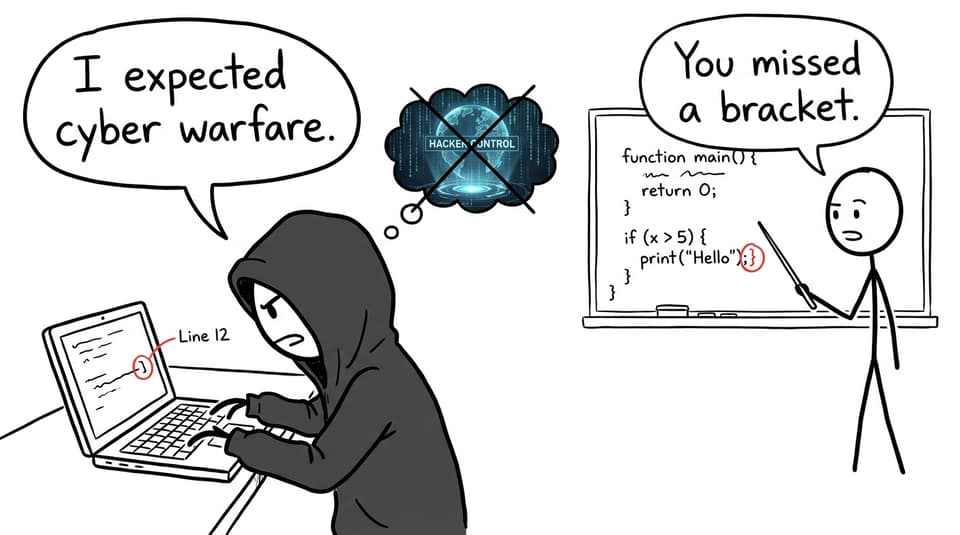
The goal is not merely to make code run. You need to understand why it runs. RevisionDojo's B2 Programming resources let you move between explanations, examples, and focused practice when classroom code starts moving faster.
The middle of the term: concepts connect
Around weeks 4-8, the course becomes more layered. You may encounter selection, iteration, functions, strings, lists, and basic data structures. The important shift is from copying patterns to selecting them. A beginner can reproduce a for loop; a Computer Science student must decide whether it is appropriate, determine its stopping condition, and test normal, boundary, and invalid inputs.
Theory also requires more than recognition. You may explain how hardware components interact, interpret binary data, complete a truth table, or compare technical approaches. RevisionDojo's data representation and computer logic materials can connect those ideas to your programming work.
A realistic workload outside class is often around 2-4 focused hours weekly, although schools and students vary. Debugging is unpredictable, so short, regular sessions usually work better than one large weekend session.
Assessment exposes shallow understanding
By weeks 9-12 or later, you will probably face a broader task or assessment combining code tracing, program writing, definitions, and explanations. Some schools also assign a small project involving planning, implementation, testing, and reflection.
This creates an important surprise: working code is not the same as complete understanding. You may need to justify a data structure, identify the effect of changing a condition, or evaluate a solution against requirements. Eventually, Paper 1 focuses on concepts and the pre-seen case study, while Paper 2 covers computational thinking, algorithms, and programming in Java or Python.
After reviewing the IB Computer Science study notes, attempt questions from the IB Computer Science Questionbank. Reading creates familiarity. Questions reveal whether you can retrieve and apply an idea independently.
What surprises new students most
Computer Science includes substantial theory
Not every lesson involves coding. The course also covers computer fundamentals, networks, databases, machine learning, and the consequences of technological decisions. This theory explains the environment in which programs operate.
Debugging is part of the work
A program failing on its first run is normal. Trace variable values, test smaller sections, read error messages, and change one thing at a time. A debugging log recording each error, cause, and correction can become a valuable personalized reference.
Explanation can be harder than implementation
You might know how to solve a problem but struggle to describe the algorithm. IB assessment rewards visible reasoning, accurate terminology, and attention to command terms. The guide to mastering IB Computer Science assessments explains how to present knowledge in a markworthy form.
Previous experience helps with syntax, but experienced programmers can still lose marks through imprecise explanations. Beginners may develop excellent tracing and testing habits because they cannot rely on intuition. The first term is a period of calibration, not a race.
How SL and HL differ
Both levels study programming, computer science concepts, object-oriented programming, and the case study. The official course recommends 150 teaching hours for SL and 240 for HL across the programme. HL adds breadth and depth, including abstract data types as a dedicated HL-only area.
The difference may initially seem modest because everyone needs the fundamentals. It becomes clearer as HL students face more demanding extensions and complex problem-solving. RevisionDojo's guide to weekly study time for IB Computer Science HL provides a useful framework, but your assignment schedule and error rate should determine your routine.
A sustainable first-term routine
Use a simple weekly cycle:
- Learn: Review one concept using class material and Study Notes.
- Build: Write or modify a small program without copying a finished solution.
- Prove: Complete several Questionbank questions and correct every mistake.
Use Flashcards for definitions and syntax patterns. Ask AI Chat to challenge your reasoning rather than replace it. Save working programs with comments and test cases for later reference.
You may not begin the computational solution immediately, but notice everyday problems software could solve. The IB allocates 35 recommended teaching hours to this internal component, so a manageable idea matters more than a spectacular unfinished one. RevisionDojo's IB IA guides and Coursework Library can help you recognize an appropriate scope.
What a successful first term accomplishes
A good first term does not make you an expert programmer. It gives you a reliable process for approaching unfamiliar problems. You should become more comfortable tracing code, breaking problems into steps, testing edge cases, and explaining technical choices.
RevisionDojo turns weaknesses into practice loops. Study Notes and Flashcards build clarity, the Questionbank tests application, and AI Chat and Grading tools sharpen explanations. Later, Predicted Papers and Mock Exams develop timing, while the Coursework Library and Tutors support the computational solution.
The early programs may be small. Their value becomes visible when the problems get larger.