

The invisible “cloud” that sits on real concrete
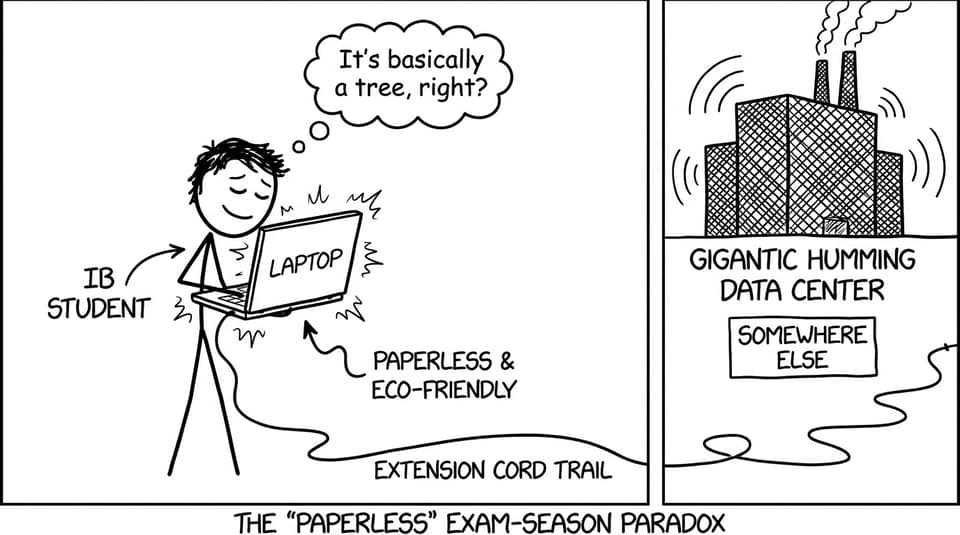
Open your laptop, sync a file, stream a video, and it feels weightless. In IB Digital Society, that feeling is the trap. The “digital” world is built on mines, ships, factories, cables, warehouses, and data centers that hum all night. The environmental story is rarely on-screen, which makes it easy to ignore and hard to analyze under exam pressure.
But this topic is a gift if you treat it like a system: inputs, outputs, stakeholders, and trade-offs. This article breaks down how to discuss environmental impacts of digital systems in IB Digital Society with clear angles you can reuse in essays, short responses, and your IA.
Quick checklist: what examiners want you to cover
Use this as a fast plan before you write:
-
Define the digital system (not “technology in general”).
-
Track the lifecycle: production, operation, disposal.
-
Identify impacts on individuals and impacts on communities.
-
Add power: who decides, who profits, who pays the environmental cost.
-
Add ethics: responsibility, harm, sustainability, fairness.
-
Conclude with balanced evaluation (benefits plus limits).
When you revise, pair this article with RevisionDojo’s 4.3 Environmental hub for focused practice: 4.3 Environmental.
Environmental impacts in IB Digital Society (the lifecycle view)
In IB Digital Society, environmental impacts are the effects a digital system has on the natural environment across its full lifecycle. The key move is to show that “online” is still physical.
Production: extraction and manufacturing
Devices and infrastructure start with raw materials. Resource extraction (often for metals used in electronics and batteries) can damage ecosystems, strain water supplies, and create pollution. Manufacturing then adds energy use, emissions, and chemical waste.
If you want syllabus-aligned vocabulary, RevisionDojo’s notes help you phrase this precisely: Pollution and waste notes.
Operation: energy demand and carbon footprint
Data centers, network equipment, and constant device charging require electricity. Even when one user action seems tiny, scale changes everything: billions of users and always-on systems turn convenience into continuous demand.
A strong IB Digital Society response explains why efficiency improvements do not automatically solve the problem: rebound effects can mean that as services get cheaper and faster, total usage rises.
For structured revision and short recall sessions, combine notes with active retrieval using RevisionDojo’s Flashcards and then test yourself with the 4.3 Environmental Questionbank.
Disposal: e-waste and “messy” recycling
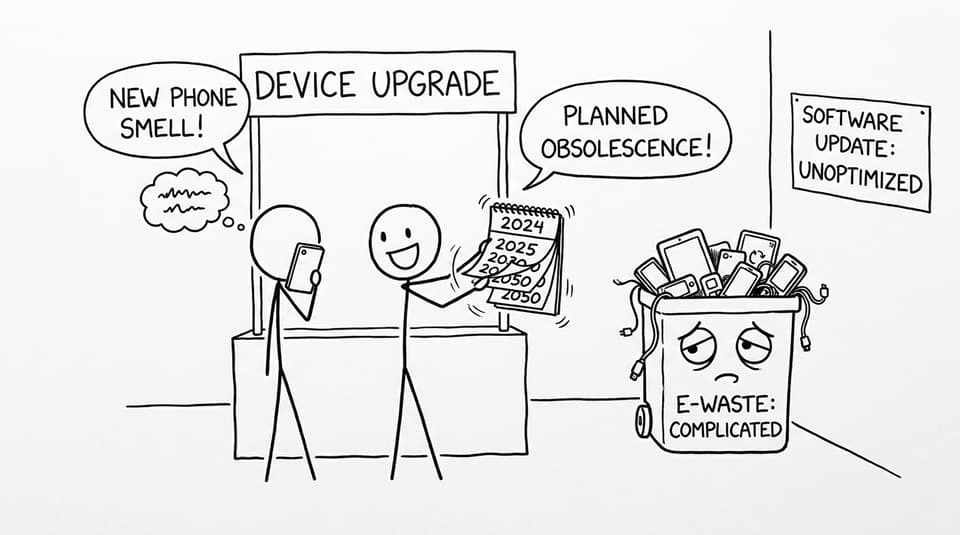
When devices are replaced frequently, electronic waste grows. Recycling is not a magical erase button: it can be complex, incomplete, and sometimes shifted to places with weaker environmental protections.
RevisionDojo’s broader interventions angle is useful here: Managing pollution and waste notes.
How to analyze impacts on individuals (without staying superficial)
In IB Digital Society, individual impacts are often indirect, which tempts students into vague lines like “people should recycle more.” Go sharper.
Individuals are shaped by:
-
Design nudges: upgrade prompts, expiring support, locked ecosystems.
-
Information gaps: environmental costs are hidden behind sleek marketing.
-
Convenience incentives: default settings push constant syncing, streaming, and backups.
Your analysis improves when you show how individual choices are constrained by system design and corporate strategy. That is the IB Digital Society move: behavior is not just personal morality, it is structured.
For study flow, use RevisionDojo’s Study Notes for concepts, then open AI Chat to test your understanding with “what if” questions, then finish with question practice.
How to analyze impacts on communities (where the burden concentrates)
Communities experience environmental impacts unevenly. Some regions gain jobs and infrastructure, while others bear extraction damage, pollution, or waste processing risks.
A high-scoring IB Digital Society paragraph usually:
-
Names a specific community group (miners, factory workers, residents near processing sites).
-
Explains the mechanism (pollution, unsafe disposal, water contamination, land degradation).
-
Links to power (limited political leverage, global supply chains, outsourced harm).
To build case-study readiness, RevisionDojo’s broader course notes can help you connect environmental issues to development and sustainability themes: Content notes for Digital Society.
Power, responsibility, and sustainability (the examiner’s favorite pivot)
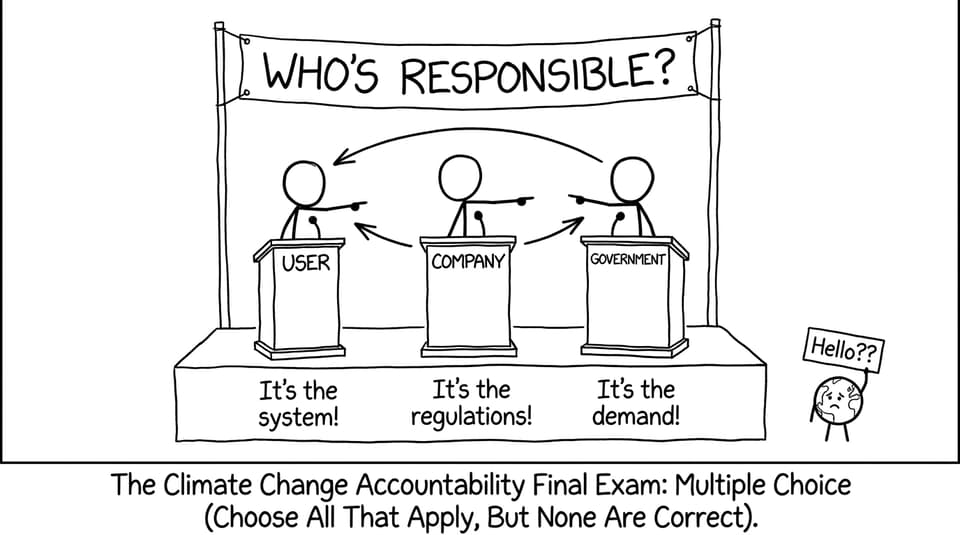
Environmental harm is rarely caused by “users” alone. In IB Digital Society, power analysis asks who controls design decisions, supply chains, and product lifespans.
Consider:
-
Corporations: set upgrade cycles, repairability, and transparency.
-
Governments: regulate standards, right-to-repair, waste exports, and energy grids.
-
Consumers: create demand, but within limited menus of options.
This is where ethics becomes concrete: responsibility is shared, but not equally.
For exam writing structure, RevisionDojo’s guidance is worth revisiting: How to structure high-scoring IB Digital Society exam answers.
How to use this topic in exams and the IA
In exams
When an unseen stimulus mentions “cloud services,” “smart devices,” “AI,” or “streaming,” you can often bring in environmental analysis in IB Digital Society.
Do:
-
Define the system boundary (what parts you are analyzing).
-
Use lifecycle language (production/operation/disposal).
-
Evaluate trade-offs (benefits vs harms, short-term vs long-term).
Avoid:
-
Pure description of “technology causes pollution” without a mechanism.
-
One-sided moralizing without power analysis.
In the IA
Environmental impacts work best when your research question focuses on a specific digital system with visible infrastructure and stakeholders.
To keep your work examiner-friendly, use RevisionDojo’s IA support: IB Digital Society IA Structure Explained, plus the official guide hub: IB Digital Society Internal Assessment Guide. And for evidence integration, see: Using evidence effectively in the IB Digital Society IA.
Closing: make the “invisible” visible
The core skill in IB Digital Society is noticing what the interface hides. Digital systems can feel clean because the noise is elsewhere: in energy grids, supply chains, and waste streams that rarely appear in a glossy product launch.
If you want this topic to turn into marks, build a small toolkit: lifecycle vocabulary, power analysis, and two or three flexible examples. Then drill it with RevisionDojo’s Study Notes, Flashcards, AI Chat, Questionbank, and Mock Exams so your evaluation stays calm and specific when the exam clock starts. Start here: IB Digital Society resources.

