
Electronegativity is the kind of idea that feels small until it quietly shows up everywhere.
One minute you are learning a neat trend in IB Chemistry. The next, you are being asked to justify bond polarity, explain reactivity, predict intermolecular forces, and make sense of data tables under exam pressure. Most students can recite “it increases across a period.” Fewer can explain why in the clean, mechanical way that earns full marks.
This guide focuses on the electronegativity trend across a period and gives you the examiner language to match.
Quick checklist for the electronegativity trend (exam-ready)
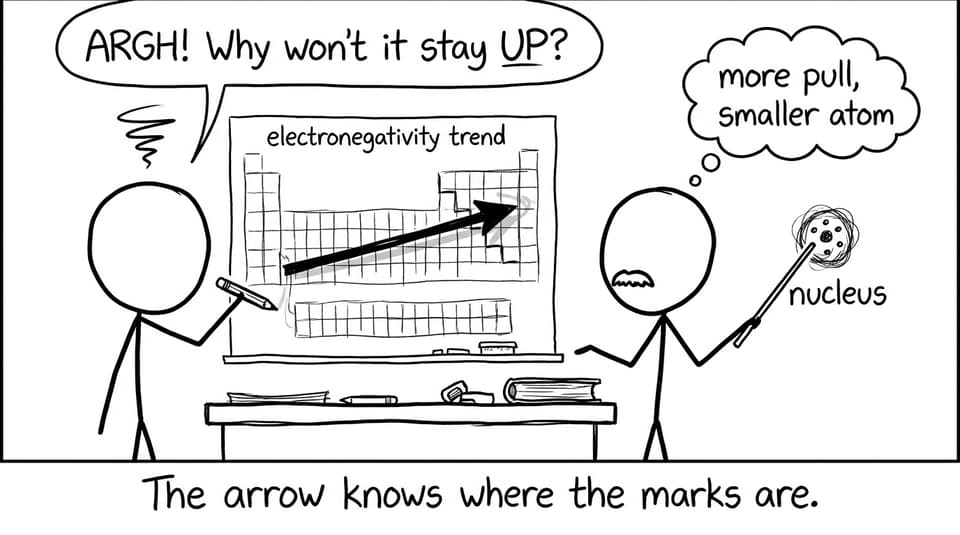
If you remember nothing else for IB Chemistry, remember this cause-and-effect chain:
-
Across a period (left to right), electronegativity increases.
-
Nuclear charge increases (more protons).
-
Electrons are added to the same main energy level.
-
Shielding is nearly constant (no new inner shells).
-
Atomic radius decreases.
-
Attraction for bonding electrons increases (higher effective nuclear charge felt by valence electrons).
For a broader view of how the periodic table is used under timed conditions, pair this with How to Use the IB Periodic Table in Exams and Revision.
The electronegativity trend across a period in IB Chemistry (what’s actually changing)
Nuclear charge increases (the “proton pressure”)
Across a period, each element has one additional proton compared with the previous element. That rising positive charge strengthens the electrostatic attraction for electrons.
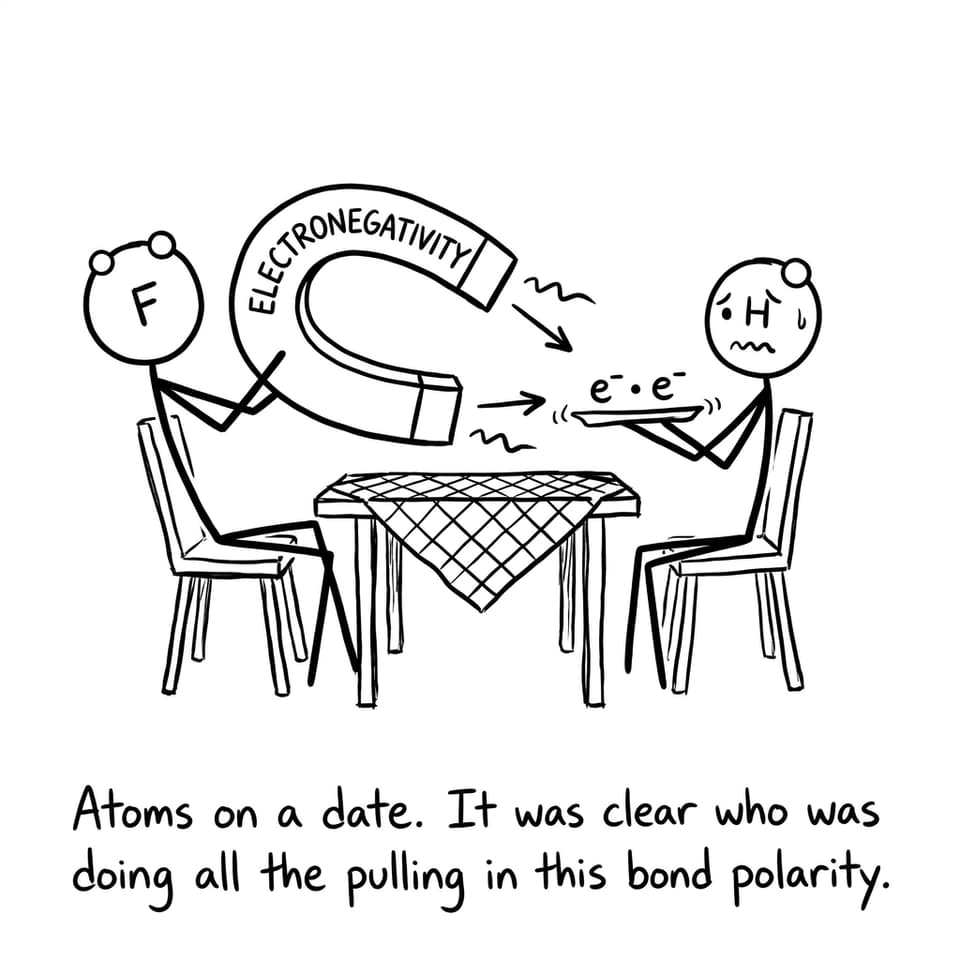
In IB Chemistry exam phrasing, you are really describing a stronger pull on the bonding pair in a covalent bond. The atom with the stronger pull is described as more electronegative.
If you want a crisp definition you can copy into explanations, RevisionDojo’s IB Chemistry Key Definitions is a reliable place to drill the wording.
Shielding stays almost the same (the quiet reason the trend is strong)
Students often assume that “more electrons” automatically means “more shielding.” Across a period, that is mostly wrong because the added electrons go into the same shell, not into new inner shells.
So shielding from inner electrons changes very little. This is why the increase in nuclear charge is not “cancelled out”; the valence electrons feel a stronger effective attraction.
For periodicity practice that connects trends to properties, see the Periodic Trends Notes.
Atomic radius decreases (distance makes the pull stronger)
As effective nuclear attraction rises, the electron cloud is pulled in closer. The atomic radius decreases across a period.
Smaller radius matters because bonding electrons are, on average, closer to the nucleus, so the attraction is stronger. In IB Chemistry, this is often the second sentence that turns a decent answer into a full-mark answer.
How to write the perfect 3-line explanation in IB Chemistry
When a question says “explain the trend,” it is asking for a short causal chain, not a story.
Use this structure:
-
Across a period, nuclear charge increases (more protons).
-
Electrons are added to the same shell so shielding is nearly constant, therefore effective nuclear charge increases.
-
Atomic radius decreases, so the attraction between the nucleus and bonding electrons increases; therefore electronegativity increases.
If bond polarity is part of the question (it often is), reinforce the application with IB Chemistry S2.2.5 Bond Polarity Notes.
Common misconceptions that lose marks
“Electronegativity increases because atoms gain more electrons”
Across a period, atoms do gain electrons, but that is not the driver. In IB Chemistry, the key is the increase in nuclear charge with nearly constant shielding.
“Shielding increases significantly across a period”
Shielding from inner shells does not rise much because you are not adding new inner shells. This misconception usually leads to answers that contradict themselves.
“Higher electronegativity always means higher reactivity”
Reactivity depends on context. Non-metals with high electronegativity often attract electrons strongly, but reaction pathways, bond enthalpies, and molecular structure also matter.
To connect trend logic to reactivity more directly, use Reactivity of Elements Based on Periodic Trends.
How to revise this fast with RevisionDojo tools
A trend becomes useful only when you can apply it under pressure. Here is a practical loop that works well for IB Chemistry:
-
Study Notes: Read the periodic trends summary until the cause chain feels automatic.
-
Flashcards: Turn the 3-line explanation into an active recall card.
-
Questionbank: Do short questions that force you to justify polarity and bond type.
-
AI Chat: Ask it to mark your 3-line explanation and demand examiner-style wording.
-
Grading tools + Mock Exams: Use timed practice to stop over-explaining.
If you are also juggling coursework decisions, RevisionDojo’s Navigating the IB Chemistry IA: From Planning to Execution and Best Chemistry IA Ideas in 2025 can help you keep your planning structured.
Closing: learn the trend once, use it everywhere
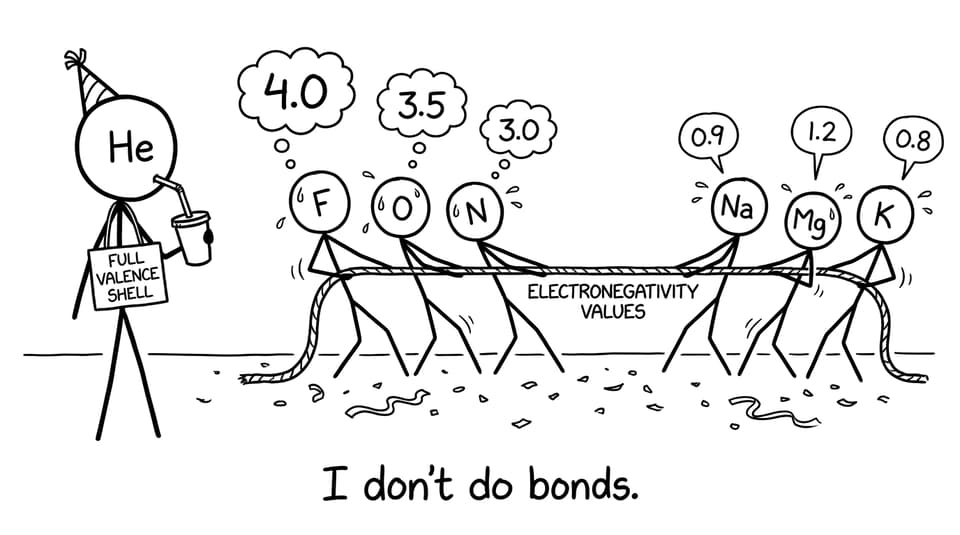
Across a period, electronegativity increases in IB Chemistry because nuclear charge increases, shielding stays nearly constant, atomic radius decreases, and bonding electrons feel a stronger attraction to the nucleus. That one chain of logic unlocks clearer explanations of polarity, bonding, and reactivity.
If you want to make this automatic before exams, build a short routine on RevisionDojo: use the Study Notes to anchor the idea, the Flashcards to keep it sharp, the Questionbank to apply it, and the AI Chat plus Grading tools to polish your wording. Add Mock Exams and Predicted Papers when timing becomes the real challenge. IB Chemistry rewards students who can explain simply, not loudly, and RevisionDojo is built to help you do exactly that.