
The quiet advantage of strong IB Chemistry lab skills
The weird thing about IB Chemistry is that the lab doesn’t just test your hands, it tests your thinking.
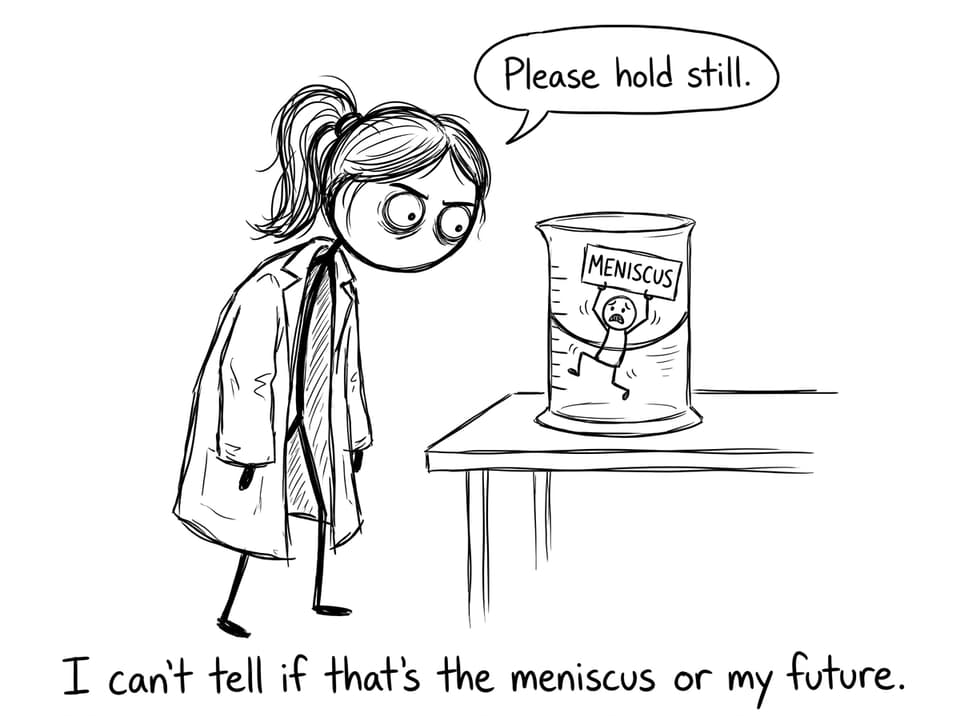
A burette reading isn’t “just a number.” It’s a decision you made under pressure: how you aligned your eye, how you judged the meniscus, whether you rushed because the bell was about to go. Those tiny decisions stack up in your Internal Assessment (IA) and in the practical, data-heavy questions that appear in exams.
If you want a calmer, more controllable path to better marks in IB Chemistry, lab skill is one of the highest-return places to invest.
A quick checklist to improve your IB Chemistry practical work
-
Pick 3 core techniques to master: titration, calorimetry, kinetics, equilibrium
-
Record raw data cleanly: units, sig figs, uncertainties
-
Separate random vs systematic error in every evaluation
-
Practice lab-style questions, not just theory
-
Use feedback loops: fix one weakness per practical
To see how this connects to scoring at the top end, keep an eye on RevisionDojo’s guidance on what it really takes to get a 7 in IB Chemistry: the truth about scoring a perfect 7.
Master the techniques that show up everywhere in IB Chemistry
In IB Chemistry, a few techniques appear again and again because they’re reusable: they train precision, control, and interpretation.
Titration: build repeatability, not drama
Your goal is boring consistency: similar titres and clean endpoints.
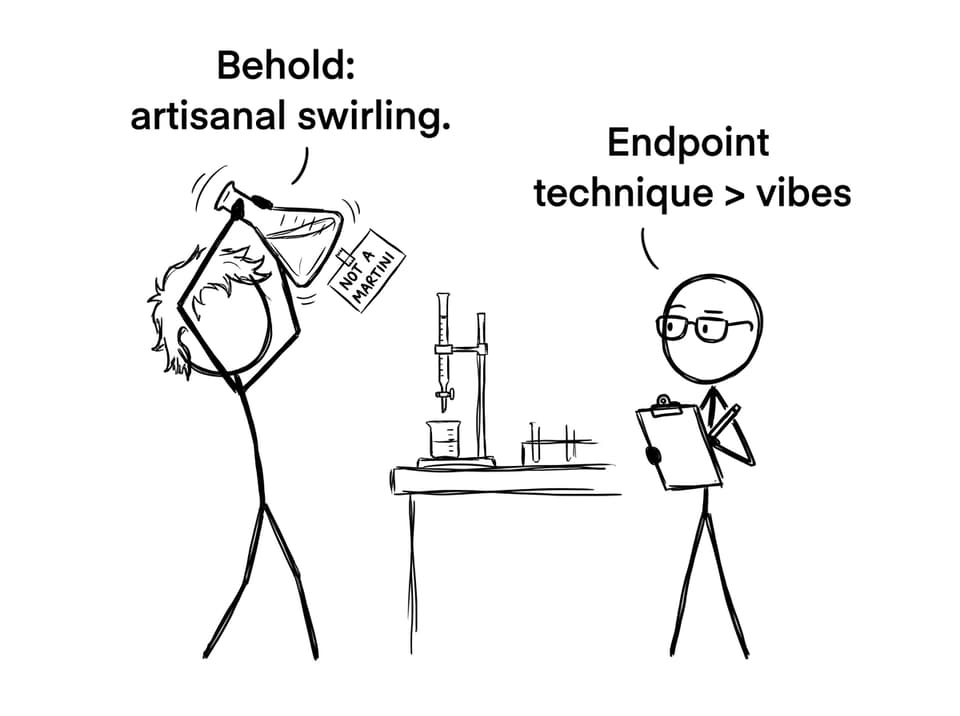
Practice the same micro-habits each time: rinse with the solution you’ll use, remove air bubbles from the burette tip, read at eye level, and swirl the same way for every run.
For targeted practice and feedback, RevisionDojo’s IB Chemistry Questionbank trains you on the exact kind of concentration and technique logic that underpins titration work.
Equilibrium and lab write-ups: clarity beats creativity
Equilibrium experiments often look simple, then become messy when you have to explain what “shift” means using evidence.
If you struggle with structure, borrow one and reuse it.
This guide is built for that: How to Write an Equilibrium Lab Report in Chemistry.
And if you need a quick concept refresher to support your discussion, pair it with Why Does Changing Concentration Shift the Equilibrium Position?.
Data analysis and uncertainties: where marks quietly hide in IB Chemistry
Good practical marks in IB Chemistry often come from what happens after the experiment.
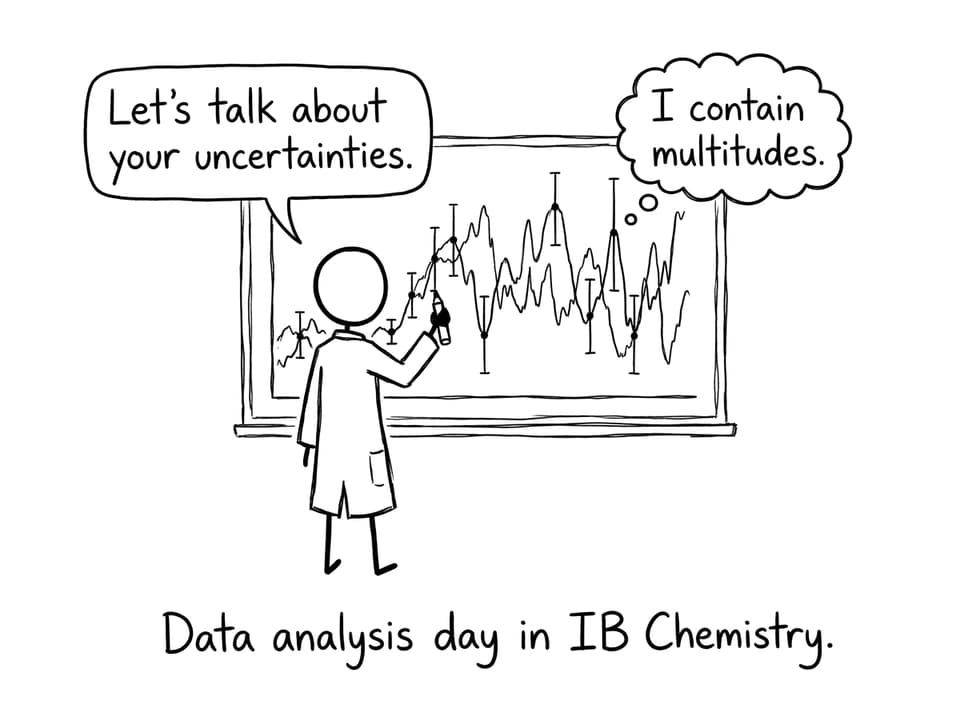
Treat uncertainty like a language you learn to speak fluently: you state it, you propagate it, and you interpret whether differences are significant.
Start with RevisionDojo’s explanation of the “why” behind it: Why do uncertainties accompany all experimental measurements?.
Then go one step more exam-ready by drilling the topic hub: Uncertainties and errors in measurement and results (11.1).
Write lab reports like an examiner is scanning, not reading
A strong IB Chemistry report is easy to mark.
Use headings that make your thinking visible: aim, variables, method, raw data, processed data, conclusion, evaluation.
In evaluation, don’t write “human error.” Write the mechanism: parallax on burette readings, heat loss to surroundings in calorimetry, timing lag in kinetics.
If your IA is approaching, use RevisionDojo’s IB Chemistry Internal Assessment Guide for criterion-based expectations, and explore real standards through the Chemistry IA Examples library.
Practice practical questions the smart way
Lab skills improve fastest when you simulate the pressure you’ll face in IB Chemistry exams: short time, unfamiliar data, and marks awarded for interpretation.
Build mini-sets in RevisionDojo’s ecosystem: use the Questionbank feature to target weak areas, then review with Flashcards and Study Notes inside IB Chemistry Resources.
If you want a guided loop, RevisionDojo’s AI Chat and Grading tools can check explanations the way a markscheme does, and Predicted Papers and Mock Exams help you practice decision-making under time.
Conclusion: make IB Chemistry practical work your calm advantage
If IB Chemistry sometimes feels unpredictable, your lab skills are the part you can make predictable.
Master a few core techniques, treat uncertainties as a skill (not an afterthought), and write reports that make your thinking easy to mark.
When you’re ready to turn practice into points, RevisionDojo ties it all together with its Questionbank, Study Notes, Flashcards, AI Chat, Grading tools, Predicted Papers, Mock Exams, Coursework Library, and Tutors, built to help IB Chemistry students improve faster, with less guesswork.