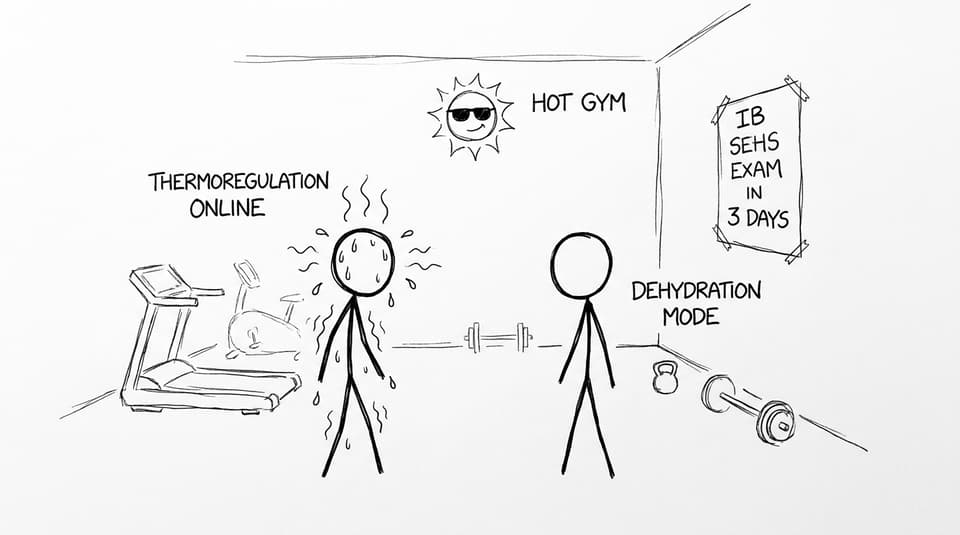
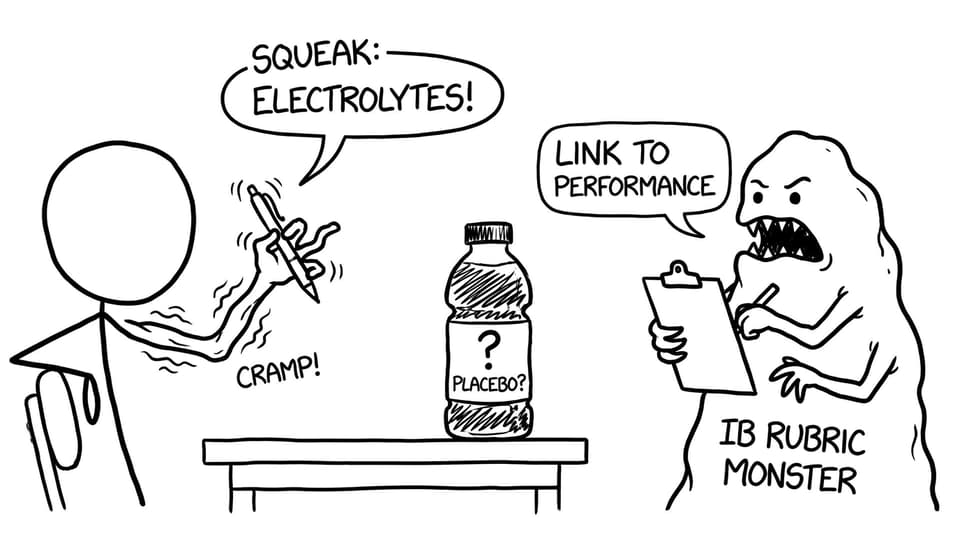
In the last five minutes of a hard session, everything feels louder: your breathing, your heartbeat, your thoughts. Sometimes the problem is fitness. Sometimes it’s simpler--you just ran out of water.
In IB SEHS, dehydration during exercise is one of those topics that looks straightforward until you’re asked to explain why performance drops. The best answers don’t list symptoms. They trace a chain of causes: fluid loss leads to physiological strain, which leads to fatigue, heat stress, and slower decision-making.
IB SEHS quick checklist: what dehydration changes
Use this quick structure in IB SEHS short and extended responses:
-
Sweat loss reduces total body water
-
Plasma volume decreases (lower blood volume)
-
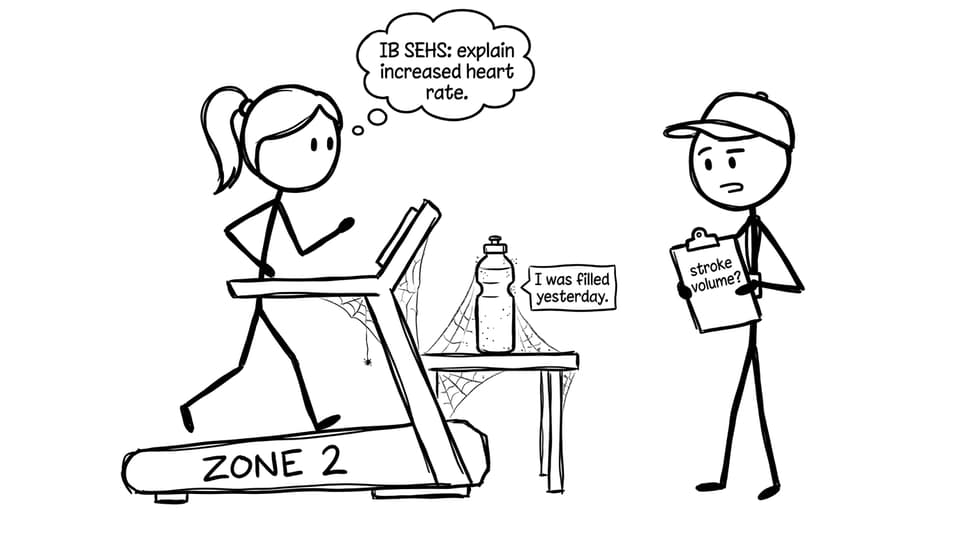
Stroke volume falls and heart rate rises to maintain cardiac output
-
Sweat rate can drop, so core temperature rises
-
Electrolyte balance shifts, affecting nerve and muscle function
-
Perceived exertion increases, so pace and skill execution decline
For the syllabus-aligned core content, start with A.2 Hydration and nutrition and then drill the details in A.2.1 Water and electrolyte balance.