


Digital Society feels like the air you breathe (and that’s the point)
The first time most students truly notice “digital society” is the moment something goes wrong.
A feed that suddenly turns hostile. A school device that starts tracking. A job application filtered by software you’ll never meet. You can live inside these systems for years and still miss how much they shape your choices, until the day a small glitch exposes the machinery.
That is exactly why Digital Society has become a newer DP subject in Individuals and Societies, and why so many students ask the practical question: can I write my EE in it?
Yes. You can write an EE in Digital Society. In fact, Digital Society is available as an Extended Essay subject in both the Subject-Focused and Interdisciplinary pathways. The bigger question is whether your idea can be narrowed into a researchable question, with a method that fits the subject.
If you’re trying to pick the right EE subject and want a calm, exam-smart plan, this guide walks you through what Digital Society is, what a strong Digital Society EE looks like, and how to avoid the traps that waste weeks.
Quick checklist: Should you choose a Digital Society EE?
Use this as a fast filter before you commit your EE to Digital Society.
- You’re curious about a real digital system (platform, policy, algorithm, workplace tech, database, surveillance tool)
- You can access credible sources (and ideally at least some primary data like interviews, surveys, content analysis, or policy documents)
- Your question is arguable (it requires evaluation, not just description)
- You can define your key terms clearly (misinformation, democracy, automation, identity, bias, privacy)
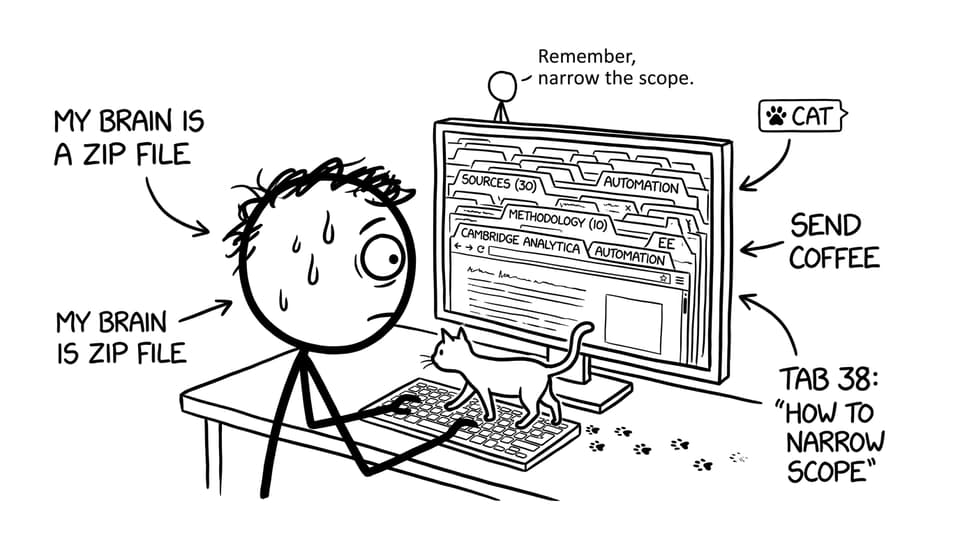
- You can keep the scope small enough for 4,000 words
- You’re willing to discuss ethics and limitations honestly (IB loves honest evaluation)
If that list feels doable, a Digital Society EE can be one of the most interesting things you write in the DP.
To ground yourself in the subject, start with RevisionDojo’s overview: What Is IB Digital Society?
What is Digital Society in the IB?
IB Digital Society is an Individuals and Societies subject that studies how digital systems affect people and communities. It’s not a “learn to code” course. It’s more like learning to see the invisible rules.
You look at how digital technologies shape:
- power and participation (who gets heard, who gets filtered out)
- ethics (what should be allowed, and by whom)
- identity and culture (how people present themselves, and how they’re categorized)
- politics and social cohesion (polarization, persuasion, propaganda)
- work and economic life (automation, surveillance, gig platforms)
This makes Digital Society naturally EE-friendly because the world supplies endless case studies, and the subject rewards critical inquiry.
If you’re currently taking the course, RevisionDojo’s Digital Society hub is a solid starting point: IB Digital Society Resources
And if you want to build the habit of using real examples properly (instead of dumping them into paragraphs), read: Using Case Studies for Better Learning in Digital Society
Can you write an EE in Digital Society?
Yes, you can write an EE in Digital Society.
Digital Society is a newer DP subject in the Individuals and Societies group, and it is available as a subject for the Extended Essay in both the Subject-Focused and Interdisciplinary pathways.
That matters because students often confuse “new subject” with “not allowed.” The subject is allowed, and the guide even includes example directions such as:
- democracy in an age of misinformation (for example, using a Cambridge Analytica case study)
- the transformation of factory work by automation
But permission isn’t the hard part. The hard part is designing a question and method that stays inside Digital Society rather than drifting into vague commentary.
A Digital Society EE should feel like you’re investigating a system, not ranting about technology.
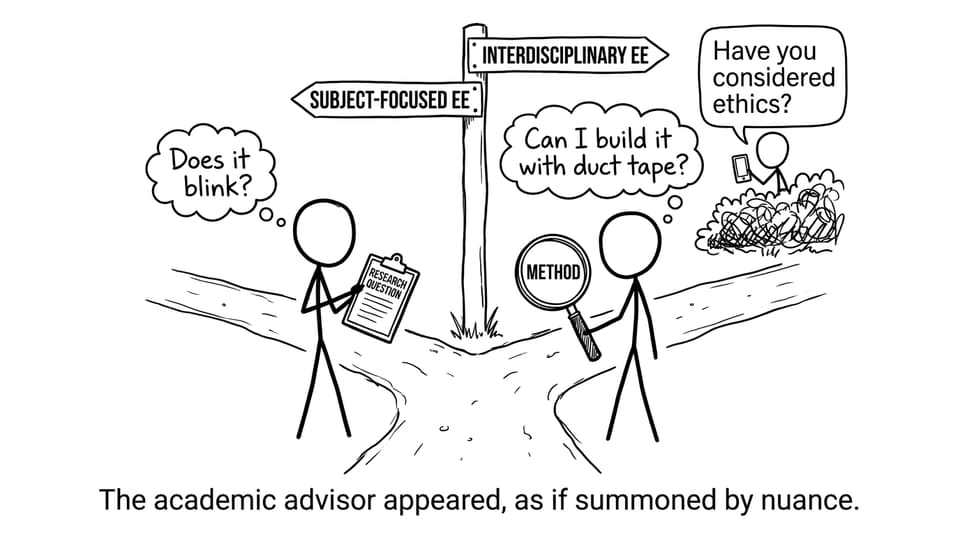
Subject-Focused vs Interdisciplinary: which pathway fits your EE?
The pathway you choose shapes what “good” looks like.
Subject-Focused Digital Society EE
A subject-focused Digital Society EE stays rooted in Digital Society concepts, frameworks, and inquiry practices.
You typically:
- define a digital system clearly
- choose a specific context (place, time period, community, policy environment)
- analyze impacts and implications
- evaluate trade-offs and responses
This pathway is often the safer option for most students because the boundaries are clearer and supervision is simpler.
Interdisciplinary Digital Society EE
An interdisciplinary Digital Society EE combines Digital Society with another subject lens in a structured way.
This can work beautifully when the two disciplines genuinely both matter. For example:
- Digital Society + Economics: platform labor and wage dynamics
- Digital Society + Psychology: persuasive design and adolescent wellbeing
- Digital Society + Global Politics: regulation, rights, governance
But it can also become messy if you treat “interdisciplinary” as permission to be broad.
If you’re still choosing your overall approach, RevisionDojo’s EE resource hub is a good anchor: IB Extended Essay Guides
What makes a high-scoring Digital Society EE topic?
A strong Digital Society EE topic has three things: a specific system, a narrow claim, and a method.
Make the system concrete
“Social media” is not a system. It’s an ocean.
A concrete system looks like:
- TikTok’s recommender system as experienced by a specific user group
- a country’s online political advertising rules during a defined election
- a workplace productivity monitoring tool in one industry
- a school’s proctoring software policy and its effects on student trust
Make the claim arguable
Good EE questions force you to take a position that can be supported, questioned, and refined.
Try stems like:
- To what extent...
- How has...
- In what ways does...
- How effectively...
Make the method visible
Examiners reward work that shows how you reached conclusions.
Possible methods for a Digital Society EE include:
- content analysis (posts, ads, public statements)
- interviews (with consent and ethical care)
- surveys (basic, well-designed, with limitations acknowledged)
- document analysis (policies, transparency reports, court cases)
- comparative case study analysis (two similar contexts, one key difference)
To practice research-question precision, use: How to Craft the Perfect IB Extended Essay Research Question
Topic ideas you can adapt for a Digital Society EE
Below are directions that align with the course and the guide’s style. Notice how each one tries to control scope.
Democracy, misinformation, and persuasion
The guide’s example of democracy in an age of misinformation (including Cambridge Analytica as a case study) works because it’s concrete and historically bounded.
Potential EE-style angles:
- To what extent did microtargeted political advertising influence voter perceptions in a specific election, based on publicly available campaign material and reporting?
- How effectively do transparency policies (like ad libraries) reduce misinformation risk in political advertising?
Automation and the transformation of factory work
The guide’s automation example works because it focuses on a workplace system and measurable impacts.
Potential EE-style angles:
- How has the adoption of automation changed worker autonomy and skill requirements in a specific manufacturing sector?
- To what extent do automated monitoring systems affect worker productivity versus worker wellbeing?
Surveillance, privacy, and power
- To what extent do school device monitoring policies reshape student behavior and trust within a school community?
- How do different privacy frameworks influence the design choices of a specific app category (health, finance, education)?
Identity, bias, and classification
- In what ways do automated content moderation systems affect marginalized creators in a specific platform category?
- How does algorithmic classification shape identity expression in a defined online community?
When you’re building a case-study bank for ideas like these, RevisionDojo helps you keep examples usable instead of chaotic: Using Case Studies for Better Learning in Digital Society
The biggest traps in a Digital Society EE (and how to avoid them)
Trap: writing an opinion piece
A Digital Society EE is not a TED talk transcript. If your draft is full of big claims and thin evidence, your argument will feel like vibes.
Fix it by forcing every paragraph to answer: what is the evidence, and what does it prove?
Trap: scope creep
Digital Society topics expand fast because everything is connected.
Fix it with boundaries:
- one system
- one community or country
- one time window
- one main concept lens
This is also why it helps to learn how the IB rewards focused structure. Start with: Mistakes to Avoid in IB Extended Essays
Trap: weak methodology
Students often say they’ll “analyze misinformation,” but they haven’t defined what counts as misinformation or how they will measure it.
Fix it by operationalising: define indicators you can actually observe.

Trap: ignoring ethics
Digital Society research can touch privacy, identity, and vulnerable groups.
Fix it by:
- using public data when possible
- anonymizing participants
- getting informed consent for interviews/surveys
- acknowledging limitations instead of hiding them
A simple workflow to plan and write your Digital Society EE
A strong EE is built like a system: small loops that compound.
Step one: build your foundation fast
Use RevisionDojo’s Digital Society notes to clarify the concepts you’ll rely on, without rewriting everything.
Start here:
Step two: draft a research question, then attack it
Write a first version of your EE question quickly. Then try to destroy it:
- Is it too broad?
- Can you answer it with the sources you can access?
- Does it demand analysis and evaluation?
If you need a structured process, use: 10 Powerful Steps to Choose an Extended Essay Topic
Step three: plan your evidence before your paragraphs
Create a small table:
- Claim
- Evidence (source + quote/data)
- Analysis (your reasoning)
- Limitation (what the evidence cannot prove)
That table becomes your body.
Step four: get feedback in the right way
RevisionDojo’s ecosystem matters here because it mirrors how IB work improves:
- Study Notes to clarify the concept lens you’re applying
- Flashcards to lock in definitions and key thinkers so your writing stays precise
- AI Chat to stress-test phrasing of your research question and criteria alignment
- Grading tools to see what top-band descriptors actually require
- Coursework Library to compare structure and academic tone
- Tutors when you need human-level strategy on scope and method
If you want a feedback loop designed for IB work, read: IB EE Feedback Tool: Improve Your Extended Essay Score
And when you’re formatting the final draft, use: How to Format Your EE According to IB Guidelines: Tips + FAQ
Closing: Your EE is not a prediction, it’s a process
Digital Society is the study of systems that influence people quietly, at scale. Your EE is similar. It rewards the student who builds small, repeatable habits: define terms, narrow the scope, collect evidence, analyze honestly, revise with intention.
If you want your Digital Society EE to feel less like chaos and more like progress, build your workflow inside RevisionDojo: use the Digital Society Study Notes to clarify concepts, Flashcards to keep your language precise, AI Chat to unblock confusion, Grading tools to align with criteria, and the Coursework Library plus Tutors when you need real feedback.
Start simple: choose one system, write one research question, and make it answerable. Your EE will thank you near the end, when 4,000 words finally feels like a container, not a cliff.