


The difference that quietly decides your grade
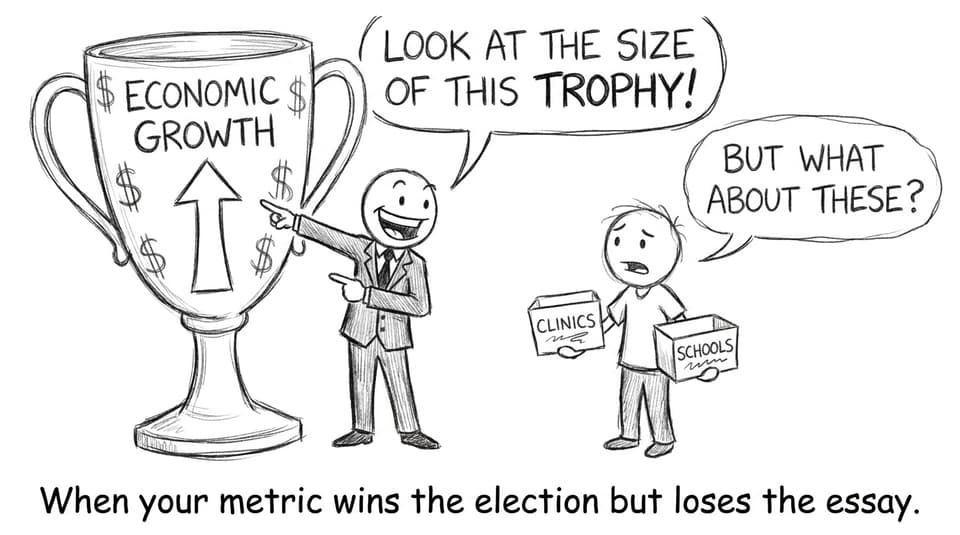
A lot of IB essays fail for a boring reason: the student answers a different question than the examiner asked. In IB Global Politics, this happens constantly with economic development and human development. One sounds like progress, the other sounds like progress too, and under exam pressure they blur into the same idea.
But they aren’t the same. And once you see the gap, your analysis of inequality, justice, sustainability, and state priorities gets sharper almost instantly, especially in IB Global Politics Paper 1 source questions and Paper 2 evaluation.
Quick checklist (what to write in an exam)
Use this as a fast mental plan in IB Global Politics:
-
Define economic development (economy-first)
-
Define human development (people-first)
-
Compare indicators (GDP/GNI vs HDI-style outcomes)
-
Evaluate distribution (who benefits?)
-
Link to political choices (policy priorities, legitimacy, justice)
For syllabus-aligned support, start with IB Global Politics Resources and the IB Global Politics Development and Sustainability unit.
Economic development in IB Global Politics
In IB Global Politics, economic development usually means growth in the economy: higher income, output, productivity, and expanding markets. It is often discussed through indicators like GDP or GNI per capita. The implied story is simple: if a state becomes wealthier, living standards will eventually rise.
Politically, economic development matters because money converts into capacity. States with stronger economies can fund infrastructure, public services, and security, and they often gain bargaining power internationally. But IB Global Politics expects you to question the assumption that growth automatically improves life for everyone.
To deepen this part of your answer, revise indicators and their limits via How Is Development Measured in Global Politics? and the Core Ideas in Development and Sustainability notes.
Human development in IB Global Politics
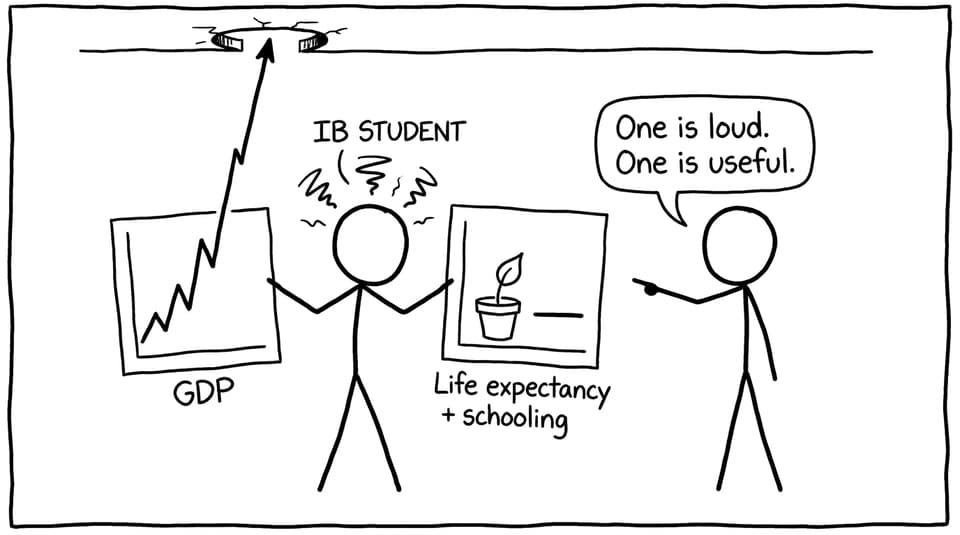
Human development flips the focus. Instead of asking, “How big is the economy?”, it asks, “What can people actually do with their lives?” In IB Global Politics, that means outcomes like health, education, opportunities, equality, and real freedom to make choices.
This approach forces you to talk about distribution. A country can grow rapidly while large groups remain excluded from healthcare, schooling, or political voice. Human development is also closely tied to debates about justice and long-term sustainability: development that destroys the environment or entrenches inequality may raise short-term income while reducing future well-being.
If you want strong examples for essays, connect this to inequality using Does Development Always Lead to Inequality? and How Does Inequality Affect Human Development?. You can also reinforce definitions with the Inequality notes.
The real exam difference: values, not vocabulary
Here’s the key IB Global Politics move: show that measurements reflect priorities.
Economic development indicators value market output and national income. Human development indicators value lived outcomes and capabilities. That difference is political, because governments choose what to measure, what to fund, and which groups count as “successful.” Even the same policy (say, a megaproject) can look impressive economically while remaining disappointing in human development terms if the benefits concentrate among elites.
To practise writing this kind of evaluation under pressure, use IB Global Politics Paper 2 Guide Notes and IB Global Politics Paper 1 Guide Notes.
A simple way to remember it (and use RevisionDojo)
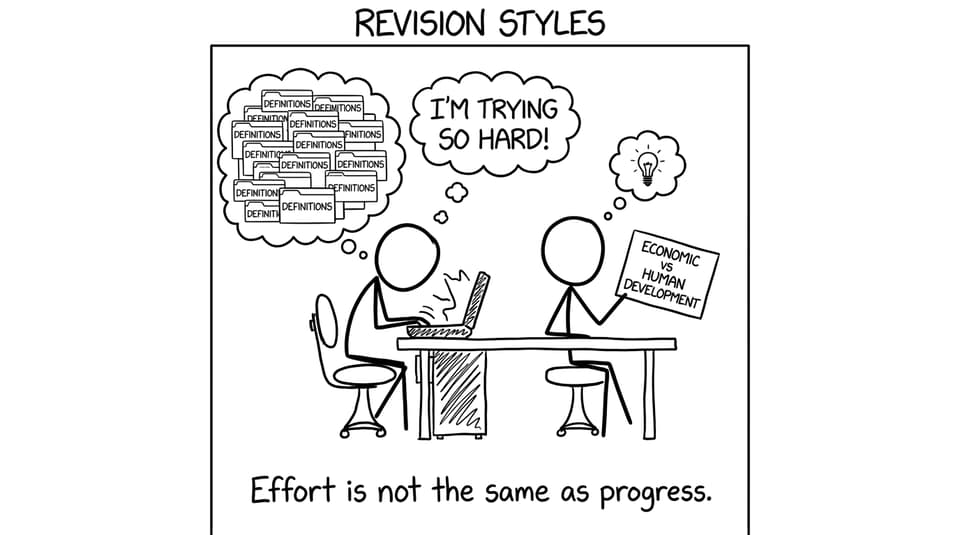
In IB Global Politics, economic development asks: How much wealth is created? Human development asks: How well do people live? Your best exam answers show both, and then explain why the gap between them is where politics happens.
When you revise, lean on RevisionDojo as your all-in-one IB system: Study Notes for clean definitions, Flashcards for fast recall, Questionbank practice for exam phrasing, and AI Chat plus Grading tools to tighten your evaluation. Add Cheatsheets, Predicted Papers, Mock Exams, the Coursework Library, and Tutors when you want that final layer of confidence before exam day.