


The moment your phone decides your mood
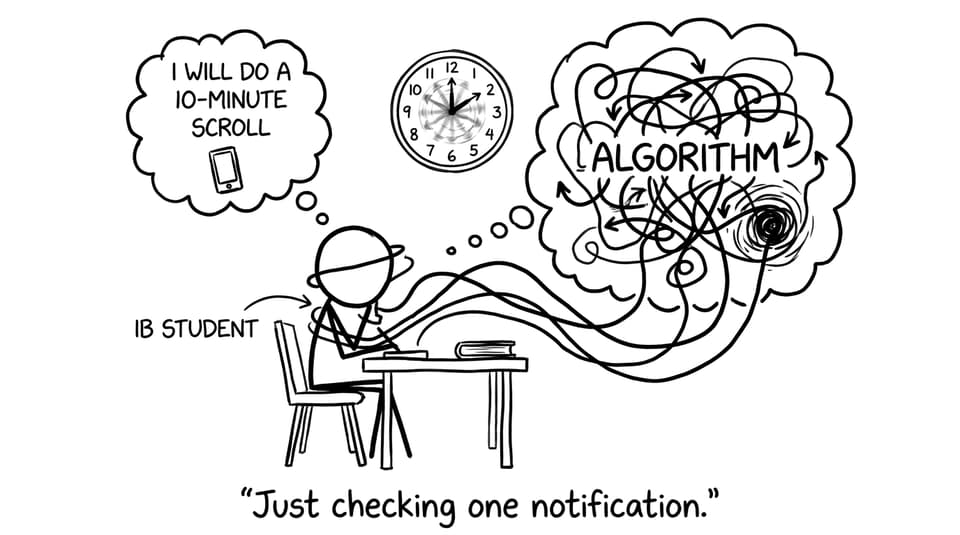
You sit down to revise, open your laptop, and promise yourself you will be “responsible.” Ten minutes later, you are deep in a feed you did not choose, thinking about people you do not know, feeling oddly behind on a life you were not living five minutes ago.
That quiet emotional shift is exactly why IB Digital Society treats digital wellbeing and mental health as more than personal self-control. In IB Digital Society, digital wellbeing is a system outcome. It is shaped by design choices, business incentives, algorithmic ranking, and power relationships that are often invisible to users.
This post explains how to write sharp, exam-ready analysis of digital wellbeing and mental health in IB Digital Society, without turning your response into generic advice about “screen time.”
Digital wellbeing checklist (fast exam framing)
When a question hints at wellbeing, use this quick checklist to keep your IB Digital Society response concept-driven:
-
Define digital wellbeing as impacts of digital systems on mental and emotional health.
-
Identify specific design features (notifications, metrics, ranking, infinite scroll).
-
Analyse impacts on individuals and communities.
-
Locate power and responsibility (platforms, users, institutions).
-
Evaluate ethical trade-offs (engagement vs duty of care, informed consent).
-
Add a balanced judgment: harms and benefits, plus uncertainty.
If you want a broader course refresher before you revise wellbeing, start with What Is IB Digital Society?.
What digital wellbeing means in IB Digital Society
In IB Digital Society, digital wellbeing refers to how digital systems influence mental, emotional, and psychological health. It includes attention, stress, self-esteem, belonging, anxiety, and even the felt pressure to be “always on.”
Crucially, IB Digital Society asks you to treat wellbeing as something produced by systems, not just by individual choices. So instead of writing “people should use their phones less,” you examine how:
-
engagement-driven design nudges prolonged use
-
ranking systems change what people believe is normal
-
popularity metrics (likes, views) shape self-worth
-
constant alerts restructure time and attention
If you ever struggle to keep your language precise, the IB Digital Society Glossary: Key Terms Students Must Know is a reliable way to sharpen definitions before an exam.
Mental health in IB Digital Society: why scale changes everything
Mental health matters in IB Digital Society because digital systems operate continuously and at scale. A harmful feature does not affect one person in one room. It can affect millions, across time zones, with no clear moment where responsibility is “handed over.”
This is also why exam answers that blame users usually underperform. Examiners reward students who show how responsibility is distributed between:
-
platform designers and product teams
-
corporate incentives and growth targets
-
policymakers, regulators, and schools
-
users who adapt their behaviour inside the system
To revise this angle properly, read Power and Control in Digital Systems: IB Digital Society Explained and practise applying its ideas to wellbeing examples.
How platform design shapes digital wellbeing (use this in essays)
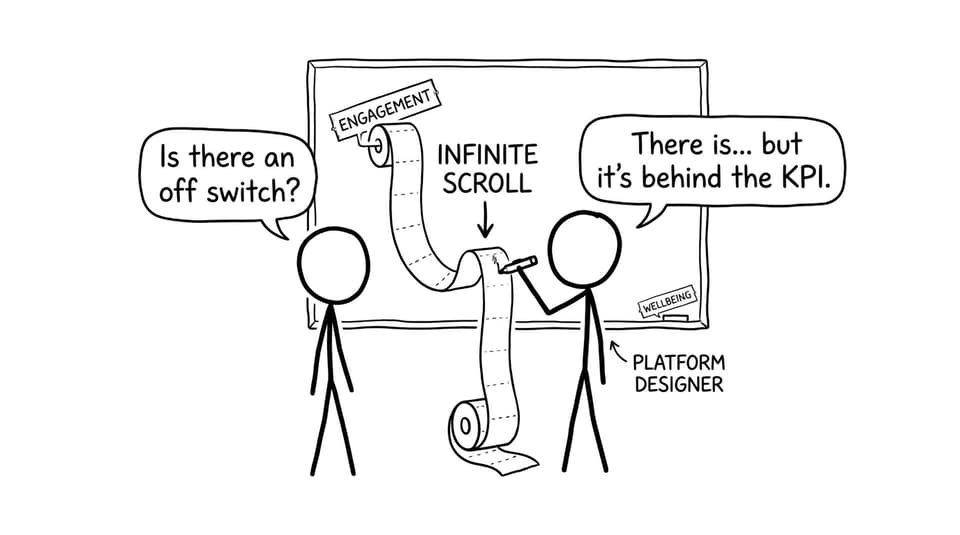
Design is where your IB Digital Society analysis becomes concrete. Many wellbeing harms are not accidental; they are side effects of optimisation for engagement.
Useful design features to analyse:
-
Notifications: create urgency, fragment attention, and train habitual checking.
-
Infinite scroll / autoplay: remove stopping cues, making disengagement harder.
-
Algorithmic ranking: amplifies emotionally intense content and reinforces comparison.
-
Popularity metrics: turn social interaction into quantifiable status.
A strong IB Digital Society paragraph links feature --> behaviour --> wellbeing outcome --> ethical implications.
If you need structured syllabus coverage for wellbeing content, the RevisionDojo lesson hub for 5.1 Global well-being helps you practise the same analysis style the exams reward.
Individual impacts (analyse, don’t diagnose)
In IB Digital Society, you are not diagnosing mental health conditions. You are analysing plausible impacts of system use on users’ emotions, thinking, and identity.
Potential negative impacts you can explain clearly:
-
anxiety linked to constant connectivity and perceived availability
-
reduced focus due to attention fragmentation
-
self-esteem effects from comparison and metric visibility
-
emotional volatility caused by high-arousal content cycles
But balanced analysis matters. Digital systems can also support wellbeing by:
-
offering community and peer support
-
providing access to information and helplines
-
enabling identity exploration and creative expression
A simple way to stay balanced is to write one sentence that begins: “However, in some contexts…” That tiny habit can lift your IB Digital Society evaluation.
Community impacts: wellbeing becomes a social norm
Digital wellbeing is not just personal. Communities develop shared expectations about response time, visibility, and participation.
Community-level impacts you can discuss:
-
normalisation of constant availability in group chats
-
stress contagion (burnout spreading through peer cultures)
-
shifts in how support is offered (public vs private help)
-
polarised community identities reinforced by algorithmic content feeds
These points become more persuasive when you connect them to course thinking skills. If you are revising your overall approach, How to Revise Effectively for IB Digital Society is a good guide for building flexibility with unseen examples.
How to write about digital wellbeing in IB Digital Society exams
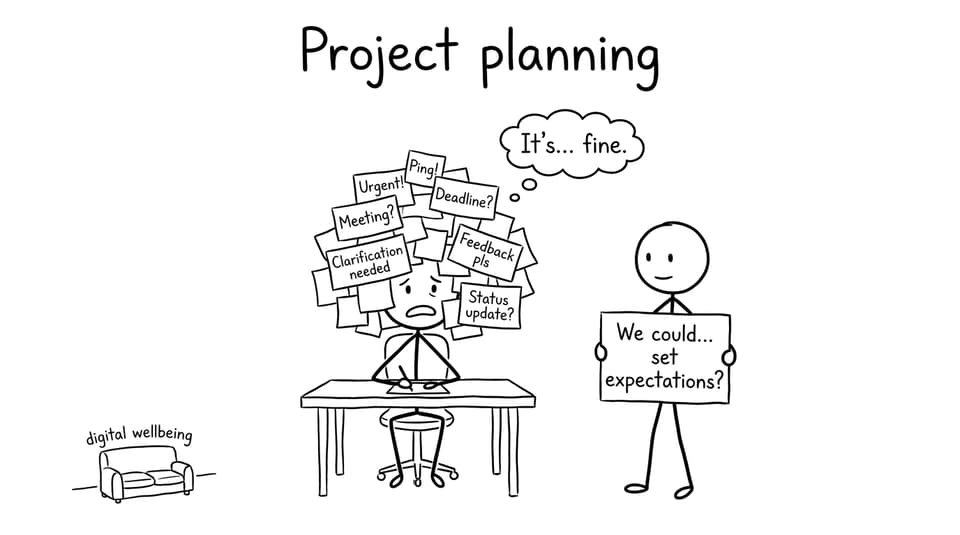
In exams, wellbeing often appears through an unseen scenario: a new app feature, a school policy, a teen platform trend, or a health-related intervention. High-scoring IB Digital Society answers usually do three things:
-
Name the system and key feature(s) before you analyse.
-
Use concepts like power, ethics, values, and responsibility to structure paragraphs.
-
Make evaluation visible: trade-offs, stakeholders, and likely unintended consequences.
If you want a reliable writing framework, use How to Structure High-Scoring IB Digital Society Exam Answers and then test it with question practice from the RevisionDojo Questionbank inside the IB Digital Society Resources hub.
For last-week preparation, pair that with Flashcards for definitions, Study Notes for quick recall, and AI Chat to challenge your reasoning with counterclaims. RevisionDojo also supports Grading tools, Mock Exams, Predicted Papers, and even Tutors when you need feedback that is calm, specific, and markscheme-aware.
Using digital wellbeing for your IA (Inquiry Project)
Digital wellbeing can be an excellent focus in IB Digital Society if you stay specific.
Stronger IA directions usually:
-
focus on one digital system (or one feature) rather than “social media” in general
-
make it possible to evaluate responsibility and interventions
-
include stakeholder perspectives (users, platform, school, policymakers)
If you are planning your question, How to Write a Strong IB Digital Society IA Research Question will help you narrow scope fast.
Closing: treat wellbeing as a design outcome
Digital wellbeing is one of the most human topics in IB Digital Society because it sits at the intersection of attention, identity, power, and ethics. The course is not asking you to panic about technology. It is asking you to see the system clearly, name the incentives honestly, and evaluate responsibility with care.
If you want to turn that clarity into marks, build your revision loop with RevisionDojo: use Study Notes to anchor concepts, Flashcards to keep definitions automatic, the Questionbank to practise unseen scenarios, and AI Chat plus Grading tools to refine your evaluation. Digital wellbeing in IB Digital Society becomes far easier when your analysis has a structure you can trust.
