
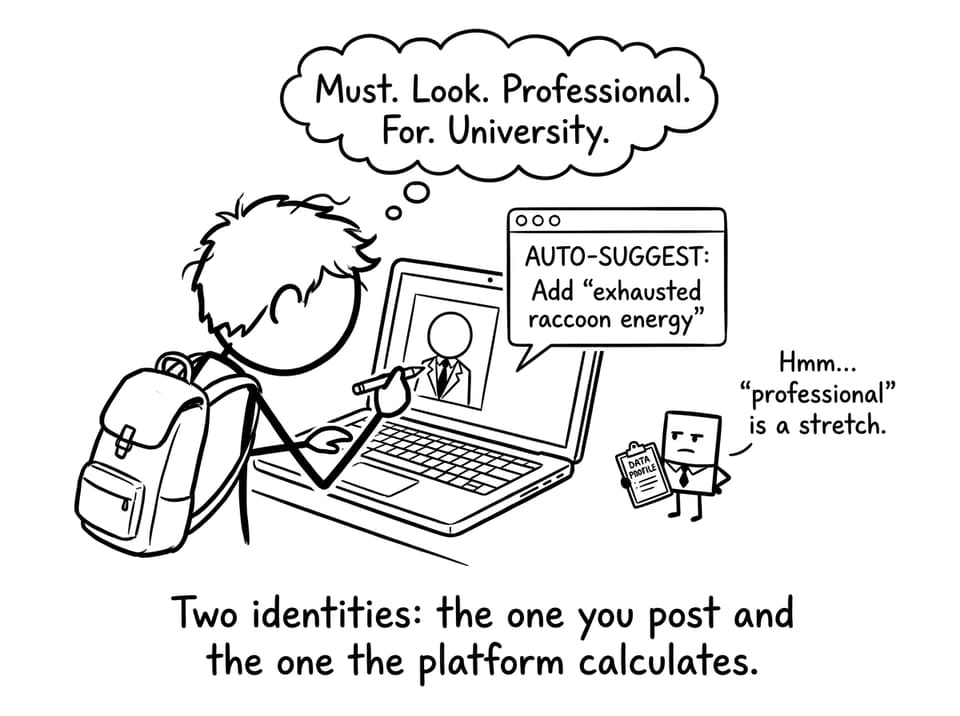
Digital identity is the quiet story you tell about yourself when you are not in the room.
One version is the story you choose: your username, your photos, the posts you delete five minutes after publishing. Another version is assembled without asking: a data profile built from clicks, locations, watch time, and the things you almost bought.
In IB Digital Society, that split matters because it turns identity into something you can analyze, debate, and evaluate. Not as a vague “online persona,” but as a system of representation linked to power, opportunity, and ethics.
Digital identity in IB Digital Society: a simple definition
In IB Digital Society, digital identity is how individuals and groups are represented, perceived, and categorized through digital systems.
That includes two layers you should always name in essays and inquiries:
-
Self-created identity: what users deliberately present (profiles, bios, posts, avatars, handles).
-
System-generated identity: what platforms infer and assign (recommendation labels, risk scores, ad segments, verification status, shadow profiles).
Digital identity is dynamic. It shifts as you change behavior, as platforms update algorithms, and as older data continues to shape predictions about you.
If you want a syllabus-aligned definition to anchor your notes, RevisionDojo’s topic note is a strong starting point: Defining identity in digital society (2.3A notes).
Quick checklist: how to analyze digital identity fast
When an exam question or IA draft mentions digital identity in IB Digital Society, run this checklist:
-
What digital system is involved (platform, database, school tool, government ID system)?
-
What data is collected (voluntary vs passive)?
-
How is identity represented (profile fields, categories, scores, labels)?
-
Who controls visibility (user, platform, employer, state)?
-
Who benefits, who is harmed (stakeholders)?
-
What ethical issue is central (consent, autonomy, fairness, dignity, accountability)?
For extra practice turning these into mark-earning paragraphs, build short sets in the Digital Society Questionbank and use RevisionDojo’s AI Chat to tighten your evaluation.
Self-expression: the identity you curate (and the platform nudges)
The obvious part of digital identity is self-expression: you choose what to post, what to hide, and which community you sound like you belong to.
But IB Digital Society rewards the next step: noticing how “choice” is designed.
Platforms shape identity expression through:
-
Templates (what the profile asks for becomes what counts as “real”).
-
Metrics (likes, follower counts, streaks: identity becomes performance).
-
Defaults (public-by-default, real-name policies, auto-tagging).
-
Affordances (filters, duets, stitches, quote tweets: identity through remix).
A strong answer doesn’t moralize. It explains mechanisms and then evaluates implications: whose self-expression is amplified, whose is punished, and what that does to belonging.
To connect identity to the broader course framing, it helps to revisit the big picture: What is IB Digital Society?.
Assigned identity: the one built from data and algorithms
The less visible layer is the one that often matters more.
System-generated digital identity is created when platforms and institutions:
-
infer your interests and “type” from behavior,
-
rank your credibility or risk,
-
decide what you see (and what never reaches you),
-
connect you to other people through lookalike modeling.
You might feel like you are browsing. The system feels like it is measuring.

In IB Digital Society, this is where the best evaluation lives. If an algorithm misclassifies you, you don’t just get “wrong ads.” You can be nudged away from opportunities, filtered out of visibility, or treated as suspicious.
A useful technical bridge between “identity” and “trust” is understanding how systems prove authenticity. If you are studying verification and authenticity, this pairs well with: Digital certificates and public key infrastructure (PKI).
Power and control: who gets to define “who you are”?
Digital identity becomes a power issue when:
-
Users cannot access, correct, or contest their data profiles.
-
Identity categories are opaque (the “why” is hidden behind proprietary logic).
-
Automated decisions affect real-world outcomes (schooling, employment, policing, finance).
In IB Digital Society, don’t stop at “companies have power.” Identify the specific lever of control: data ownership, ranking systems, content moderation, terms of service, or the ability to link identities across platforms.
A good way to widen your lens is to connect identity to course concepts and themes across the syllabus. RevisionDojo’s overview helps you do that quickly: How all the core concepts fit together and Key themes in IB Digital Society explained.
Inclusion and exclusion: identity is not experienced equally
Digital identity can create community for marginalized groups, especially when offline spaces are unsafe.
But exclusion is also built into digital identity systems:
-
Facial recognition and verification processes may fail for some groups more than others.
-
Language, documentation, and device access shape who can “exist” in a system.
-
Moderation and ranking can silence certain dialects, political speech, or cultural expression.
High-band IB Digital Society responses show uneven impacts. They compare contexts: not just “social media,” but which platform, which policy, which community, and which consequences.
If you want a strong course-level hub for targeted revision, start here: IB Digital Society resources.
How to use digital identity in exams (without sounding generic)
Exams often reward specificity: digital identity is never just “people act differently online.”
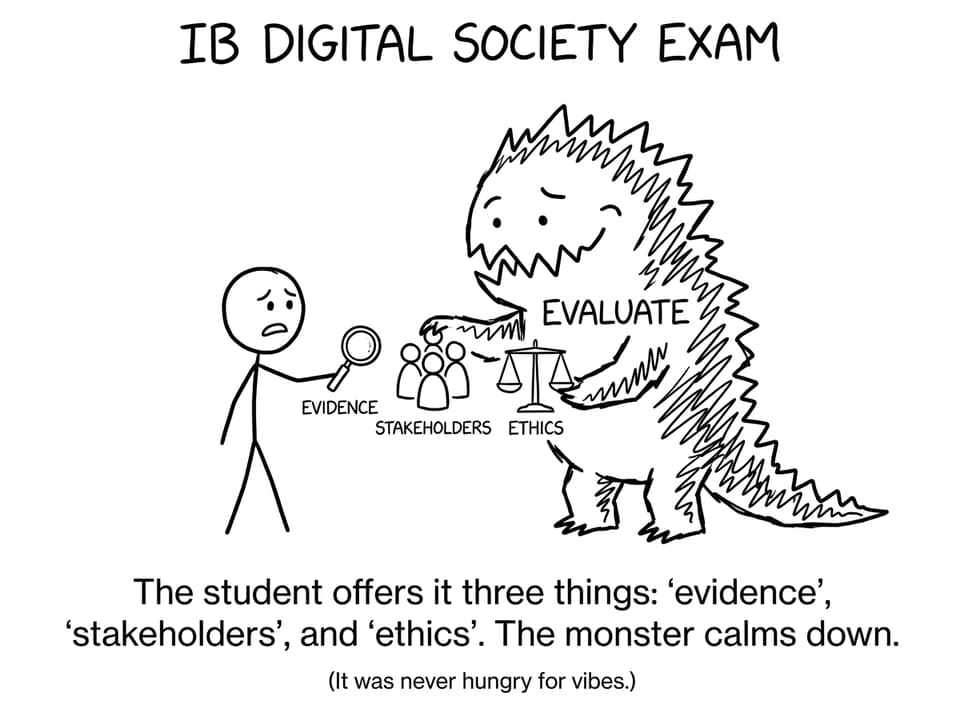
Instead, structure responses like this:
-
Define digital identity in IB Digital Society (self-created + system-generated).
-
Name the system (e.g., a platform’s recommender, a school proctoring tool, a government digital ID).
-
Explain a concrete impact on people/communities.
-
Evaluate ethically (trade-offs, who benefits, who is harmed, what safeguards exist).
Practice this under time pressure using RevisionDojo’s Digital Society topic pages, such as Topic 2: Concepts questionbank. Then use RevisionDojo’s Grading tools and AI Chat to rewrite one paragraph into a top-band evaluation.
Digital identity in the IA: how to make it focused
Digital identity is strong for the IB Digital Society IA when the digital system clearly:
-
constructs or assigns categories,
-
changes visibility or opportunity,
-
produces ethical tensions you can evaluate with evidence.
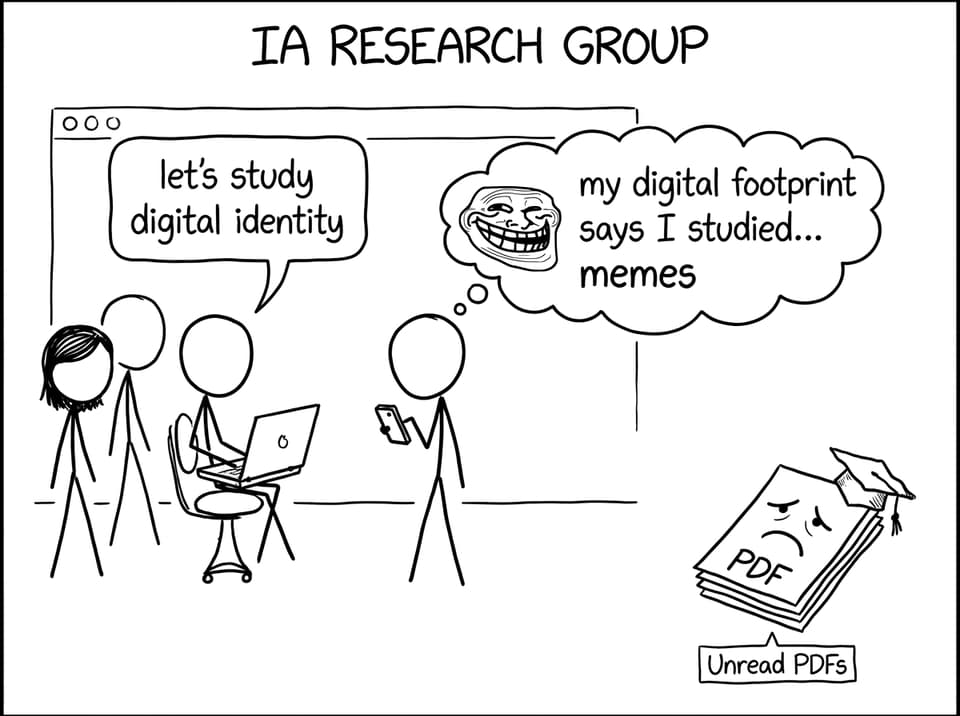
Avoid “social media affects identity” as a topic. Narrow it to a system feature and a stakeholder group.
If you are still shaping your question, use this guide: How to write a strong IB Digital Society IA research question. Then build your research toolkit using RevisionDojo’s Study Notes, Flashcards, and Coursework Library to keep evidence organized.
Conclusion: make digital identity earn marks
In IB Digital Society, digital identity is not a side topic. It is a doorway into the course’s biggest questions about technology and culture, data and power, inclusion and ethics.
If you revise it well, you get a reusable lens for unseen exam prompts and a focused angle for the IA. Build your foundation with RevisionDojo Study Notes, lock key terms with Flashcards, pressure-test your writing in the Questionbank, and use AI Chat plus the Grading tools to turn “good points” into evaluated arguments. When digital identity shows up again -- and it will -- you’ll be ready to explain not only who people say they are, but who the system insists they must be.


