

Digital rules are like invisible architecture. You only notice them when you hit a wall.
A video gets removed. An app is banned. A facial recognition system is paused after public backlash. Suddenly, “the internet” stops feeling like a neutral space and starts looking like what it really is: a set of choices about power, values, and responsibility.
That is why IB Digital Society treats digital governance and regulation as a living social process, not a dry legal footnote. In exams, the strongest answers show how rules are made, who benefits, who is harmed, and what trade-offs are being defended.
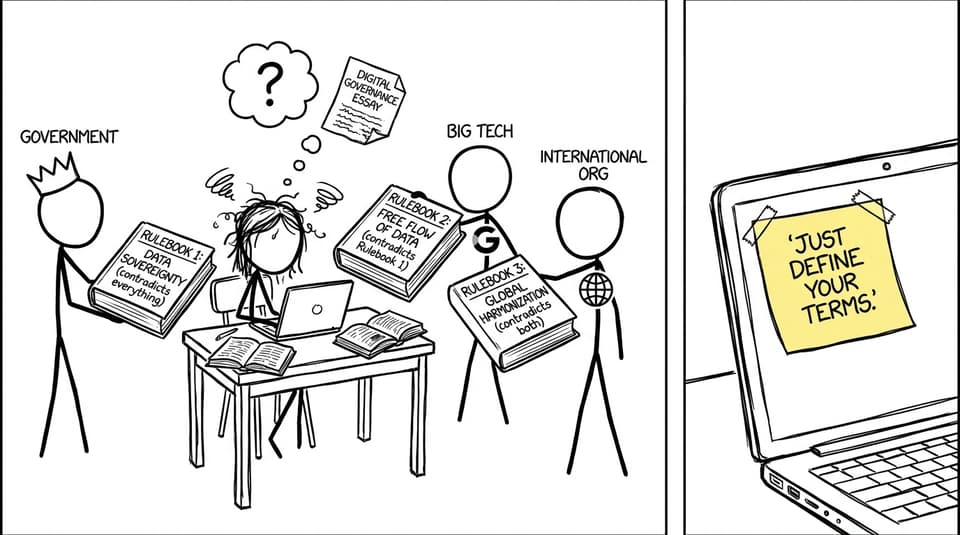
Digital governance in IB Digital Society: the exam-ready meaning
In IB Digital Society, digital governance means the frameworks and decision-making processes that shape how digital systems are designed, used, moderated, and held accountable. Governance includes formal regulation, but also the quieter forms of control that students often forget to mention.
A high-scoring IB Digital Society definition usually covers both:
-
Formal governance: laws, court decisions, regulatory agencies, standards
-
Private governance: platform rules, content moderation policies, app-store policies
-
Hybrid governance: co-regulation, public-private partnerships, industry codes
-
Informal governance: social norms, user practices, “accepted” online behavior
If you want tight language for essays, keep the terminology sharp using the IB Digital Society Key Definitions.
A quick checklist for analyzing regulation (use this in Paper responses)
When an unseen source mentions a policy, ban, algorithm change, or new law, run this simple IB Digital Society checklist:
-
What is being governed? (data collection, content, AI decisions, cybersecurity)
-
Who are the actors? (state, company, international org, civil society)
-
What form of power is used? (legal authority, economic leverage, technical design)
-
What is the goal? (safety, rights protection, national security, profit)
-
Who is affected and how? (individual rights, community trust, inequality)
-
What trade-offs appear? (privacy vs security, free expression vs harm reduction)
-
How will it change over time? (reactive policy, loopholes, enforcement problems)
To build source-analysis habits, practice with DS-style prompts in the Digital Society Questionbank and filter by the governance-related subtopics.
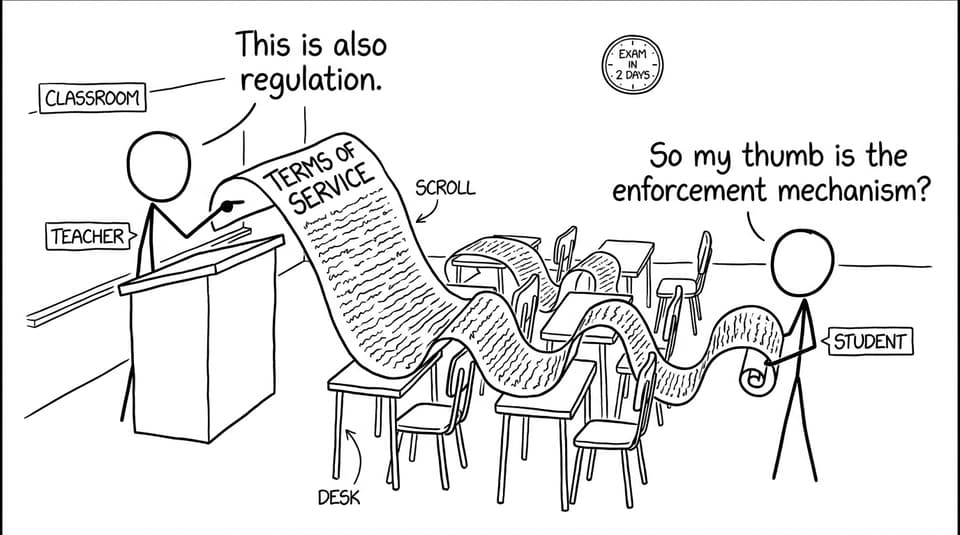
Why regulation matters in IB Digital Society (beyond “we need laws”)
Digital systems scale fast, cross borders easily, and often operate through opaque design choices. Regulation matters because it creates boundaries for digital power and defines what accountability looks like when harm happens.
In IB Digital Society, you can usually argue regulation matters because it:
-
Limits concentrated power (especially where platforms become “gatekeepers”)
-
Protects rights (privacy, data protection, non-discrimination)
-
Creates accountability (who can audit, who can challenge decisions)
-
Shapes innovation (what is permitted, incentivized, or restricted)
A strong answer avoids slogans. Instead of “regulation is needed,” explain what kind of regulation, by whom, and with what enforcement tools.
Governance actors and power: who really sets the rules?
A core move in IB Digital Society is identifying governance actors and mapping power between them. Digital governance is rarely controlled by one group.
Key actors include:
-
Governments and regulators: set laws, investigate, fine, or ban
-
Technology companies: design systems, set platform rules, control data access
-
International organizations: propose cross-border standards and coordination
-
Civil society and journalists: expose harms, push transparency, shape public pressure
In exams, you get extra credit (conceptually) when you show power imbalances. For example, a regulator might have legal authority, but a company may have technical advantage (knowledge, data, speed) that weakens enforcement.
To connect governance to “systems thinking,” the Understanding Systems in IB Digital Society article is a useful companion.
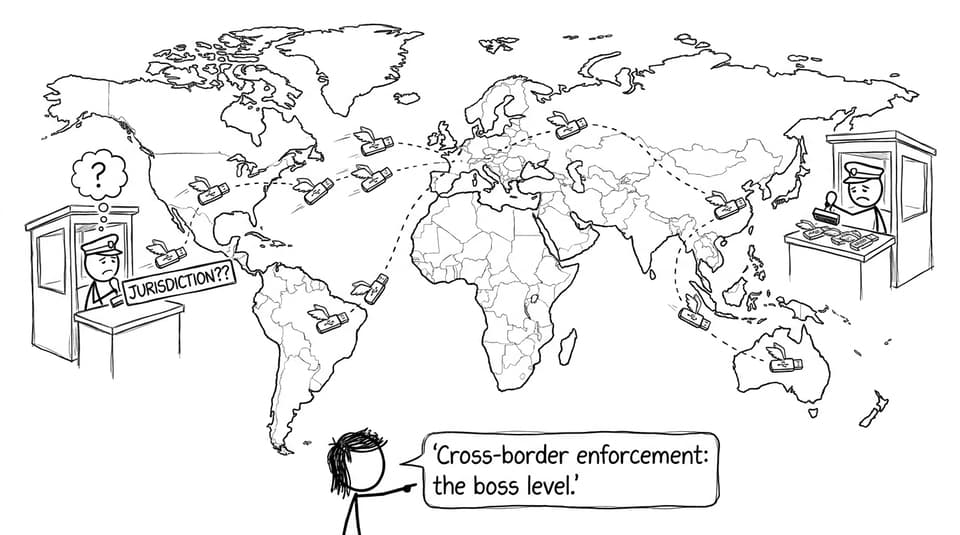
Why regulating digital systems is uniquely difficult
Many essays become unrealistic because they assume regulation is simple. IB Digital Society rewards students who explain why it is hard.
Common obstacles:
-
Cross-border enforcement: laws are national; platforms are global
-
Rapid change: technology shifts faster than policy cycles
-
Transparency gaps: black-box algorithms and proprietary systems limit scrutiny
-
Asymmetric resources: companies can outspend regulators on legal and technical capacity
Impacts on individuals and communities (write both, not just one)
Regulation can protect people, but it can also restrict them. In IB Digital Society, impacts should be evaluated, not assumed.
Individual-level impacts might include:
-
Better privacy protection and clearer consent
-
Safer online spaces through harmful-content restrictions
-
Reduced autonomy if surveillance expands under “security” framing
Community-level impacts might include:
-
Increased trust in digital systems when oversight is credible
-
Unequal outcomes if moderation is biased or inconsistently enforced
-
Exclusion if access requires expensive compliance or identity checks
When you write evaluation, name the stakeholder perspective you are using and justify it.
Ethics and responsibility: the marks come from justification
Ethics in IB Digital Society is not about declaring what you personally like. It is about arguing responsibly.
Good ethical analysis often asks:
-
Who should be responsible for harm: user, developer, platform, state?
-
Is the governance process transparent and accountable?
-
Do the rules align with human rights and shared social values?
If you need structured study support, the Ultimate Survival Guide for IB Digital Society Students pairs well with governance topics because it shows how to turn big issues into repeatable exam skills.
How to train this for exams using RevisionDojo
A calm advantage in IB Digital Society comes from practicing the same thinking pattern until it becomes automatic.
A simple RevisionDojo routine:
-
Learn the concepts with Topic 2 - Concepts - Digital Society
-
Add case-study structure using Notes for Topic 4 - Contexts - Digital Society
-
Drill governance questions in 5.2 Governance and human rights - IB Questionbank
-
Use Flashcards for definitions and stakeholders, AI Chat to test counterarguments, and Grading tools to tighten evaluation language
-
Simulate pressure with Mock Exams and Predicted Papers so your structure holds when time is tight
If you need a broader study loop, How to Study for IB Exams When You Feel Behind is a strong reset.
Closing: turn digital rules into marks
Digital governance is the story of who gets to decide how the digital world behaves. In IB Digital Society, your job is to make that story visible: define the governance mechanism, map the actors and power, analyze impacts, and evaluate trade-offs with ethical justification.
If you want this to feel easier under time pressure, build a tight routine inside RevisionDojo: Study Notes for clarity, Flashcards for definitions, Questionbank drills for exam patterns, AI Chat for counterarguments, Grading tools for sharper evaluation, plus Mock Exams and Predicted Papers to practice structure when it counts. The goal is simple: make IB Digital Society governance answers feel like a practiced skill, not a last-minute opinion.

