
Digital education often arrives quietly.
One day you’re in a classroom with a whiteboard and a half-working marker. The next, your learning is a login screen, a dashboard, and a “your microphone is muted” moment that somehow becomes your personality.
In IB Digital Society, that shift is not just a convenience story. It’s a systems story. And if you’re preparing for exams, learning how to write about digital education and online learning with concepts like power, inequality, and ethics is one of the cleanest ways to score well in IB Digital Society.
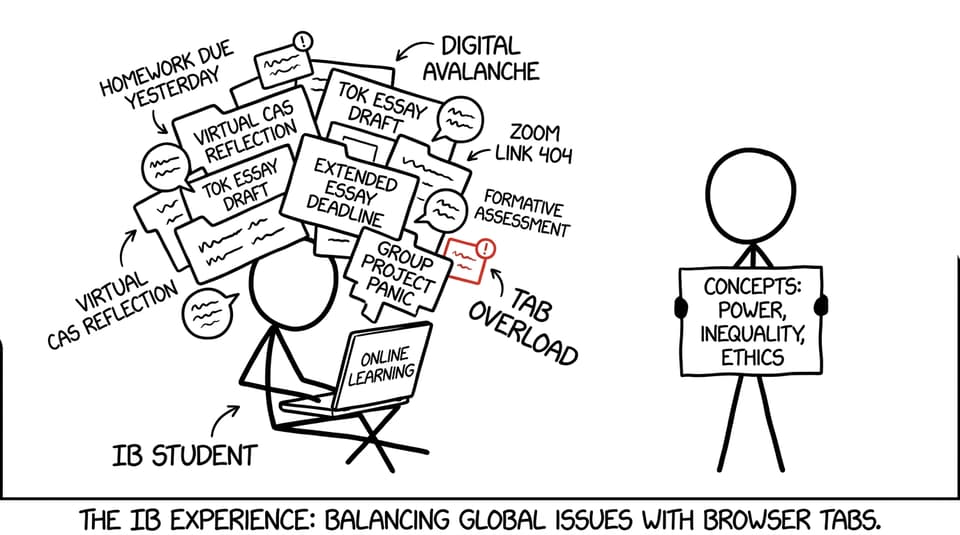
Digital education in IB Digital Society: what it actually means
In IB Digital Society, digital education refers to learning systems that rely on digital technologies to deliver instruction, resources, assessment, or interaction. Think learning management systems (LMS), video lessons, online quizzes, automated feedback, discussion boards, and platform-based classrooms.
The key exam move is this: treat digital education as a designed system, not a neutral tool.
That means you’re expected to ask questions like:
-
Who designed the learning platform, and what problem were they trying to solve?
-
Who controls access to content, pacing, and assessment?
-
Which learners benefit most, and which learners struggle?
-
What ethical trade-offs appear when learning becomes measurable data?
If you want a quick refresher on the course framing, keep What Is IB Digital Society? bookmarked.
Quick exam checklist for online learning analysis
When an unseen stimulus mentions online learning, use this mini checklist to structure your response in IB Digital Society:
-
Define the system: platform, school policy, device ecosystem, assessment method.
-
Identify stakeholders: students, teachers, parents, platform companies, governments.
-
Apply concepts: power, inequality, change, responsibility, sustainability.
-
Separate levels: individual learner impacts vs community/system impacts.
-
Evaluate ethically: privacy, consent, fairness, wellbeing, autonomy.
For more general strategy on building calm, repeatable exam routines, RevisionDojo App: The Smarter Way to Prep for IB Exams is a good companion piece.
Impacts on learners: flexibility meets friction
Online learning can feel like freedom: rewindable lessons, self-paced modules, instant practice. For some students, it removes commuting time, reduces social pressure, and makes feedback more immediate.
But IB Digital Society asks you to notice the hidden costs too. Digital education often shifts responsibility from institution to individual. If you miss a deadline, the system rarely asks why before it records the miss.
Common learner-level impacts worth analyzing:
-
Reduced face-to-face interaction and weaker informal support networks
-
Higher dependence on self-discipline and time management
-
Greater cognitive load from multitasking platforms and notifications
-
Isolation, disengagement, or anxiety when learning becomes solitary
To tighten your writing, pair each impact with a concept (for example, “responsibility” or “change”) and a mechanism (for example, “asynchronous modules reduce real-time teacher intervention”).
Digital inequality: same class, different reality
Digital education can expand access in theory, while narrowing it in practice.
The exam-ready term is digital inequality: uneven access to devices, stable internet, quiet learning spaces, assistive technologies, language support, and digital literacy.
It’s rarely just “some students don’t have laptops.” It’s also:
-
shared devices at home that limit study time
-
data caps that make video learning expensive
-
accessibility barriers for learners with disabilities
-
parents or caregivers who can’t provide technical support
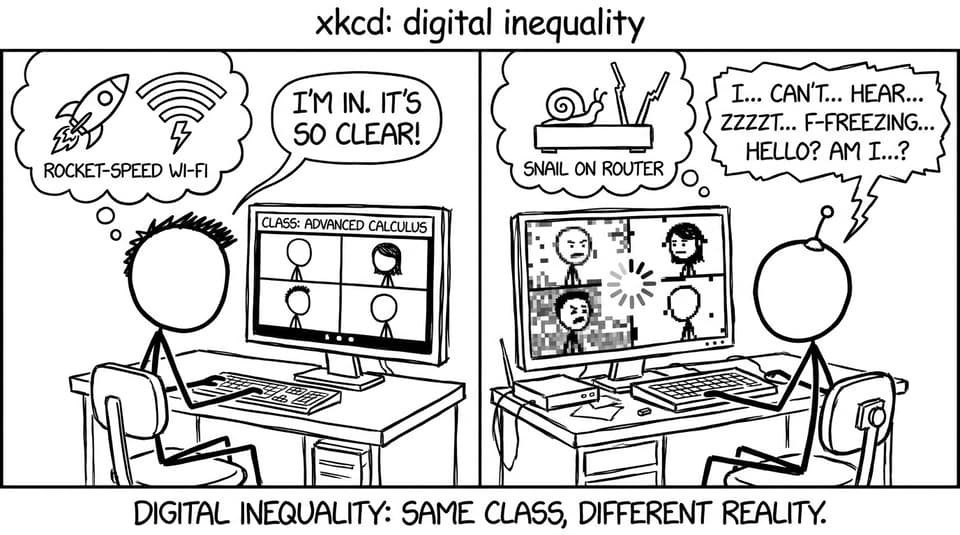
In IB Digital Society, you can evaluate whether a school’s digital shift reinforces inequality (by assuming equal home infrastructure) or reduces inequality (by funding devices, providing offline options, and offering structured support).
Power and control: who owns the classroom when it’s a platform?
A physical classroom has power dynamics. A digital classroom adds new ones.
Platforms can decide what is visible, what is measurable, and what counts as “engagement.” A teacher may still lead learning, but the platform often sets the rules: what data is collected, how content is sequenced, and which behaviors are rewarded.
Strong IB Digital Society analysis looks for control points:
-
platform design choices (defaults, nudges, restrictions)
-
school policies (mandatory cameras, attendance rules, device monitoring)
-
content control (who can publish, remove, or flag materials)
If you want a concept refresher to support this kind of answer, Understanding Change in Digital Society: IB Concept Explained helps you connect digital education to broader system shifts.
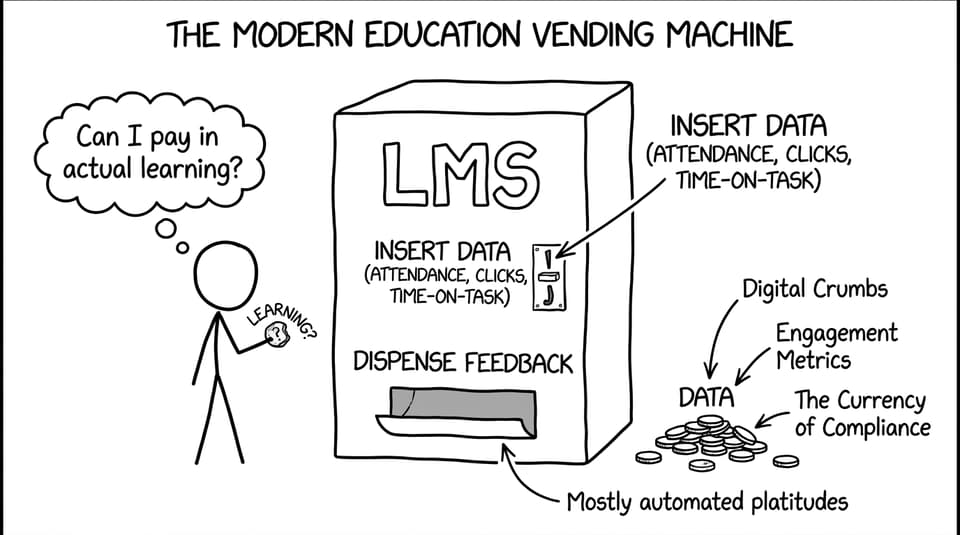
Data collection and surveillance: learning metrics vs learner autonomy
Digital education systems can track clicks, time-on-task, message frequency, quiz attempts, location (sometimes), and more.
In IB Digital Society, the ethical tension is not “data is bad.” It’s that data can improve support and threaten autonomy.
Questions to explore in exam responses:
-
Did students meaningfully consent to monitoring, or was it bundled into attendance?
-
Who can access the data: teachers, administrators, third-party providers?
-
How long is it stored, and for what secondary purposes?
-
Does surveillance change behavior, reducing creativity and risk-taking?
When you write evaluation, show balance: acknowledge benefits (early intervention, personalized feedback) while assessing risks (privacy erosion, stress, unfair profiling).
How to revise this topic efficiently with RevisionDojo
If your notes feel scattered across apps, treat your revision like the digital systems you’re studying: build a workflow.
A simple loop inside RevisionDojo:
-
Use Study Notes to learn the vocabulary and concepts quickly (see Digital IB Study Notes: Access Anywhere, Anytime).
-
Turn definitions and case-study evidence into Flashcards for active recall.
-
Train exam technique with the Questionbank: Questionbank.
-
When you’re stuck, ask AI Chat to explain the concept in simpler steps (then immediately apply it).
-
Simulate pressure with Mock Exams and Predicted Papers (see IB Predicted vs Specimen Papers: What They Mean and IB Predicted Papers by IB Examiners (Free)).
-
For coursework links, use the Coursework Library and Grading tools as you draft and refine.
-
If you need human strategy, add Tutors for targeted feedback.
For subject-specific practice pathways, start from the IB Digital Society Resources hub or browse all IB Digital Society posts.
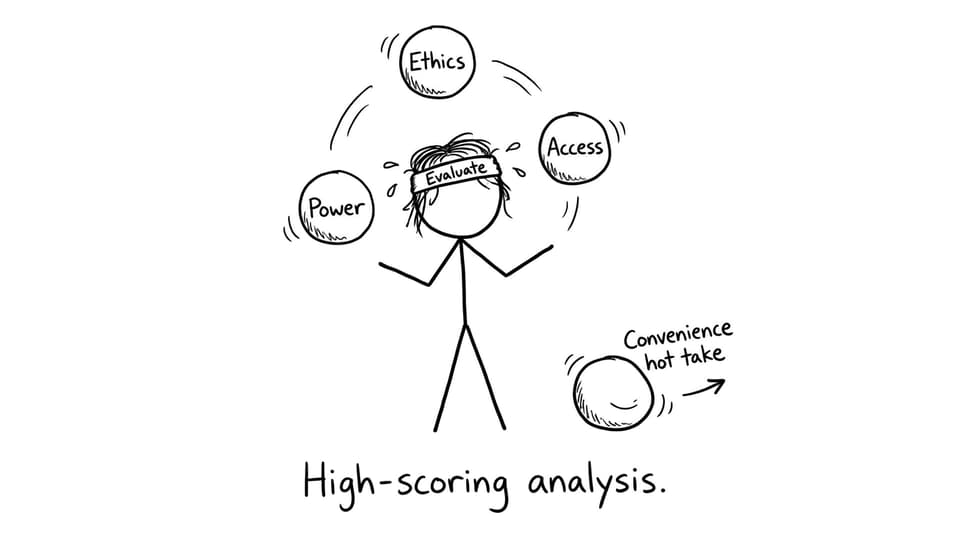
Closing: turn online learning into exam leverage
Digital education is not a side topic in IB Digital Society. It’s one of the clearest windows into how digital systems reshape power, widen or reduce inequality, and introduce ethical trade-offs through data.
If you want this topic to feel predictable on exam day, build repetition: read one focused note, drill questions, write one short evaluation paragraph, and repeat. RevisionDojo makes that loop easier with Study Notes, Flashcards, AI Chat, the Questionbank, Grading tools, Mock Exams, Predicted Papers, a Coursework Library, and Tutors.
Treat IB Digital Society the way it asks you to treat technology: as a system you can understand, question, and use intentionally.


