


Digital money is weird in the same way Wi-Fi is weird: you only notice it when it fails.
One day you tap your phone for a snack and it feels like magic. The next day the payment terminal is down and suddenly you’re holding a plastic card like it’s an ancient artifact. That small moment is exactly why IB Digital Society treats digital currency and financial technology (fintech) as more than “innovation.” It’s about how a digital system reorganizes power, trust, surveillance, and inclusion.
If you’re revising IB Digital Society for exams, your job isn’t to explain cryptography or how banks code their apps. Your job is to analyze who benefits, who gets left out, and who gains new control when money becomes data.

Quick checklist: what exam answers should hit (IB Digital Society)
Use this as a fast mental template for any fintech or digital currency stimulus in IB Digital Society:
-
Define the digital system (app, platform, payment network, ID layer, credit scoring model).
-
Identify stakeholders: users, banks, governments, merchants, data brokers.
-
Track data flows (what’s collected, stored, shared, inferred).
-
Analyze impacts on individuals and communities.
-
Evaluate power (who can decide, block, rank, or exclude).
-
Evaluate ethics (privacy, consent, fairness, accountability).
To build the core course framing, keep What Is IB Digital Society? open while you revise.
What “fintech” means in IB Digital Society
In IB Digital Society, fintech is any digital system that automates or mediates financial activity: payments, lending, remittances, budgeting, insurance, fraud detection, and even customer support bots. The point isn’t the feature list. The point is the social consequence.
Fintech systems often:
-
Turn transactions into behavioral data
-
Replace face-to-face discretion with automated decisions
-
Shift trust from institutions to platform design
When you practice applying course concepts, RevisionDojo’s IB Digital Society Resources hub helps you move from “I understand it” to “I can write it under pressure” using Study Notes, Flashcards, and exam-style practice.
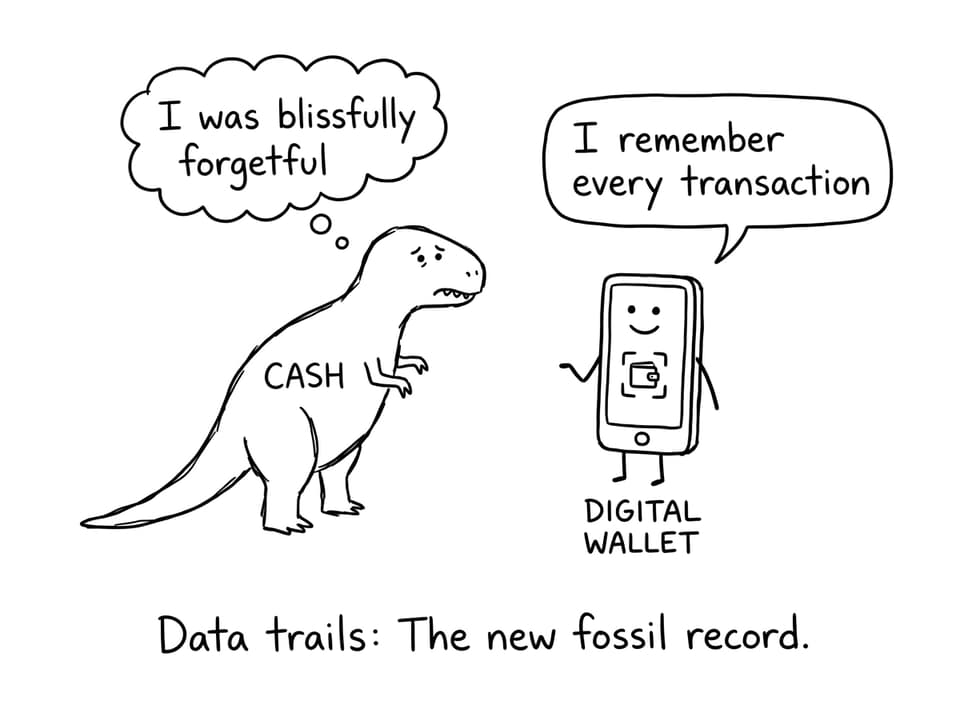
Digital currency: money as a data trail (IB Digital Society)
Digital currency is money that primarily exists inside digital systems (rather than as physical notes and coins). That includes everyday bank deposits used through contactless payments, but also platform-based balances and other digitally issued forms.
From an IB Digital Society lens, the key question is: what changes when money becomes searchable, legible, and portable as data?
-
Convenience rises (speed, automation, fewer intermediaries in some contexts).
-
Visibility rises (more monitoring, more profiling, more enforcement potential).
-
Dependency rises (infrastructure, network access, device access, digital literacy).
A strong exam response makes this trade-off explicit and then evaluates it with evidence.
Inclusion vs exclusion: the quiet dividing line
Digital finance is often marketed as “access for everyone.” Sometimes it genuinely helps: quicker transfers, safer storage than cash, and simpler payment options. But IB Digital Society expects you to ask: access for whom?
Common exclusion mechanisms include:
-
No smartphone, unstable internet, or expensive data
-
Low digital literacy or disability access barriers
-
Lack of official ID or mismatched documentation
-
Bias in automated credit scoring or fraud detection
This is where the course’s focus on people and communities matters. Pair your revision with topic-based notes and contexts using IB Digital Society Topic 3 -- Content and IB Digital Society Topic 4 -- Contexts so your analysis stays grounded in the syllabus.
Power and control: who can freeze, rank, or deny?
In cash-based systems, control is physical and local. In digital systems, control is often centralized and remote. For IB Digital Society, this is the heart of fintech analysis.
Ask:
-
Who owns the rails (banks, payment networks, platform companies, states)?
-
Who sets the rules (terms of service, risk policies, fraud thresholds)?
-
Can users appeal decisions, or is it “computer says no”?
A useful way to revise this is to practice writing 2--3 paragraph evaluations. RevisionDojo’s Questionbank is built for exactly that: exam-style prompts plus feedback loops so you learn how marks are awarded.
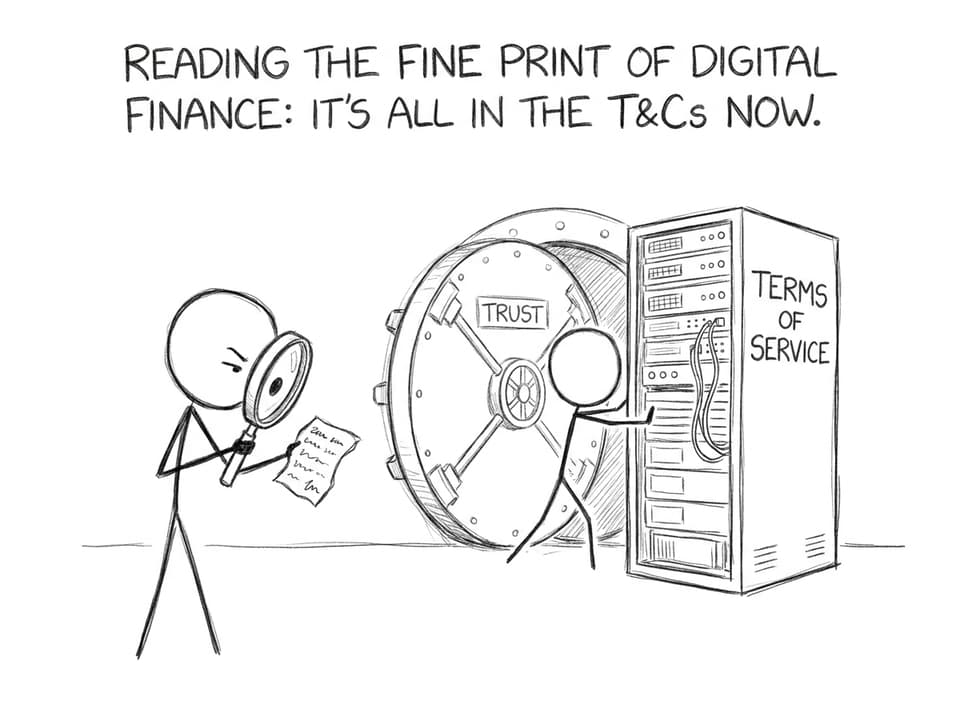
Surveillance and consent: the ethics IB Digital Society wants you to name
Fintech produces granular data: where you were, what you bought, when you bought it, and sometimes what that implies about you (health, religion, relationships, risk). Even when users “consent,” the consent is often rushed, unclear, or functionally unavoidable.
In IB Digital Society, you should evaluate:
-
Is the data collection proportionate to the service?
-
Is consent meaningful, or coerced by necessity?
-
What are risks of misuse (targeted manipulation, discriminatory pricing, state overreach)?
To strengthen your ethical writing style, it helps to keep your case studies organized. RevisionDojo’s Using Case Studies for Better Learning in Digital Society is a practical system for making examples reusable in exams.

How to write fintech answers in exams (IB Digital Society)
A reliable approach in IB Digital Society is:
-
Define the system in one sentence.
-
Apply one key concept (power, ethics, inequality, change) to frame analysis.
-
Analyze impacts on individuals and communities (not just “good/bad”).
-
Evaluate trade-offs with a clear judgement and a condition (when/for whom).
If you struggle to keep answers structured, RevisionDojo’s Ultimate Survival Guide for IB Digital Society Students is a calm blueprint for turning broad themes into exam-ready paragraphs.
Using digital currency for your IA (IB Digital Society)
Digital currency and fintech can make an excellent IB Digital Society IA topic if you narrow it to a specific digital system and a specific impact. For example, one payment app in one community, or one credit scoring model used by one lender.
A strong IA setup typically includes:
-
A clearly bounded system (features, stakeholders, context)
-
A focused research question about access, control, or ethics
-
Evidence from credible sources and lived experience (where appropriate)
If you need help refining scope, use How to Write a Strong IB Digital Society IA Research Question. Then use RevisionDojo’s Coursework Library and Tutors when you want human-level feedback on whether your question is actually investigable.
Closing: make fintech feel like a people story (IB Digital Society)
The best IB Digital Society answers about digital currency don’t sound like product reviews. They sound like small human stories backed by careful concepts: someone gains convenience, someone loses privacy, someone gets excluded, and someone else gains the power to decide.
If you want that kind of control in your writing, build a simple routine: revise a concept in Study Notes, lock key terms with Flashcards, practice with the Questionbank, then pressure-test your timing with Mock Exams and Predicted Papers. That full loop is what RevisionDojo is designed to make easy -- so your IB Digital Society revision becomes calmer, sharper, and more scoreable.
