This site uses cookie tracking technologies. Learn more in our Cookie Policy.
IB Digital Society: Digital Activism and Social… | RevisionDojo
Join 600k+ students breezing through the IBReady to breeze through the IB?
Digital activism rarely starts with a megaphone.
More often, it starts with a half-formed thought at 1:00 a.m., a clip you can’t unsee, and a decision to press “share” even though you’re not sure it will matter. In IB Digital Society, that moment is not just personal. It’s evidence. It’s the first visible step in a digital system where platforms, algorithms, rules, and communities decide what becomes a movement, what becomes noise, and who pays the cost.
This is why IB Digital Society treats digital activism and social movements as neither automatically heroic nor automatically pointless. Your job is to analyze how the system shapes the action, and how the action reshapes the system.
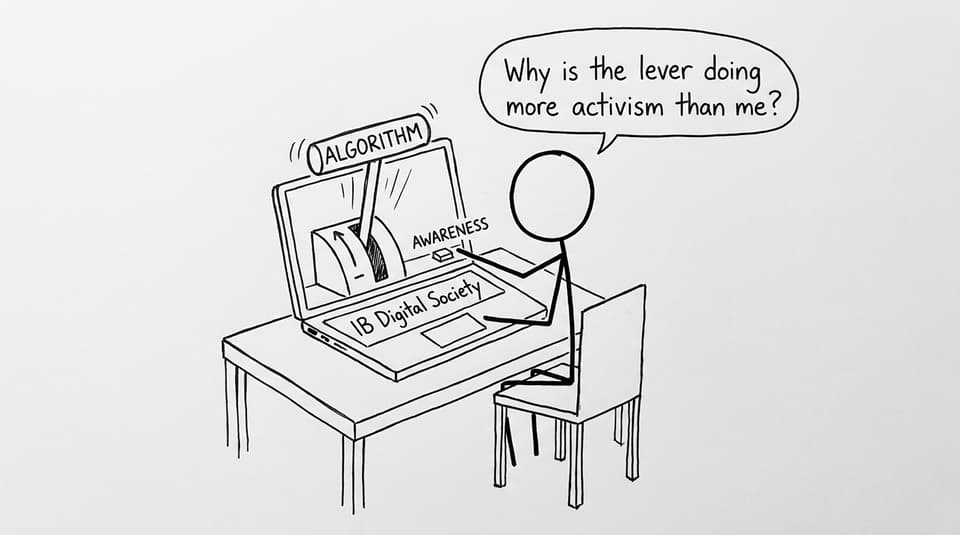
A student vs the algorithm lever
Quick checklist for analyzing digital activism (exam-ready)
Use this quick structure whenever you see activism in a stimulus or case study in IB Digital Society:
Define the digital system (platforms, features, rules, algorithms, data flows)
Identify power (who controls visibility, moderation, resources, narratives)
Map participation (who joins, who stays silent, who is excluded, who is targeted)
Evaluate impacts (individual vs community/society; short-term vs long-term)
What counts as digital activism in IB Digital Society?
In IB Digital Society, digital activism is the use of digital tools and platforms to pursue social, political, or cultural change. That includes obvious actions (campaign pages, fundraising links, viral hashtags) and quieter ones (coordination in private channels, documenting events, archiving evidence, building networks of solidarity).
A strong IB analysis avoids reducing activism to posting. Instead, describe how activism becomes organized action inside a system: rules, platform affordances, and network effects.
The most important advantage digital activism offers is speed plus reach. A message can cross borders instantly, coordinating people who never share a classroom, a city, or even a language.
Digital systems enable social movements when they:
Lower barriers to entry (a repost is easier than attending a rally)
Connect dispersed groups through networked communication
Amplify messages via sharing, recommendations, and influencer pathways
Create alternative public spaces when traditional media excludes voices
In IB Digital Society, the key move is to connect these benefits to design choices. For example, “sharing” is not neutral. It’s a feature built to increase engagement, and activism often rides the same rails as advertising.
To build system vocabulary (and stronger evaluation), RevisionDojo’s IB Digital Society Topic 3 - Content resources help you describe platforms with precision instead of vibes.
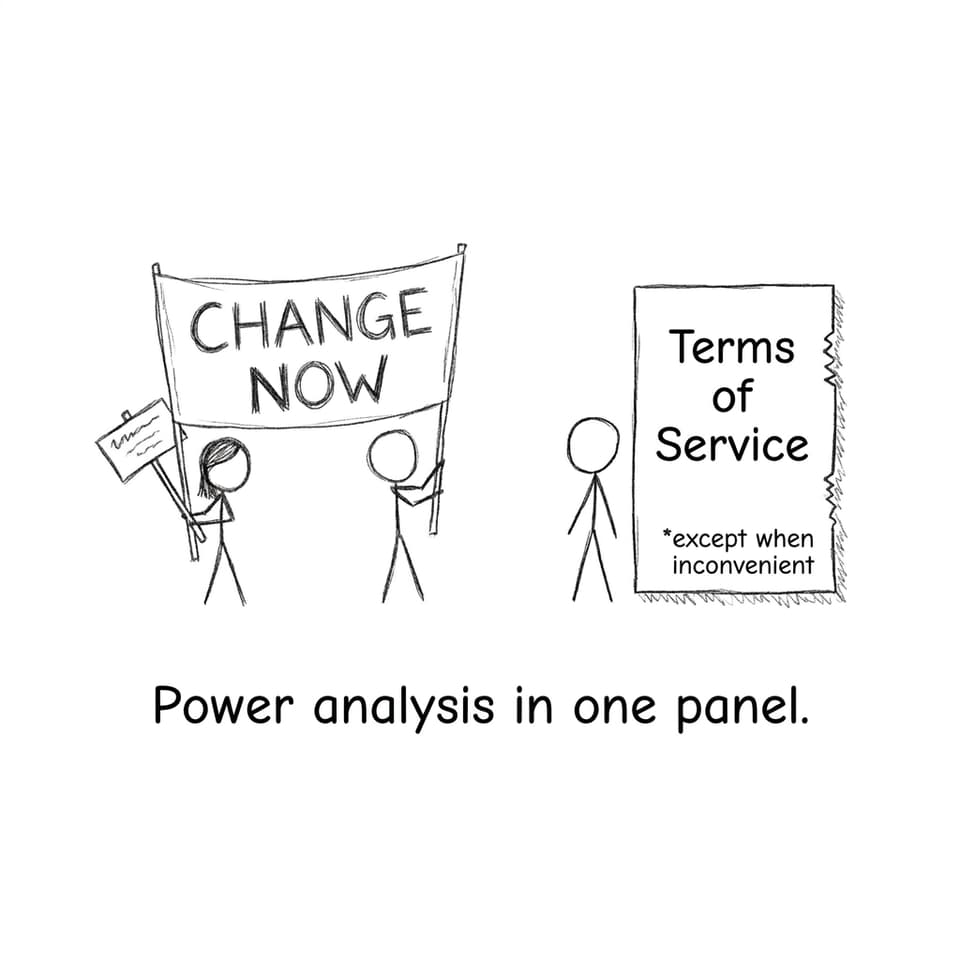
Platform rules vs protest banner
The limits of digital activism (and why visibility isn’t impact)
The internet is excellent at producing moments, and less reliable at producing outcomes.
Common constraints you should analyze in IB Digital Society include:
Short-lived engagement: attention spikes, then disappears
Oversimplification: complex issues compressed into shareable slogans
Unequal access: digital divide, language barriers, safety risks
Algorithmic dependence: what is seen depends on opaque ranking systems
A useful exam sentence is: “High visibility may increase awareness, but awareness does not automatically translate into institutional change.” That single distinction separates descriptive responses from analytical ones.
Power is the quiet engine inside every loud movement.
In IB Digital Society, power analysis asks:
Who owns the platforms activists rely on?
Who writes and enforces the rules (moderation, takedowns, shadow limiting)?
Which voices are amplified by the system’s incentives?
Who faces surveillance, harassment, or reputational risk?
This is where activism becomes complicated: a movement can challenge governments and institutions while still depending on platforms controlled by corporations.
If you need a clean way to frame power in your writing, RevisionDojo’s Notes for Power and Types of Power can help you name the type of power you’re seeing rather than just saying “powerful.”
Participation and inclusion: the movement is not the timeline
A timeline can look like everyone agrees. In reality, participation is uneven.
In IB Digital Society, examine:
Who can safely participate (legal, social, personal safety)
Who is excluded by access, disability, language, or digital literacy
Who participates invisibly (lurking, donating, documenting)
Who is pushed out by harassment or doxxing
Movements often create new forms of belonging. They also create new targets.
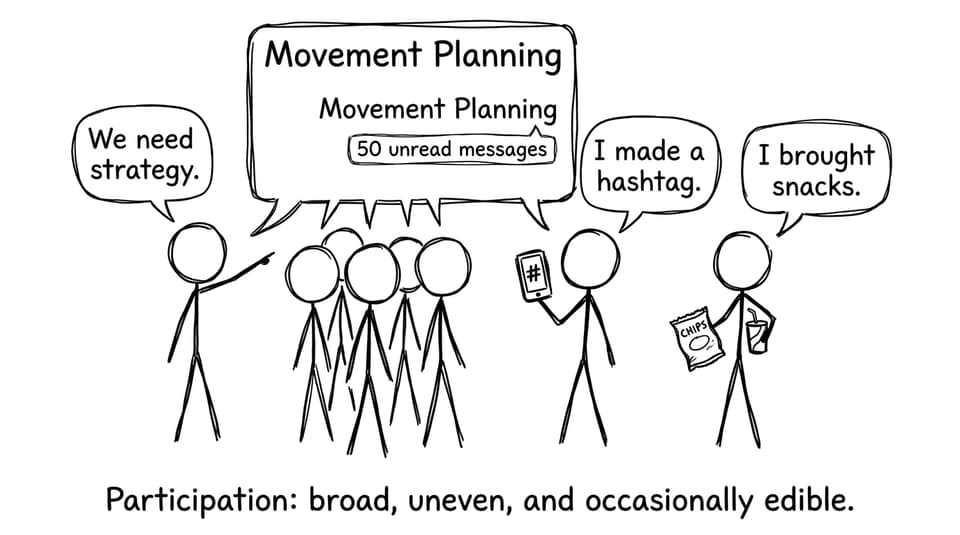
Group chat planning chaos
Ethics in digital activism (how to argue, not just react)
Ethics is where strong IB Digital Society answers become mature. Instead of declaring activism “good” or “bad,” evaluate trade-offs.
Key ethical tensions:
Accuracy vs urgency: sharing fast can spread misinformation
Consent vs exposure: documenting harm may endanger individuals
Free expression vs harm prevention: harassment and hate campaigns
Accountability: who is responsible when harm spreads through the network?
When a prompt includes a campaign, a protest, or online organizing, treat it as a system. Anchor your response in IB Digital Society concepts: power, participation, ethics, and impacts.
A high-scoring pattern looks like this:
Identify the digital system (platform + features + algorithmic visibility + rules)
Explain enabling effects (coordination, amplification, alternative spaces)
Critique constraints (access, incentive structures, moderation, short attention)
Evaluate impacts on individuals and communities (benefits and risks)
Make a justified judgment about effectiveness and implications
Digital activism is one of the most testable areas of IB Digital Society because it forces you to think in systems: power in the platform, participation in the crowd, ethics in the trade-offs, and impacts that land differently on individuals and communities.
If you want to revise this topic efficiently, build a loop: learn the concepts, practice questions, then tighten your writing. RevisionDojo makes that loop easy with Study Notes, Flashcards, AI Chat, Grading tools, Predicted Papers, Mock Exams, a Coursework Library, and Tutors, all aligned to IB Digital Society.
Start here: IB Digital Society Resources and keep practicing until your answers stop describing movements and start explaining systems.