


Cybersecurity stories usually begin with something dramatic: a hospital goes offline, an exam board leaks data, a city’s transport system freezes. But for most of us, the first sign is smaller -- a password reset email we didn’t request, a login from a location we’ve never visited, a message that feels slightly “off.”
That slow, creeping uncertainty is exactly why IB Digital Society treats cybersecurity and digital risk as more than a technical topic. In IB Digital Society, the interesting question is rarely “how did the hack work?” It’s “who gets harmed, who benefits, and who is expected to fix it?”
This guide breaks down cybersecurity and digital risk in IB Digital Society in a way you can actually use in exams and your internal assessment (IA), with a focus on concepts like power, responsibility, ethics, and trust.
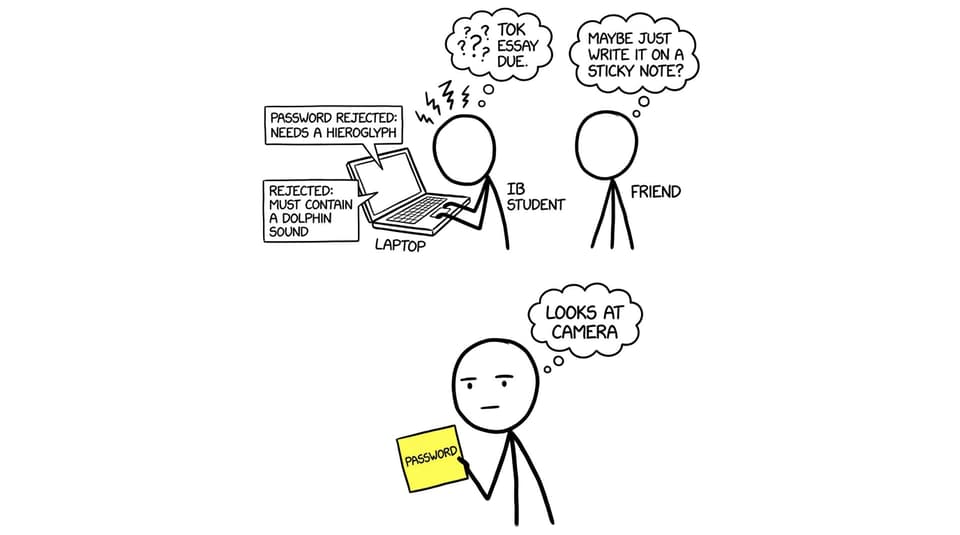
Quick checklist for IB Digital Society answers on cybersecurity
Use this mini-structure whenever a question mentions breaches, safety, malware, scams, outages, surveillance-for-security, or “risk management” in IB Digital Society:
-
Define the digital risk clearly (what could go wrong, for whom, and how).
-
Identify stakeholders (users, companies, governments, schools, vulnerable groups).
-
Explain impacts at individual and community level.
-
Analyze power and responsibility (who controls the system, who sets the rules).
-
Evaluate ethical trade-offs (privacy vs protection, cost vs safety, convenience vs security).
-
Link to trust (how trust is built, broken, repaired).
For targeted practice, RevisionDojo’s IB Digital Society hub keeps everything organized by syllabus: IB Digital Society Resources.
What cybersecurity means in IB Digital Society
In IB Digital Society, cybersecurity is the set of measures used to protect digital systems, data, and users from unauthorized access, misuse, or harm. That includes data breaches, system disruption, identity fraud, ransomware, spyware, and exploitation.
But the course emphasis is social, not engineering. You are not being assessed on configuring a firewall. You are being assessed on your ability to explain:
-
why systems are vulnerable (complexity, incentives, human behavior)
-
why “perfect security” is unrealistic
-
how security choices shape rights and outcomes
-
how responsibility is distributed (or avoided)
To build the right vocabulary for IB Digital Society responses, use structured notes like Notes for 3.3 Computers and connected themes in 3.4 Networks and the internet.
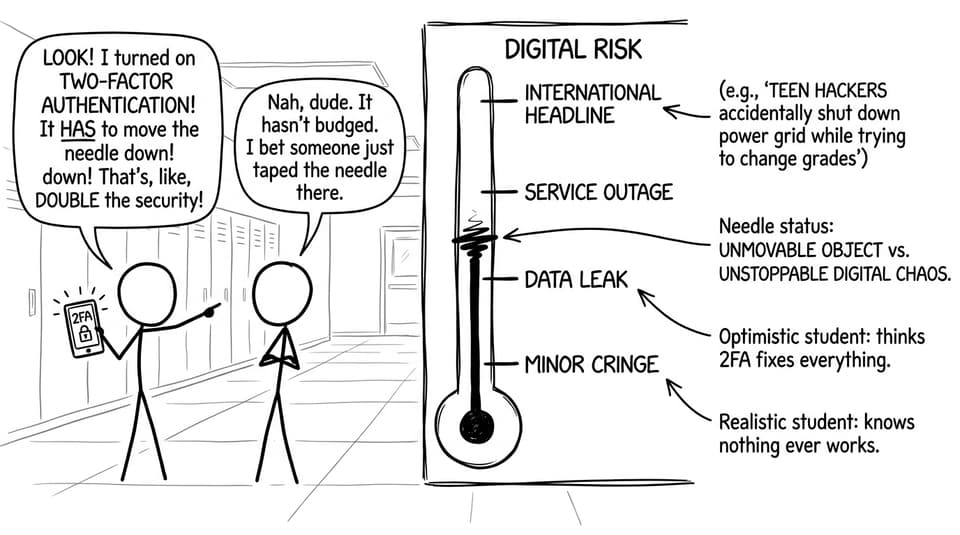
Digital risk: the harm that spreads when systems fail
Digital risk is the potential for harm when digital systems fail, are misused, or are exploited. In IB Digital Society, risk is not a glitch you “remove.” It’s a condition you manage.
Common examples you can apply in IB Digital Society essays:
-
Loss of personal data (exposure, blackmail, profiling)
-
Service disruption (healthcare, education platforms, payments)
-
Financial harm (fraud, theft, recovery costs)
-
Loss of trust in institutions (schools, banks, governments)
A strong IB Digital Society answer shows how risk travels through networks: one weak point can affect many people quickly.
Why cybersecurity is a social issue (not just a tech issue)
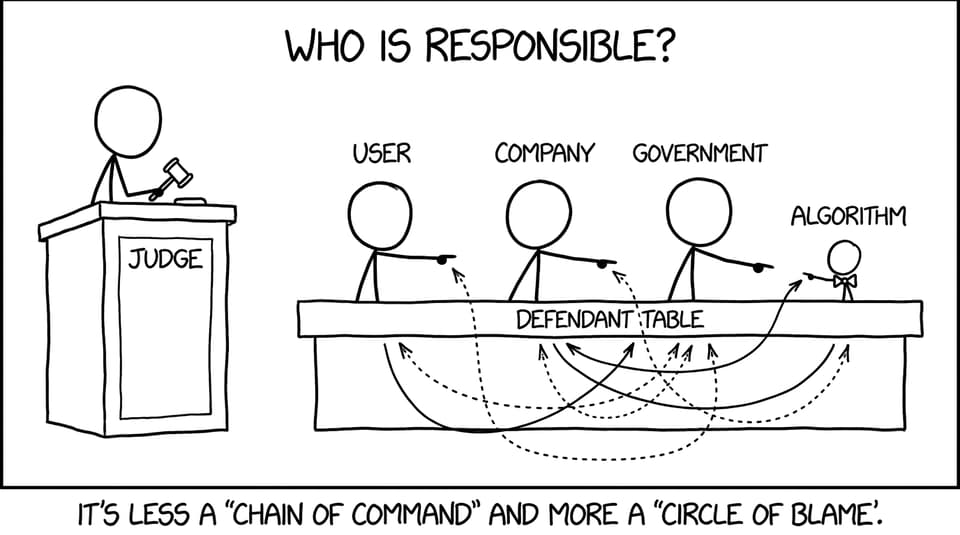
The most useful exam move in IB Digital Society is to shift from “security matters” to “security is political.” Cybersecurity decisions involve:
-
power (who designs platforms, who controls updates, who owns the data)
-
responsibility (who is blamed when harm happens)
-
resources (who can afford protection, audits, staff training)
-
inequality (who suffers most when a system collapses)
If a company chooses speed-to-market over testing, that’s a values decision. If a government expands surveillance in the name of safety, that’s a trade-off with civil liberties. This is core IB Digital Society territory.
For related dilemmas (privacy, surveillance, cybercrime), connect your discussion to Notes for Internet Dilemmas.
Impacts: individuals vs communities in IB Digital Society
Impacts on individuals
In IB Digital Society, always ground cybersecurity in lived outcomes:
-
identity theft and long recovery processes
-
anxiety and loss of control
-
exposure of private information (medical, location, relationships)
-
reduced willingness to participate online
A subtle point that examiners like: people have different capacity to protect themselves. Digital literacy, language, money, and time all shape vulnerability. That inequality is part of digital risk.
Impacts on communities and society
At scale, cybersecurity incidents affect systems people depend on:
-
disruption to healthcare, utilities, transport, education
-
economic damage (small businesses often cannot “bounce back”)
-
erosion of public trust
-
amplified inequality (the least protected are hit hardest)
When you show both levels clearly, your IB Digital Society analysis stops being generic and becomes evaluative.
Power, responsibility, ethics, and trust: your best exam paragraph
Here’s a high-scoring paragraph pattern for IB Digital Society:
-
Power: identify who controls the infrastructure (platform owners, state agencies, vendors).
-
Responsibility: explain the “accountability gap” (users blamed for weak passwords while institutions set risky defaults).
-
Ethics: weigh competing values (security vs privacy, transparency vs panic, protection vs freedom).
-
Trust: argue how trust depends on competence and honesty, and how breaches reshape behavior.
RevisionDojo helps you practice this kind of writing with exam-style prompts and feedback loops. Try a focused set from the IB Digital Society Questionbank such as 2.5 Space Questionbank or 2.6 Systems Questionbank.
How to write cybersecurity answers in IB Digital Society exams
In exams, prompts are often built around an unseen scenario: a platform breach, a school data leak, a cyberattack on infrastructure, or new security policy.
To score well in IB Digital Society:
-
Use one clear definition early (cybersecurity or digital risk).
-
Name the stakeholders (and include at least one vulnerable group).
-
Explain impacts with specificity (not just “it’s bad”).
-
Use concepts like power, ethics, responsibility, and trust explicitly.
-
Evaluate trade-offs rather than choosing a simple “solution.”
For broader study planning, these two guides help keep your revision practical: Revision Strategies That Work for IB Digital Society and Ultimate Survival Guide for IB Digital Society Students.
Using cybersecurity and digital risk for your IA
Cybersecurity works well for an IB Digital Society IA when you narrow it. Pick one system and one risk pathway you can actually analyze.
Good IA directions:
-
a school platform and student data governance
-
messaging apps and scam/fraud risk
-
critical infrastructure and community vulnerability
-
workplace monitoring tools and security vs privacy
A strong IB Digital Society IA is not “cybersecurity is important.” It is “this system distributes risk in this way, to these groups, because these actors hold power and make these ethical choices.”
To support your research and writing process, RevisionDojo is designed like a loop: learn with Study Notes, retain with Flashcards, apply with the Questionbank, get unstuck with AI Chat, then rehearse with Mock Exams and Predicted Papers, and improve written responses using Grading tools. If your IA needs deeper feedback, the Coursework Library and Tutors are there for more guided support.
Closing: the calm way to master IB Digital Society cybersecurity
Cybersecurity feels like a topic about machines until you realize it’s really a topic about people making decisions under uncertainty. That’s why IB Digital Society keeps pulling you back to power, responsibility, ethics, and trust. Digital risk is never only about what could break -- it’s about who pays the price when it does.
If you want to turn this into marks, build a simple routine: read one set of syllabus-aligned notes, drill a small batch of exam-style questions, then refine your explanations with feedback. RevisionDojo brings that full loop together with Study Notes, Flashcards, Questionbank, AI Chat, Grading tools, Mock Exams, Predicted Papers, a Coursework Library, and Tutors -- so your IB Digital Society revision stays focused, human, and test-ready.
