If you have ever stared at an IB syllabus thinking, “Tell me exactly what to do,” you are not lazy. You are human.
But the students who improve fastest in the IB are rarely the ones who wait for perfect instructions. They are the ones who learn to steer. They turn confusion into a question, and that question into a plan.
That is student agency. And inquiry-driven learning is how you build it without drifting into chaos.
In this guide, you will learn how to use inquiry to revise with more ownership, more focus, and better exam performance. You will also see how RevisionDojo turns agency into an everyday system through Study Notes, Flashcards, AI Chat, Grading tools, Predicted Papers, Mock Exams, a Coursework Library, Tutors, and the Questionbank.
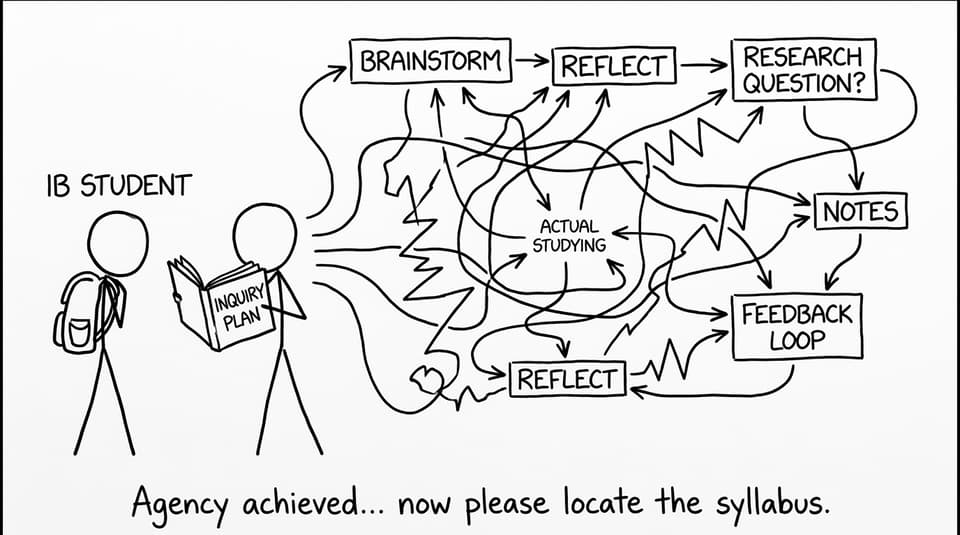
Quick checklist: inquiry-driven agency for IB exam prep
Use this as a simple loop you can run in any IB subject:
-
Start with one sharp question you genuinely want answered
-
Define what “a good answer” looks like (marks, command terms, criteria)
-
Learn the minimum content needed (not everything)
-
Practice with targeted questions and feedback
-
Reflect: what changed in your thinking and what is your next move?
If you want a home base for these steps, start at RevisionDojo for IB.
What student agency means in the IB (from a student’s perspective)
In the IB, student agency is not “doing whatever you want.” It is making informed choices, taking action, and reflecting honestly on what happened. The balance matters: autonomy without accountability becomes random effort, but accountability without autonomy becomes burnout.
Inquiry-driven learning is the practical bridge. Instead of revising like a checklist you inherit, you revise like a problem you solve. You are still aligned to the IB assessment model, but you are actively deciding:
-
Which misconception to attack first
-
Which resource actually helps you fix it
-
Which practice proves you can do it under pressure
That mindset fits the bigger IB philosophy too: being an inquirer, reflective, and principled. If you want a broader overview of what makes the IB different, this breakdown is useful: What is the IB Program? A complete breakdown.
Start with authentic inquiry: the question that pulls you forward
Most revision plans fail for a quiet reason: they start with content, not curiosity. Content feels responsible. Curiosity feels risky. But curiosity creates energy, and energy creates consistency.
Try converting a vague worry into an inquiry question:
-
“I am bad at Paper 2” becomes: “Which command terms am I mishandling, and what does a top response do differently?”
-
“I do not get this topic” becomes: “What is the one idea that, if I understood it, would make the rest simpler?”
-
“I forget everything” becomes: “What do I forget after 48 hours, and what spaced repetition schedule fixes it?”
To sharpen your questioning skills (and make them more conceptual, not just factual), read Teaching with concept-based questions that inspire curiosity. Even as a student, learning to ask stronger questions is a scoring advantage in the IB.
Structure creates freedom: how to be independent without getting lost
Agency collapses when everything is optional. Your goal is “structured freedom”: a clear frame with flexible choices.
Here is a structure that works well in IB exam season:
Set boundaries that protect your time
Choose:
-
One topic
-
One outcome (for example: “I can answer 6-mark questions on this subtopic reliably”)
-
One timed block (25, 40, or 60 minutes)
Then give yourself choices inside the frame: which examples to use, which method to write with, which weak area to test first.
Build an inquiry-to-practice pipeline
A clean pipeline looks like:
-
Learn quickly with Study Notes
-
Convert the key ideas into retrieval practice with Flashcards
-
Prove performance with the Questionbank
That is not just productivity. It is agency: you decide what you need, then you verify it.
Reflection is the engine: make metacognition practical
Reflection in the IB can sound like something you do when there is time. In real exam prep, reflection is how you stop repeating the same mistake with new stationery.
After each revision session, write six lines:
-
What did I try?
-
What did I expect?
-
What actually happened?
-
What error pattern showed up?
-
What would a top answer do instead?
-
What is my next question?
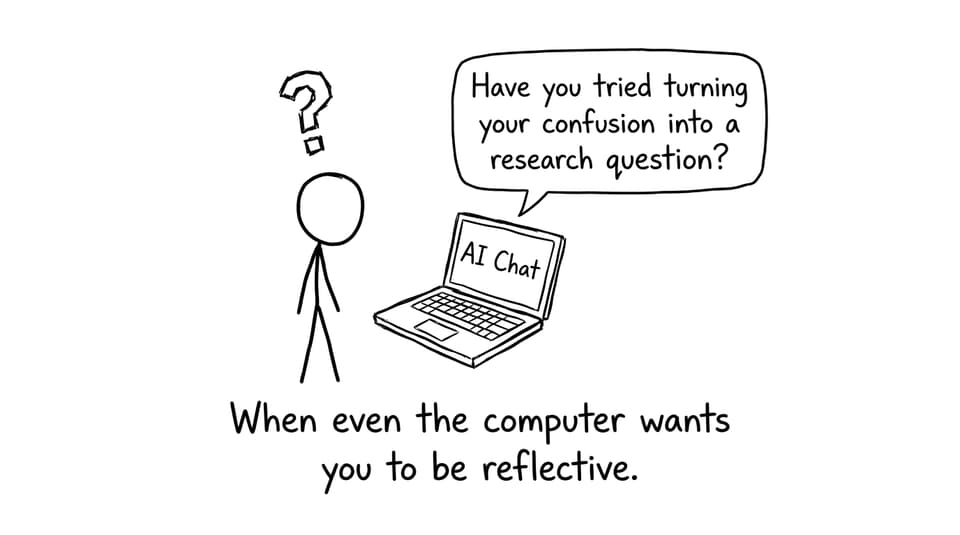
If you want to make this even more actionable, pair it with fast feedback. RevisionDojo’s AI Chat can help you turn “I am stuck” into “I know my next step.” When the platform explains why your reasoning missed marks, your reflection becomes specific instead of emotional. (You can also explore the full ecosystem in RevisionDojo app: the smarter way to prep for IB exams.)
Student voice in assessment: make marks a dialogue, not a surprise
One of the fastest ways to build agency in the IB is to stop treating assessment like a verdict and start treating it like data.
Do this in three steps:
Predict your score before you check feedback
After you answer a question, estimate your mark and explain why. This trains calibration, a hidden skill of high scorers.
Compare your thinking to markscheme logic
The point is not “right vs wrong.” The point is: what reasoning earned marks? That is why practicing with exam-style questions matters so much.
If you want a structured approach to question practice, use IB Question Bank: how to use it effectively.
Use feedback to set your next inquiry
Good feedback should create a better question. “Why did I lose marks?” becomes “Which phrase, definition, or diagram convention would have secured them?”
Collaborative inquiry: agency is also social
Agency is personal, but it is not solitary. The IB rewards clarity, perspective, and reasoning, and those improve faster when you hear how someone else thinks.
A simple group routine:
-
Each person brings one question they got wrong
-
The group identifies the hidden skill (command term, structure, evidence)
-
Everyone writes a “model move” they will copy next time
This is especially powerful in content-heavy subjects where misconceptions look convincing. If you need inspiration for keeping curiosity alive while staying rigorous, read Encouraging intellectual curiosity beyond the syllabus.
From inquiry to action: the exam-season version
In the classroom, action can mean projects. In IB exam prep, action means changing what you do tomorrow.
Use this “agency ladder”:
-
Question: What do I not understand yet?
-
Investigation: Which note section, explanation, or example resolves it fastest?
-
Practice: Which question type checks it under pressure?
-
Adjustment: What will I change in my approach?
RevisionDojo supports this loop directly: Study Notes for investigation, Flashcards for retention, the Questionbank for practice, AI Chat for clarification, and Grading tools to tighten how you respond to criteria. When you need realism, use Mock Exams and Predicted Papers to build stamina and decision-making under time.
Closing: make IB agency your unfair advantage
The IB can feel like a heavy schedule with endless expectations. Inquiry-driven learning flips the feeling. You are no longer just surviving requirements; you are running experiments on your own understanding.
Start today with one question, one timed practice set, and one reflection note. Then repeat.
If you want the most complete system for building that loop, use RevisionDojo: Study Notes for clarity, Flashcards for retention, the Questionbank for exam-style practice, AI Chat and Grading tools for feedback, Predicted Papers and Mock Exams for realism, plus a Coursework Library and Tutors when you need extra support. Your agency becomes measurable, and your IB revision becomes calmer, sharper, and more effective.

