

Your revision plan usually breaks for one quiet reason: it’s designed for the version of you who never gets tired.
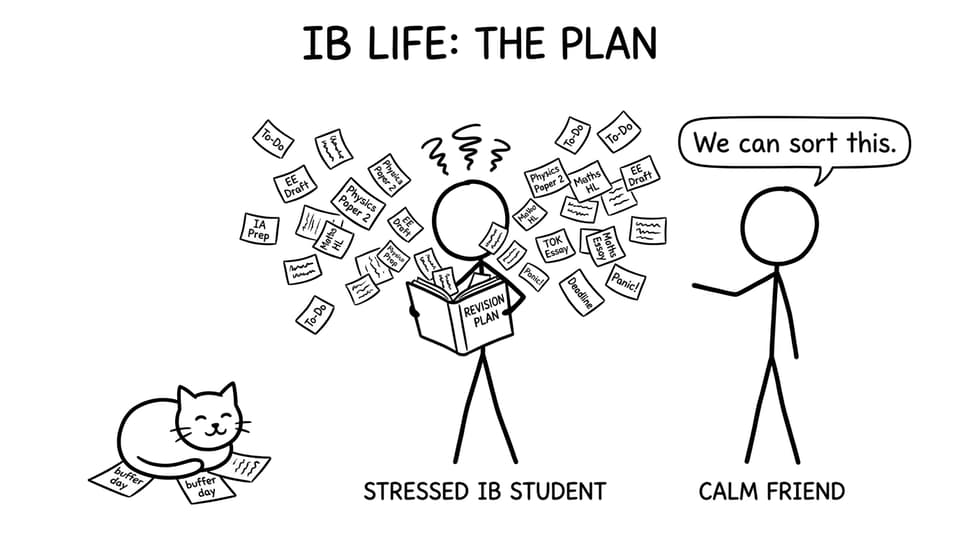
The week starts with clean pages and big intentions. Then a Physics lab runs late. A History essay expands. Your brain decides that reorganizing folders is “productive.” Suddenly, the plan feels like a judgment instead of a guide.
This is where the right Revision Tips matter: not more motivation, but a structure that survives real life. Below is a simple way to craft an IB revision plan that stays honest, builds momentum, and turns practice into marks.
Revision Tips checklist: the plan that actually holds
Keep this list somewhere visible. These Revision Tips are your “minimum viable plan” for IB:
-
Pick your next target by paper and topic, not “the whole subject.”
-
Use active recall daily (short and repeatable).
-
Do exam-style questions every week (timed when possible).
-
Keep a mistake log and schedule retests.
-
Protect sleep and energy like they’re part of the syllabus.
-
Use one platform where notes, practice, and feedback connect.
If you want a single place to run that loop, start at RevisionDojo and build your routine around tools that match how IB marks are earned.
Start by assessing your real starting point
Most students over-plan because they’re unsure where they stand. A better move is to gather evidence.
Use Mock Exams or timed sets to identify patterns: is it content gaps, command terms, or timing? Then turn those patterns into decisions. This is one of the most underrated Revision Tips: don’t guess your weaknesses, measure them.
A helpful reference point is this guide: How to Study for IB Exams: Step-by-Step Guide. It frames revision as a repeatable loop: learn, recall, apply, review.
Set goals that create weekly momentum
Goals should feel small enough to start and specific enough to check.
Try this:
-
Outcome goal: “Raise my Paper 2 score by 8 marks.”
-
Process goal: “Three Questionbank sessions + one timed block weekly.”
-
Proof goal: “My mistake log shows fewer command term errors.”
If you need inspiration for what the highest performers do differently, read How 45-Point IB Students Prepare for Exams. It’s full of grounded Revision Tips about cycles, pressure training, and error tracking.
Build your timetable with three layers
A timetable fails when it’s only made of long sessions. Build layers instead:
Daily layer (10-20 minutes): recall
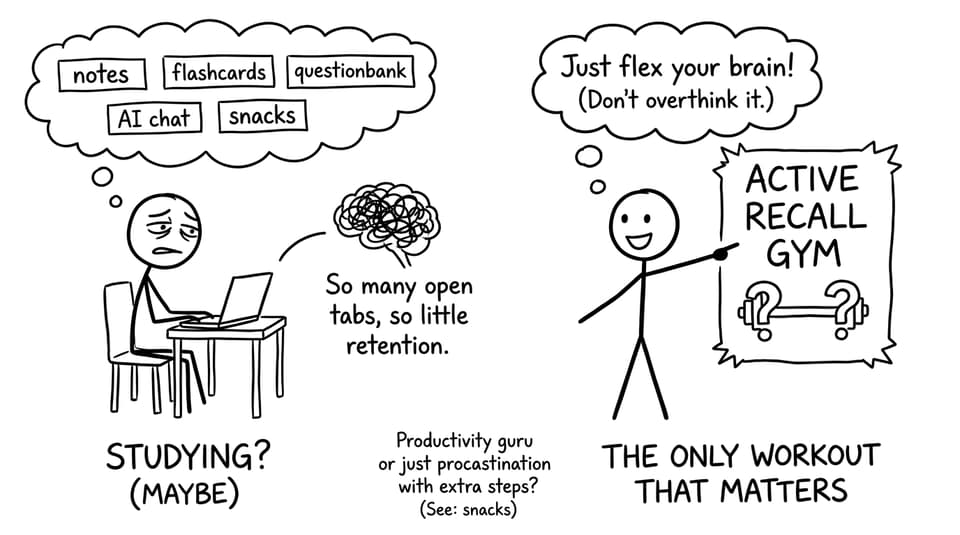
Use Flashcards every day. Not as a warm-up, but as the foundation. This is one of the simplest Revision Tips that scales across all subjects.
Weekly layer (4-6 blocks): topic practice
Pick one topic per block. Patch understanding with Study Notes, then immediately do questions. The Effective Revision Techniques for IB Exams in 2024 article is a solid reminder that passive re-reading feels safe, but active work changes outcomes.
Pressure layer (1-2 sessions): timed realism
Run a timed session weekly to learn pacing, not just content. If you’re close to exams, the structure in IB: The Last 2 Weeks Before Exams (What Matters) is especially useful.
Use active learning techniques that IB rewards
IB doesn’t just test what you know. It tests what you can do under constraints.
So your plan should prioritize:
-
Question-led study: Use a Questionbank to train exam behaviors, not just memory. Start here: Questionbank feature page.
-
Feedback loops: After every set, write 3-5 “error rules” (e.g., “Define the term before evaluating”).
-
AI support when you’re stuck: Use AI Chat to clarify a single point, then return to practice. RevisionDojo’s workflow is explained in RevisionDojo App: The Smarter Way to Prep for IB Exams.
One of the most practical Revision Tips here is to keep notes brief: notes are for fixing one mistake, then you go back to questions.
Review weekly and adapt without drama
A revision plan should change as you learn more about yourself.
Every weekend, do a 15-minute review:
-
What did I complete?
-
What kept repeating (same mistakes, same distractions)?
-
What will I cut next week so the plan stays real?
If you want broader strategy ideas, The Ultimate Guide to Revision for IB Students offers strong Revision Tips on command terms, data booklets, and timed training.
The calm way to finish strong
The perfect revision plan isn’t the one that looks impressive on a Sunday night. It’s the one you can repeat on a tired Wednesday.
So take these Revision Tips, build a three-layer timetable, and run the loop: recall daily, practice weekly, pressure-train regularly, review honestly. When you want the whole system connected in one place, use RevisionDojo’s Questionbank, Study Notes, Flashcards, AI Chat, Grading tools, Predicted Papers, Mock Exams, Coursework Library, and Tutors to keep your revision plan simple and your progress visible.