

In IB Digital Society, the moment your marks start climbing is usually the moment you stop treating concepts like separate folders.
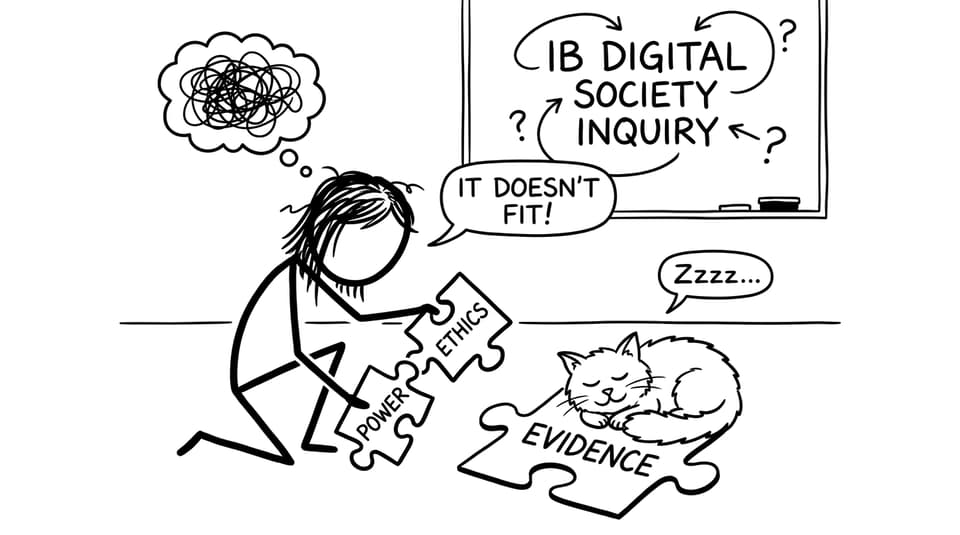
A student once told me they felt “safe” writing about power because it was clear: who has influence, who loses it, done. But the exam question they practiced on was about a recommendation algorithm. They wrote two neat paragraphs on power, and it still read like a poster, not an inquiry. The missing piece was the uncomfortable truth of IB Digital Society: digital systems rarely do one thing at a time. They shift power and shape identity and raise ethics questions, all at once.
If you can show how concepts interact, your analysis starts sounding like the world it describes.
A quick checklist for connecting concepts in IB Digital Society
Use this as your default plan whenever an IB Digital Society prompt feels messy:
-
Pick one anchor concept (the main lens).
-
Add one supporting concept (the tension, trade-off, or mechanism).
-
Name the digital system precisely (not just “social media”).
-
Track impacts (what changes now) and implications (what it could lead to).
-
Include stakeholders with different incentives.
-
End with evaluation (who benefits, who is harmed, under what conditions).
When you want a broader course refresher, start at IB Digital Society resources and the Topic 2 concepts hub.
Why IB Digital Society rewards concept connections
IB Digital Society is designed for systems thinking. Examiners are looking for more than correct definitions; they want to see whether you can explain complexity without drowning in it.
Connecting concepts signals that you can:
-
Avoid one-cause explanations
-
Show interactions inside the system (design choices, incentives, feedback loops)
-
Handle competing perspectives
-
Move from description into evaluation
If you need a clearer foundation on what “inquiry” means in this course, read The role of inquiry in IB Digital Society.
What “connecting concepts” actually looks like
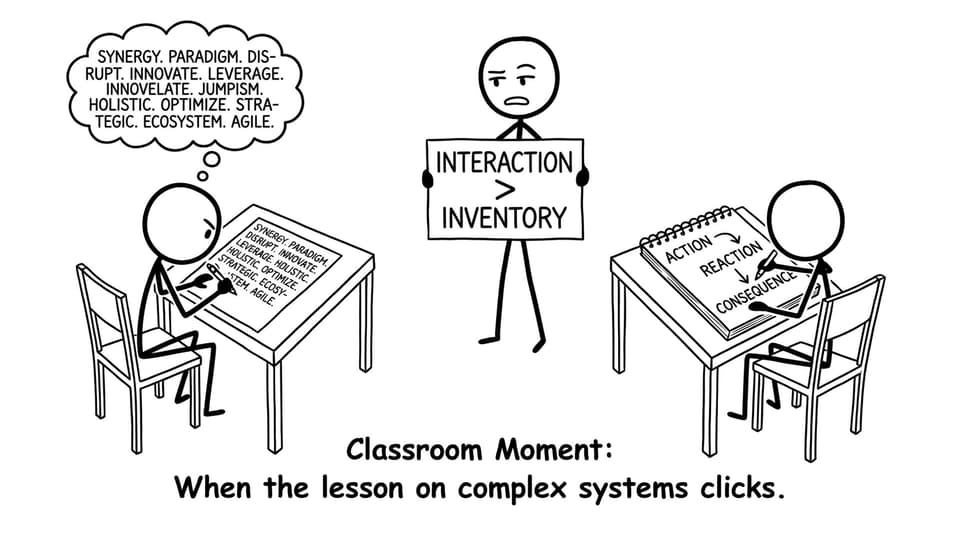
Connecting concepts in IB Digital Society is not listing: “power, ethics, identity, change…” and hoping the examiner is impressed.
It is writing a sentence like:
The platform’s moderation policy increases control, but that control is shaped by values (what counts as harm) and redistributes power toward the platform and away from creators.
Notice what’s doing the work: because, but, therefore, as a result. Those words force interaction.
High-scoring concept pairings you can reuse
The best IB Digital Society concept connections are reusable patterns. Here are pairings that consistently produce strong analysis.
Change and power in IB Digital Society
Digital change (new features, new policies, new data practices) often shifts power among stakeholders: users, governments, platforms, advertisers, and affected communities.
Try asking: Who had power before? Who has it after the change? What mechanism caused the shift?
If you want a sharper definition of change as a course concept, use Understanding change in Digital Society.
Identity and ethics in IB Digital Society
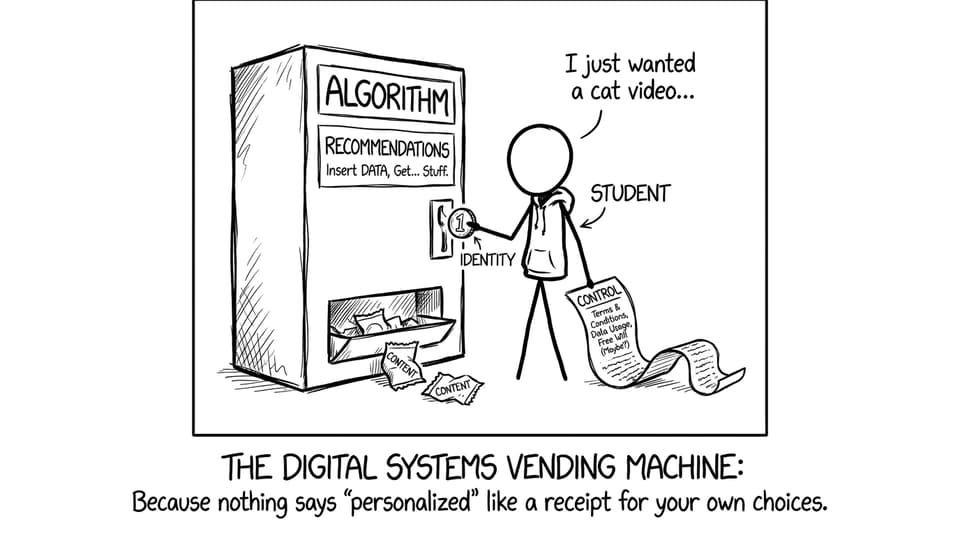
Identity is shaped by profiles, metrics, filters, and recommendation systems. Ethics appears when that shaping happens without informed consent, with bias, or with lasting consequences.
A strong move is to connect identity-building features to ethical risks like manipulation, stereotyping, or unequal outcomes.
Expression and control in IB Digital Society
Platforms amplify expression, but they also rank, limit, demonetize, remove, and shadow-ban. That means control is not only “censorship” -- it can be invisible design.
A great evaluation angle: What forms of expression become easier? Which become costly or risky?
A paragraph structure that makes concept links obvious
In exams, you do not have time to “find” the argument while writing. Use a repeatable structure:
-
System + example: name the digital system and what it does.
-
Anchor concept: apply your main concept accurately.
-
Second concept: introduce the concept that explains the trade-off or mechanism.
-
Interaction: show how concept A affects concept B (or conflicts with it).
-
Evaluation: weigh impacts and implications for stakeholders.
This is the difference between sounding informed and sounding analytical in IB Digital Society.
How to avoid forced connections
Most weak IB Digital Society responses fail in one of two ways: they stay too narrow, or they add concepts like decoration.
Before adding a second concept, ask:
-
Does it change my explanation, or just rename it?
-
Can I point to a specific feature of the digital system that makes the link true?
-
Can I explain a stakeholder consequence that depends on both concepts?
If you cannot answer yes, keep your inquiry cleaner.
Using RevisionDojo to practice connecting concepts faster
You build concept-connection skill through volume and feedback, not just reading.
-
Use the RevisionDojo Questionbank to practice exam-style prompts and force yourself to connect two concepts under time pressure.
-
Use IB Digital Society Topic 3 content when you need quick, concrete examples to anchor your analysis.
-
Watch targeted reinforcement via Topic 2 concept videos.
-
When your IA needs models and structure, lean on the Digital Society coursework guide and IB Digital Society IA structure explained.
-
For a course-wide plan, keep the Ultimate survival guide for IB Digital Society students bookmarked.
Conclusion: make IB Digital Society concepts behave like the real world
The fastest way to improve in IB Digital Society is to stop trying to be “complete” and start trying to be coherent. Pick an anchor concept, add a second concept that creates tension or explains the mechanism, and show interaction through impacts and implications. That is what high-mark inquiry looks like: not a list of ideas, but a chain of reasoning.
If you want to train this skill efficiently, build a loop with RevisionDojo: learn the frame with Study Notes, lock definitions with Flashcards, practice connections in the Questionbank, and sharpen evaluation with AI Chat, Grading tools, Mock Exams, Predicted Papers, the Coursework Library, and Tutors. In IB Digital Society, the goal is not to say more. It is to connect what matters.