

In the week before a language task, a lot of MYP students do the same thing: they reread the text, highlight harder, and write longer paragraphs.
It feels responsible. It also often changes nothing.
Because MYP Language tasks are not secretly asking, “How much did you remember?” They’re asking, “Can you prove a skill, on purpose, under time?” When capable students plateau at a 5 or 6, it’s rarely a talent issue. It’s almost always a repeatable habit.
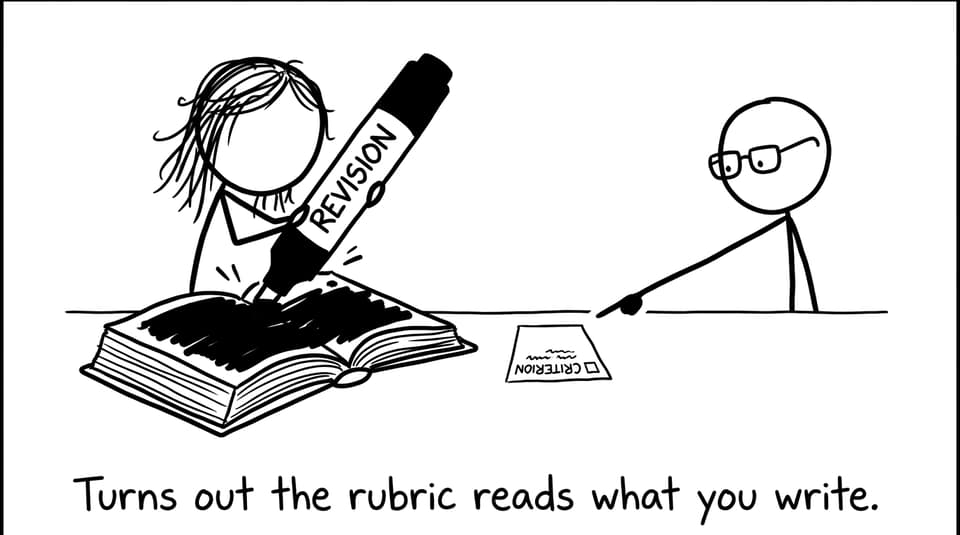
A quick MYP checklist before you start writing
Use this 90-second routine for every MYP Language task:
-
Identify the criterion the task is really assessing.
-
Highlight command terms (analyze, explain, evaluate, compare).
-
Write a one-sentence answer (your claim) before you draft.
-
Plan paragraph roles: intro, 2--3 points, mini conclusion.
-
Choose 2--3 short quotes (or precise textual moments) you can explain.
If you want one place to keep that routine consistent, start from the RevisionDojo MYP hub.
Mistake: Studying the text like it’s a memory test
In MYP, knowing plot and character details is helpful, but it’s not the same as being assessed well. Students often revise “what happened” instead of revising the skills that get rewarded.
Fix: practise skills in small reps.
-
Write one analytical paragraph instead of a full essay.
-
Drill introductions and topic sentences.
-
Train purpose + audience shifts (especially for text types).
A strong companion for this approach is Best Revision Strategies for MYP Language and Literature.
Mistake: Retelling instead of analysing
Retelling is comfortable because it’s certain. Analysis is risky because it requires you to interpret choices.
In MYP Language tasks, analysis usually means:
-
naming an authorial choice (diction, imagery, structure, tone)
-
explaining the effect on the reader
-
linking back to the task focus
Fix: use a simple chain: choice -> effect -> purpose.
If you’re unsure what “choice” looks like in different texts, the MYP English Lang & Lit resources include notes and practice materials to make those patterns obvious.
Mistake: Ignoring the assessed criterion
A common MYP trap is trying to do everything in one response: theme, context, devices, your opinion, a summary, and a dramatic closing.
The marker is not impressed by coverage. They’re impressed by alignment.
Fix: write to the criterion.
One way to build this habit is to keep a “criteria translation” line at the top of your page: This task rewards me for X, so I will show X by doing Y. For a bigger picture of why this matters, see Why Most Students Struggle in MYP (And Fix It).
Mistake: Long answers with weak structure
Length is seductive. It creates the feeling of effort. But MYP marking is not a word-count contest.
Markers look for:
-
clear topic sentences
-
one main idea per paragraph
-
logical progression
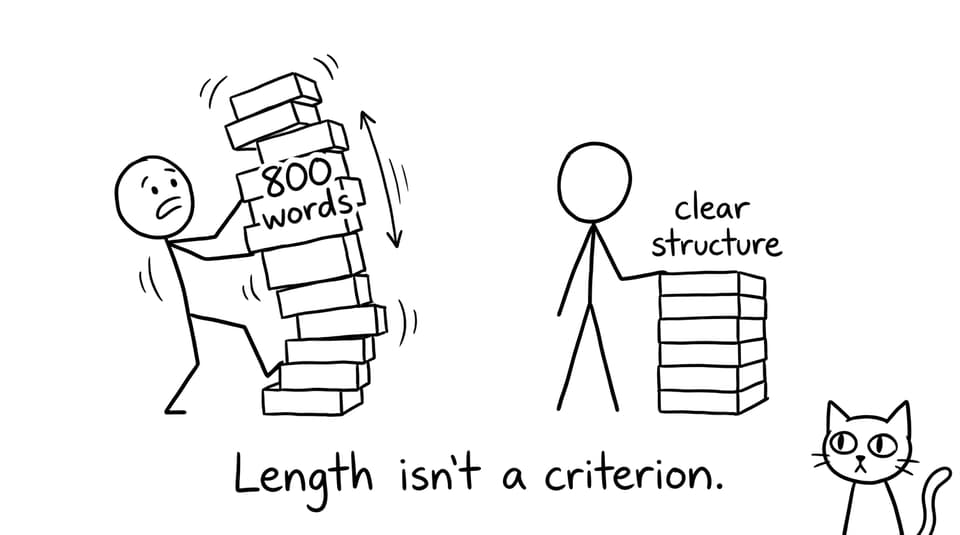
Fix: build a reusable paragraph frame.
Try: Point -> Evidence -> Explain -> Link. Then repeat. Short paragraphs that land clearly often beat long paragraphs that wander.
Mistake: Quoting without commentary
Quotes are not analysis. They’re raw material.
Common MYP problems include:
-
dropping in a long quote
-
adding no explanation
-
assuming the quote “proves” the point automatically
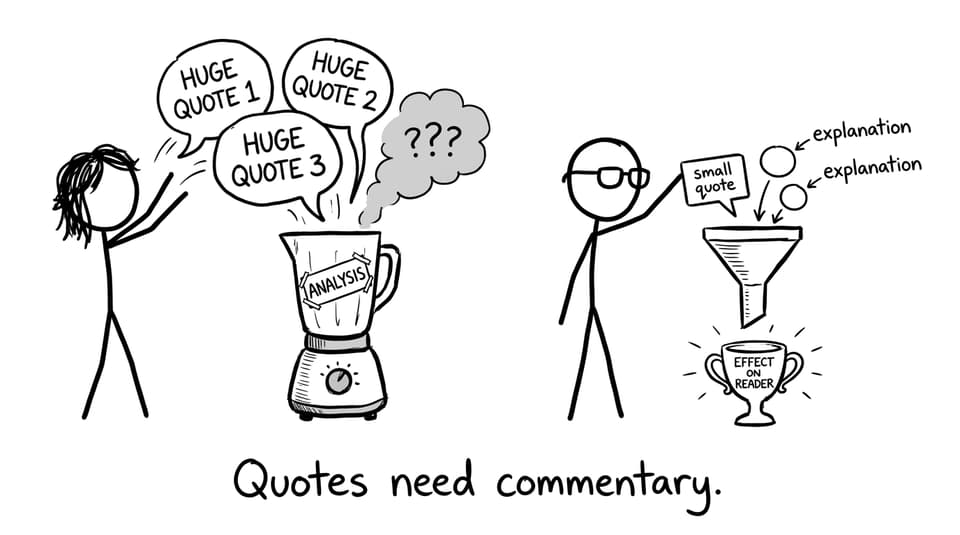
Fix: limit yourself to a short quote and force explanation.
After every quote, write two sentences:
-
What does it show?
-
How does it create meaning or impact?
If you need technique vocabulary that stays clear (not fancy for the sake of it), RevisionDojo’s Bias notes for MYP are a good model for “feature -> purpose -> effect” writing.
Mistake: Trying to sound “advanced” instead of being precise
Some students chase complexity: longer words, longer sentences, abstract phrasing.
But in MYP, unclear writing often hides unclear thinking.
Fix: aim for controlled clarity.
If a sentence has three commas, see if it should be two sentences. If a word feels decorative, replace it with a precise verb: suggests, frames, implies, emphasises, contrasts.
Mistake: Not using feedback from previous tasks
Feedback is the closest thing you get to a map. Ignoring it means you keep walking in circles.
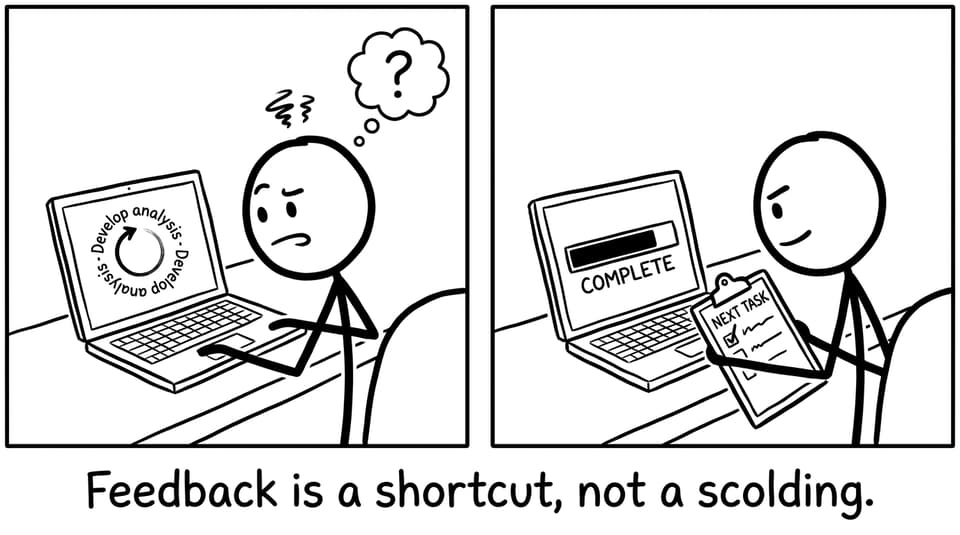
Fix: turn feedback into one micro-drill.
Example: if you keep getting “develop analysis,” your drill is: one paragraph, one quote, three explanation sentences, one link back to the question.
On RevisionDojo, students speed this up with Grading tools for rubric-aligned checks, AI Chat for “tell me what to improve next,” and Study Notes plus Flashcards to keep language precise. For repeated practice, use the RevisionDojo Questionbank to build consistent reps across skills.
Closing: the MYP advantage is an approach
The students who break through in MYP Language tasks aren’t necessarily writing more. They’re writing with sharper intention: criteria-first, structured, and explained.
If you want to make that approach automatic, build a small weekly loop on RevisionDojo: practise with Questionbank, tighten understanding with Study Notes, keep language fresh with Flashcards, use AI Chat to challenge your thinking, and apply Grading tools to turn feedback into the next drill. Start at the RevisionDojo MYP hub and make your next task the one where the plateau finally breaks.