

In IB Design Technology, the fear usually shows up at the worst possible time: you’re deep into your project, you find a product that already solves most of the problem, and your brain whispers, “If this exists… am I done for?”
That whisper is loud because you care about marks and academic honesty. But it’s also slightly mistaken.
IB Design Technology doesn’t reward students for inventing from a vacuum. It rewards students for design thinking: identifying a real user need, analysing existing solutions, and making evidence-based improvements. Reuse is often the starting line, not the finish line.
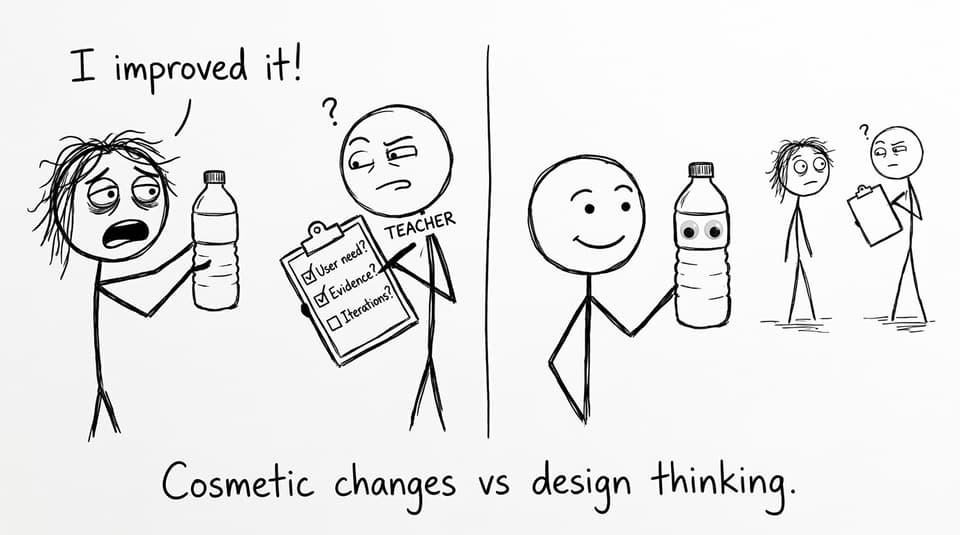
Quick checklist: reuse the smart (and safe) way in IB Design Technology
Use this before you commit to an idea:
-
Can you name specific user needs the current product does not meet?
-
Can you show measurable improvements (ergonomics, sustainability, durability, cost, accessibility)?
-
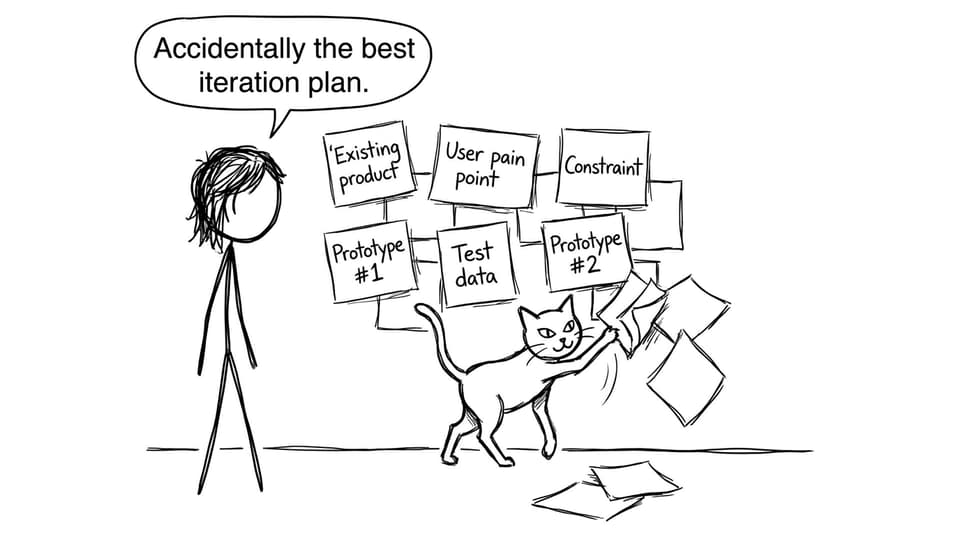
Can you document iterations (prototype 1, test data, changes, prototype 2)?
-
Can you cite and credit sources clearly (images, dimensions, inspiration, research)?
-
Can you explain why your solution is fit for a particular user in a particular context?
If you can tick most of these, you’re in a strong place.
For a bigger course overview, keep The Complete Guide to IB Design Technology open in another tab.
What “reusing ideas” actually means in IB Design Technology
In real design, almost nothing is purely original. Designers borrow, remix, and improve. IB Design Technology mirrors that reality.
Reusing ideas means you might:
-
Analyse an existing product as a baseline
-
Identify flaws, trade-offs, or unmet needs
-
Adapt the concept for a more specific user group
-
Combine features from multiple products into a more coherent solution
-
Redesign for sustainability (materials, repairability, circular economy)
A good mental model is: inspiration is allowed; misrepresentation is not.
If you want syllabus-aligned topic support while you do this, the IB Design Technology hub is the cleanest place to build your foundations.
Can you base your project on an existing product?
Yes. Many high-performing IB Design Technology projects start exactly there.
What matters is the distance between “this exists” and “this is my justified response to a user need.” That distance is built with research, testing, and iteration.
A practical approach:
-
Start with 2–3 competing products.
-
Do a short product analysis (strengths, weaknesses, constraints).
-
Extract one clear design opportunity: “Users need X, but current solutions fail because Y.”
-
Prototype, test, refine.
If you need inspiration that still leaves room for originality, browse IB Design Technology Project Ideas for Students and then narrow it to a very specific user.
What is not allowed (and what usually loses marks)
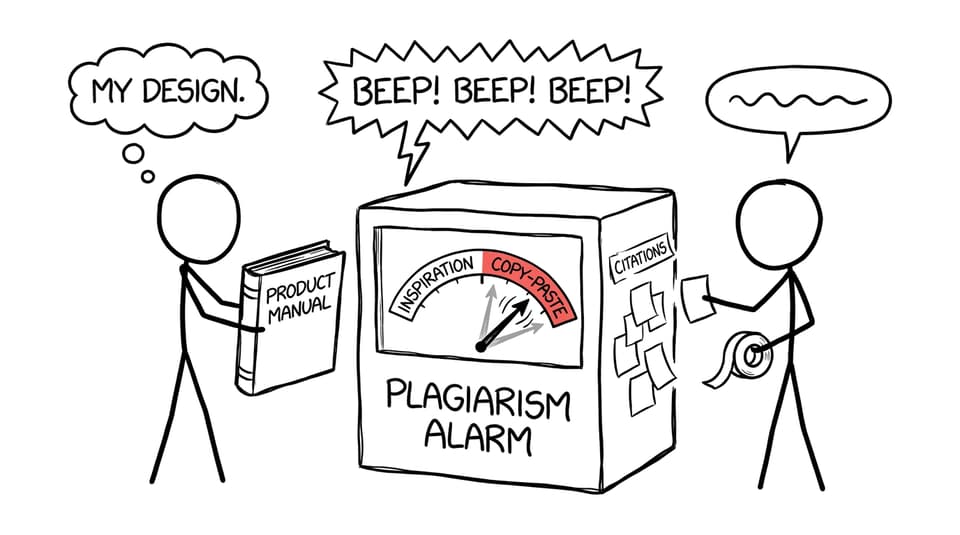
In IB Design Technology, trouble starts when “reuse” quietly becomes “copying.” Even if it doesn’t become a formal academic honesty issue, it often becomes a scoring issue because the work shows limited decision-making.
Avoid these:
-
Replicating a commercial product with only cosmetic changes
-
Copying plans, CAD files, or instructions and presenting them as your own process
-
Lifting large chunks of text or visuals without citation
-
Hiding the fact that your idea came from an existing product
If you’re unsure where the line sits, it helps to study ethical expectations in DT contexts: What Ethical Issues Commonly Appear in IB Design Technology.
How reuse can strengthen your IA (if you document it properly)
Here’s the quiet advantage: starting from an existing product gives you a benchmark.
That benchmark lets you:
-
Test your prototype against a real standard
-
Justify improvements with comparisons (comfort, time, waste, cost)
-
Show iteration clearly (“Version 1 failed this test; Version 2 fixes it”)
Examiners like maturity. They like evidence. They like a student who can say, “This design already works in general, but it fails for my user because…”
To see what that looks like in practice, read IB Design Technology IA Examples: What Top Projects Look Like.
And if you want a structured workflow while you revise and write, How to Use RevisionDojo for IB Design Technology Success shows how to keep your project moving without losing the plot.
Reusing your own previous work: the risky version of reuse
Reusing sources is usually fine. Reusing assessed work (submitting the same or heavily overlapping work for multiple components) is where students get burned.
So if you’re thinking, “I did something similar last year” or “I can recycle that write-up,” slow down.
A safer principle in IB Design Technology is: keep the interest, redesign the work. New justification, new development, new evidence.
Closing: reuse is normal -- hiding it is the mistake
The healthiest mindset shift in IB Design Technology is this: you’re not being graded for discovering a never-before-seen product. You’re being graded for showing disciplined design thinking -- user needs, evidence, iteration, and honest evaluation.
If you want to turn “inspiration” into a clear, high-mark process, RevisionDojo is built for that: Questionbank practice for exam wording, Study Notes and Flashcards for accurate terminology, AI Chat for quick clarity, Grading tools for rubric alignment, Predicted Papers and Mock Exams for exam readiness, and a Coursework Library plus Tutors when you want a second set of expert eyes.
Start with an existing product if you need to. Then prove you can make it better -- on purpose, for someone real. That’s IB Design Technology at its best.