



Artificial intelligence rarely walks into a room and announces, “I’m in charge now.” It arrives quietly: a recommendation you accept, a score you can’t see, a decision you can’t appeal. And one day you notice the shift -- not in the technology, but in the authority behind it.
In IB Digital Society, that quiet shift is the point. When AI supports or replaces human judgment, it changes who gets to decide, who gets listened to, and who carries responsibility when things go wrong. If you can explain that clearly in exams and in your internal assessment, you’re already thinking like a top student.
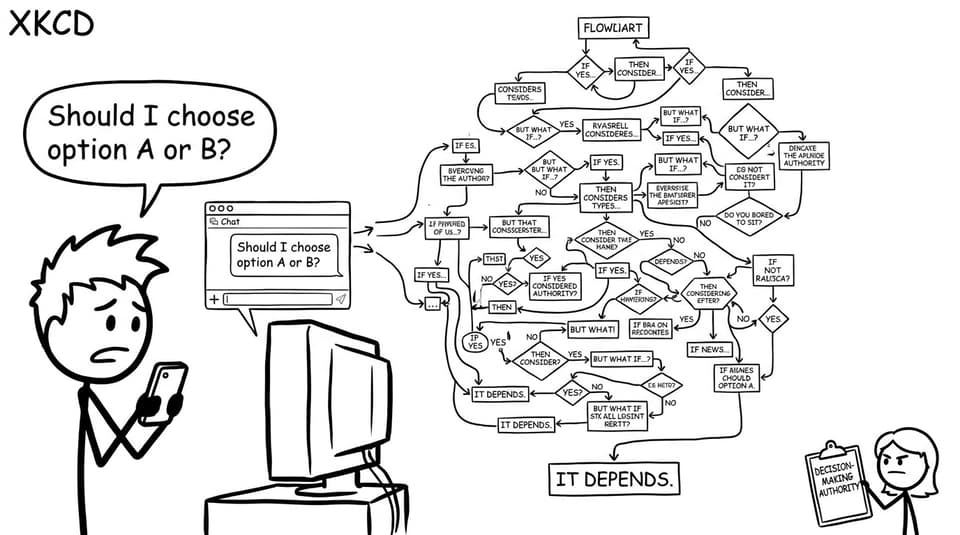
Quick checklist: what to look for in AI authority questions
Use this mini-checklist whenever you see an AI example in IB Digital Society:
-
Where does decision-making authority sit? Human, AI, or a hybrid?
-
Who designed the rules and training data? (Hidden authority counts.)
-
Who can override the output? And how often does that happen in practice?
-
Who is accountable for harm or errors? Company, state, school, developer, user?
-
Can the decision be explained and challenged? Transparency and appeal matter.
-
Who benefits, and who carries the risk? Individuals vs communities.
To ground your course concepts quickly, start from the IB Digital Society hub on RevisionDojo: IB Digital Society Resources.
What “decision-making authority” means in IB Digital Society
In IB Digital Society, decision-making authority is about power with consequences. It’s the ability to shape outcomes that affect people and communities. AI complicates this because it can sit between “recommendation” and “decision” without looking like a decision-maker.
A useful way to phrase it in an exam response is:
Decision-making authority includes who sets the criteria, who controls the process, who receives the output, and who is responsible for the outcome.
If you want a strong course foundation for how the subject frames these issues, RevisionDojo’s overview helps: What Is IB Digital Society?.
How AI changes who decides (without needing technical detail)
You don’t need to explain neural networks to do well in IB Digital Society. What you do need is a clear social explanation of how AI systems produce outputs and how institutions use those outputs.
Most exam-friendly descriptions include three steps:
-
Inputs: Data about people, behavior, or contexts (often historical).
-
Processing: Algorithms identify patterns and generate predictions, classifications, or rankings.
-
Outputs: Recommendations, risk scores, flags, or automated actions.
Then comes the most important sentence in your analysis:
Authority shifts when the AI output becomes difficult to question, easy to scale, or treated as “objective.”
If you’re revising the “content” part of the syllabus, you can pair concept clarity with practice here: IB Digital Society Topic 3 - Content and Topic 3 Learn lessons.
Why AI decision-making authority matters: power, trust, and scale
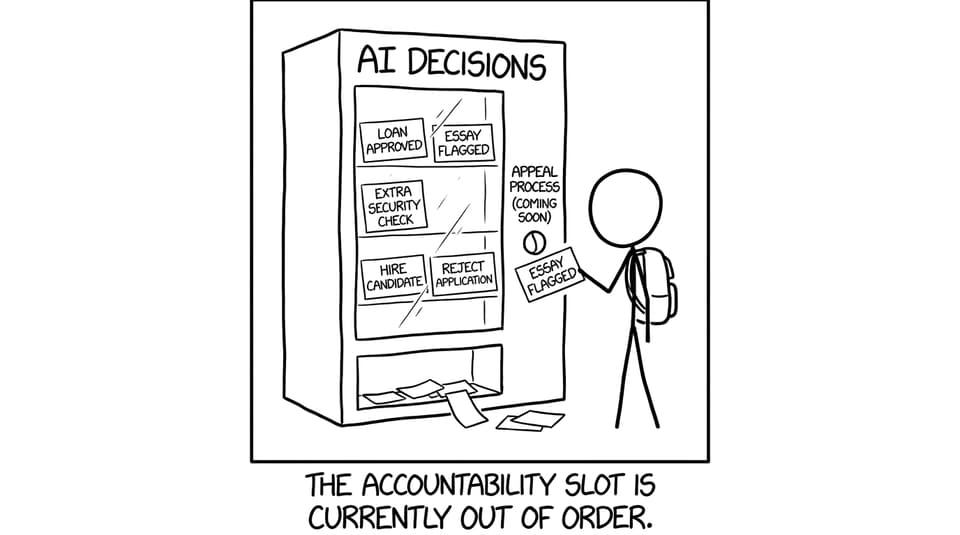
AI authority matters in IB Digital Society because it can multiply impact. A human decision-maker can be inconsistent, but is also interruptible. An AI-driven workflow can be consistent, but also unstoppable.
Here are three exam-ready implications:
Reduced transparency can become reduced trust
When a system is proprietary, complex, or hidden behind “computer says no,” individuals may feel powerless. That feeling changes behavior: people self-censor, disengage, or stop appealing because it seems pointless.
Power concentrates upstream
Authority often sits with those who:
-
choose the training data
-
define “success” (accuracy, profit, risk reduction)
-
deploy the tool at scale
In IB Digital Society, that’s a power-and-systems story, not a tech story.
Accountability gets blurry
Institutions can treat AI as a shield: “the model decided.” Your analysis should push back. Even if an algorithm produced the output, humans chose to trust it, apply it, and ignore edge cases.
To sharpen ethical evaluation language, use: How to Evaluate Ethics in IB Digital Society Effectively and The Role of Ethics in IB Digital Society.
Impacts to compare: individuals vs communities
A common weak answer in IB Digital Society lists “pros and cons” without showing who experiences what. Strong answers separate impacts.
Individual-level impacts
-
Convenience and speed (less waiting, fewer human bottlenecks)
-
Loss of explanation (“why was I flagged?”)
-
Lower ability to challenge (appeals require resources, confidence, time)
-
Autonomy pressure (people adapt to the system’s logic)
Community-level impacts
-
Reinforcing inequality if the data reflects historical bias
-
Standardizing treatment across groups, even when needs differ
-
Changing institutional trust (schools, hospitals, policing, hiring)
When you revise, practice writing one paragraph for individuals and one for communities. That structure consistently scores better because it shows control of the course lens.
Exam and IA strategy: make authority visible
In exams, questions often hide the real issue in plain sight: “An AI system helps a judge…” or “A platform uses automated moderation…” Your job in IB Digital Society is to identify the moment the AI output becomes authoritative.
Try this 3-sentence template:
-
Identify the decision and actor: “The system influences X decision made by Y.”
-
Explain authority shift: “Authority shifts because the output is treated as evidence/permission/constraint.”
-
Evaluate: “This is justified/not justified to the extent that… because impacts on individuals/communities and accountability mechanisms…”
For realistic practice, combine RevisionDojo’s Questionbank and feedback loops: Questionbank. For targeted Digital Society ethics-style items, drill: 2.7 Values and ethics Questionbank.
For the IA, don’t study “AI” in general. Pick one AI-driven decision system where authority, appeals, and responsibility are visible. If you need help narrowing a research question, use: How to Write a Strong IB Digital Society IA Research Question.
Closing: turn AI into a scoring opportunity
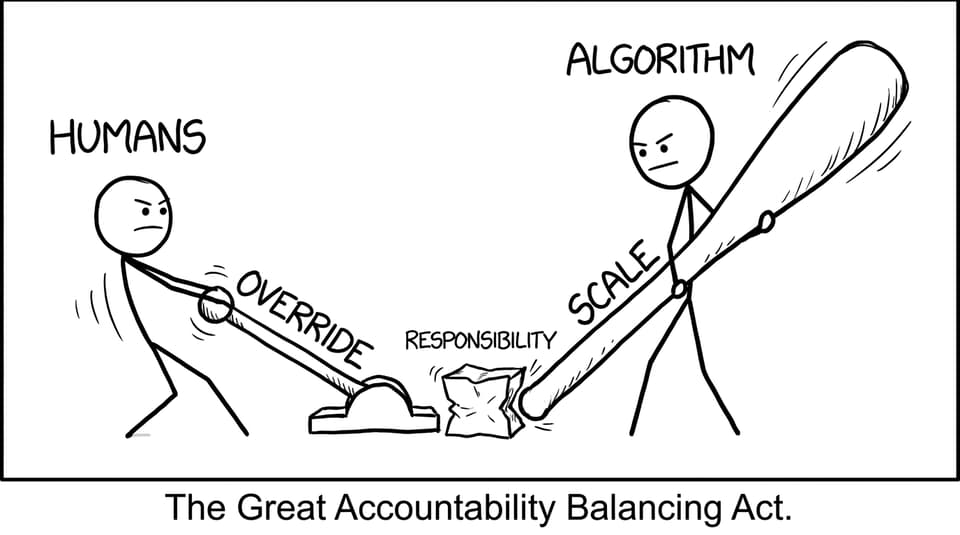
AI will keep creeping into decision-making. That’s not a prediction, it’s the pattern. The real question in IB Digital Society is whether we notice when “helpful automation” becomes authority -- and whether society builds the right checks before the scale becomes irreversible.
If you want to revise this topic efficiently, run it like a system: learn the concepts with RevisionDojo Study Notes, lock language with Flashcards, practice application in the Questionbank, and use AI Chat when you get stuck on an example. When you’re ready to pressure-test, add Mock Exams and Predicted Papers, then use Grading tools to see what the markscheme rewards. And for IA support, the Coursework Library and Tutors can help you shape a focused, high-scoring inquiry.
For a broader roadmap through the course, revisit: Ultimate Survival Guide for IB Digital Society Students. Your goal isn’t to fear AI in IB Digital Society -- it’s to explain, with calm precision, who holds power when a machine starts making choices that matter.