If you have ever watched an NGO roll into a community with boxes, banners, and big promises, you have probably felt two things at once: hope and suspicion. Hope, because something is finally happening. Suspicion, because you are not sure what happens after the cameras leave. In IB Global Politics, that tension is the whole point: NGOs can be genuinely life-changing and still be politically complicated. So, are NGOs effective in promoting development? In IB Global Politics, the best answers do not choose a side too quickly. They weigh outcomes, power, sustainability, and who gets to decide what “development” even means.
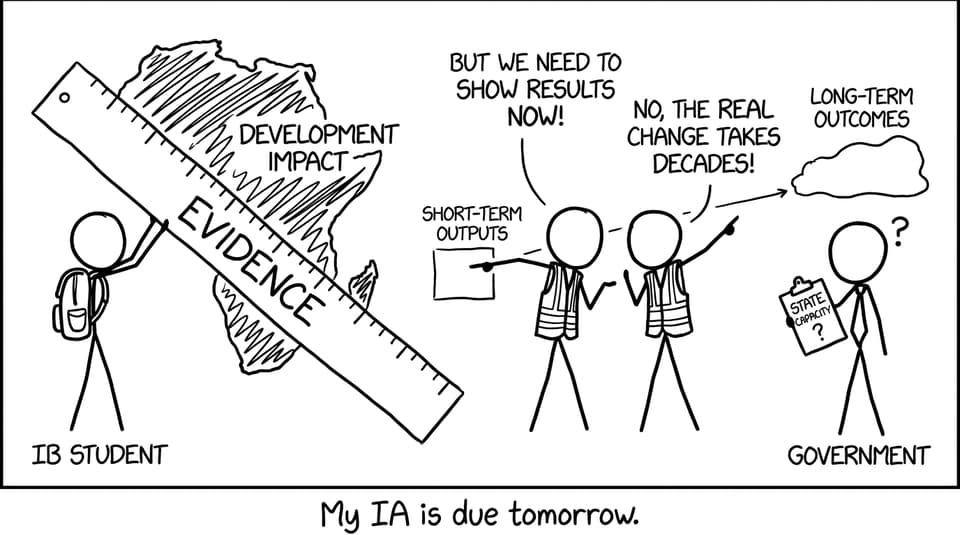
Quick checklist for evaluating NGOs (exam-ready)
Use this IB Global Politics checklist whenever a question asks you to evaluate NGO effectiveness in development:
-
Impact: What changed, for whom, and how do we know?
-
Time horizon: Immediate relief or long-term capacity?
-
Scale: Local success vs national transformation.
-
Accountability: Accountable to communities, states, or donors?
-
Politics: Cooperation, resistance, or restrictions by governments?
For the full topic framing, start with IB Global Politics Resources.
Why NGOs can be effective in development (IB Global Politics strengths)
In IB Global Politics, NGOs are non-state actors that often succeed because they can do what large institutions struggle to do: move fast, work locally, and adapt.
Local access and community trust
Many NGOs operate close to the ground. They can tailor projects to local needs, languages, and norms, which can increase participation and ownership. In development terms, this matters because a water system or school program is not just infrastructure; it is also social buy-in. If communities feel the project is “theirs,” it is more likely to survive.
To strengthen this angle, link NGOs to broader civil society. RevisionDojo’s notes on Civil society organizations including NGOs help you connect grassroots action to political legitimacy and participation.
Filling gaps when the state cannot
NGOs often deliver healthcare, education, food aid, or clean water in places affected by poverty, conflict, or disasters. In IB Global Politics, this is a key argument: where state capacity is weak, NGOs can protect human development by meeting urgent needs.
If you want syllabus-aligned language for “development,” use Development and Sustainability and the supporting Drivers of Development notes to add depth.
Innovation and agenda-setting
NGOs also influence development indirectly. They pilot new approaches, collect data, and advocate for policy change. That advocacy is political power, even without formal authority. To connect this to core concepts, revision on What is power in global politics? gives you the language to explain how NGOs shape norms and priorities.
Why NGOs can be ineffective (or limited) in promoting development
The counterclaim is not that NGOs are “bad.” It is that development is systemic, and NGOs often face structural constraints.
Donor dependence can distort priorities
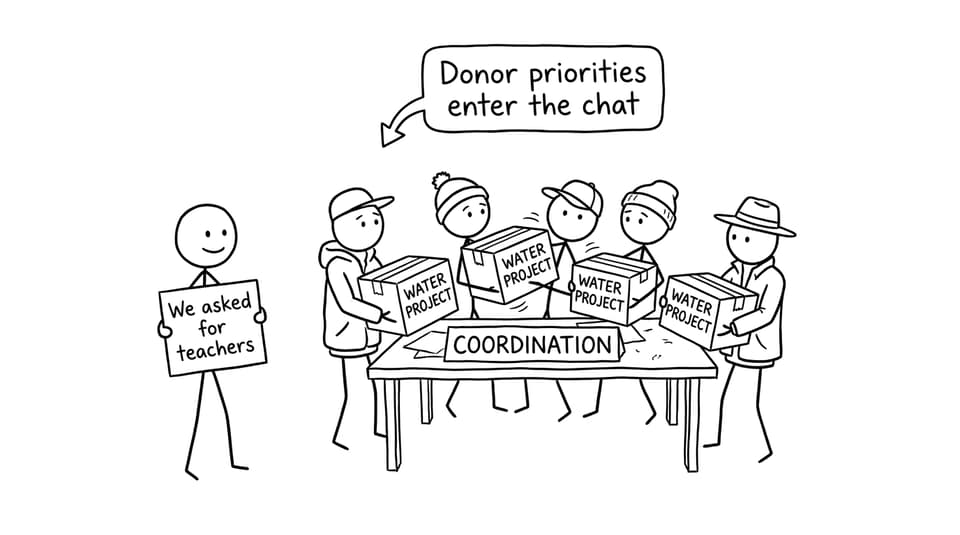
Many NGOs rely on external funding, and donors may prefer projects that are measurable, marketable, or aligned with foreign priorities. In IB Global Politics, this raises a classic evaluation point: whose interests shape development? Short funding cycles can also push quick “outputs” over sustainable outcomes.
Limited scale and coordination problems
NGOs may succeed in one district but struggle to scale nationally. Without coordination, multiple NGOs can duplicate work or compete for staff and resources. That fragmentation can reduce overall effectiveness, especially in sectors like education or health that require national planning.
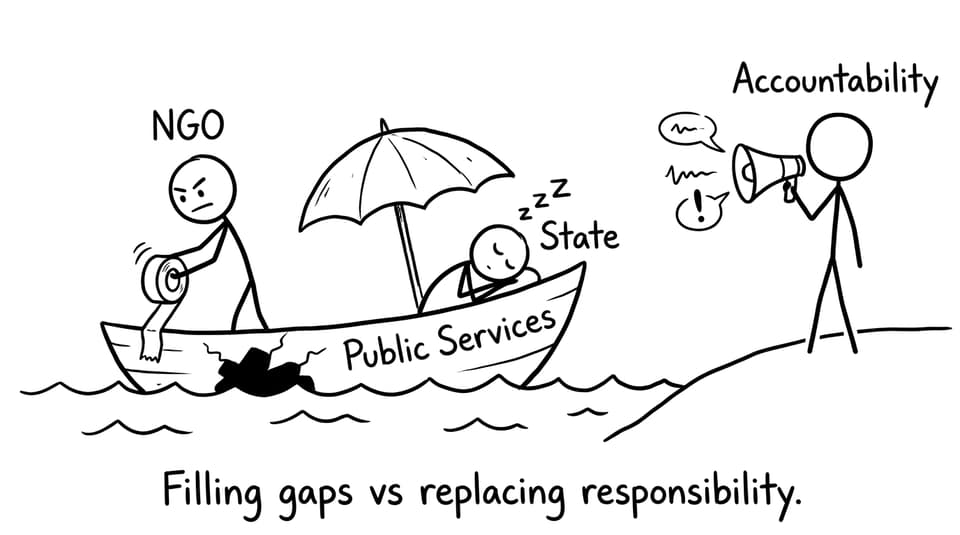
Risk of weakening state responsibility
A major criticism in IB Global Politics is that NGOs can substitute for the state. If citizens start viewing NGOs as the default service provider, accountability to elected institutions may weaken. And if governments offload responsibility, long-term capacity building becomes harder.
To link this to sovereignty and political authority, RevisionDojo’s Is state sovereignty declining? can help you explain why some states restrict NGOs or treat them as political threats.
How to turn this into a top-mark IB Global Politics paragraph
A strong IB Global Politics evaluation usually sounds like this:
-
Claim: NGOs are effective at local, short-to-medium term development because they are flexible and community-facing.
-
Counterclaim: Their donor dependence, coordination limits, and inability to replace state capacity restrict long-term effectiveness.
-
Judgement: NGOs are most effective when they complement states, strengthen accountability, and build institutions rather than permanently filling gaps.
For timed practice, use the Interactions of political stakeholders and actors Questionbank and check your structure against the Paper 2 Guide notes.
Conclusion: the IB Global Politics takeaway
In IB Global Politics, NGOs are best understood as development problem-solvers and political actors at the same time. They can deliver fast, local wins, innovate, and advocate for fairer priorities. But they can also be constrained by donors, fragmented coordination, and the deeper reality that sustainable development usually requires functioning states. If you want to revise this efficiently, use RevisionDojo’s Questionbank, Study Notes, Flashcards, AI Chat, Grading tools, Predicted Papers, Mock Exams, Coursework Library, and Tutors to practise writing the kind of balanced judgement that earns top marks in IB Global Politics.


