


Quotations can feel like tiny pieces of glass: handled well, they catch the light and prove you were really there in the text. Handled badly, they cut up your paragraph and leave the reader stepping around shards.
In IB English, examiners don’t reward evidence for existing. They reward evidence that works, proof that is selected with intention, integrated with control, and analysed with purpose. If your quotes land smoothly, your writing sounds like one voice thinking clearly under pressure. If they land clumsily, even a strong idea can start to wobble.
Why quotation control matters in IB English
A well-embedded quotation does three jobs at once: it shows close reading, tightens your claim, and gives you a specific detail to analyse. In IB English, that combination is basically the definition of “convincing.”
Smooth quotation use also keeps you out of the most common trap: retelling. When students panic, they often lean on long quotes or plot recap to fill space. But analysis is what gets rewarded, especially in Paper 1 commentary writing and Paper 2 comparison.
If you want the bigger exam context, pair this skill with Mastering IB English Paper 1: A Complete Guide and IB English Paper 2: Comparative Essay Tips That Work.
Quick checklist: embed, then explain
Use this short loop before you add any textual evidence in IB English:
-
Make a clear claim (one sentence).
-
Choose a micro-quote (2-6 words) that proves it.
-
Embed the quote grammatically inside your sentence.
-
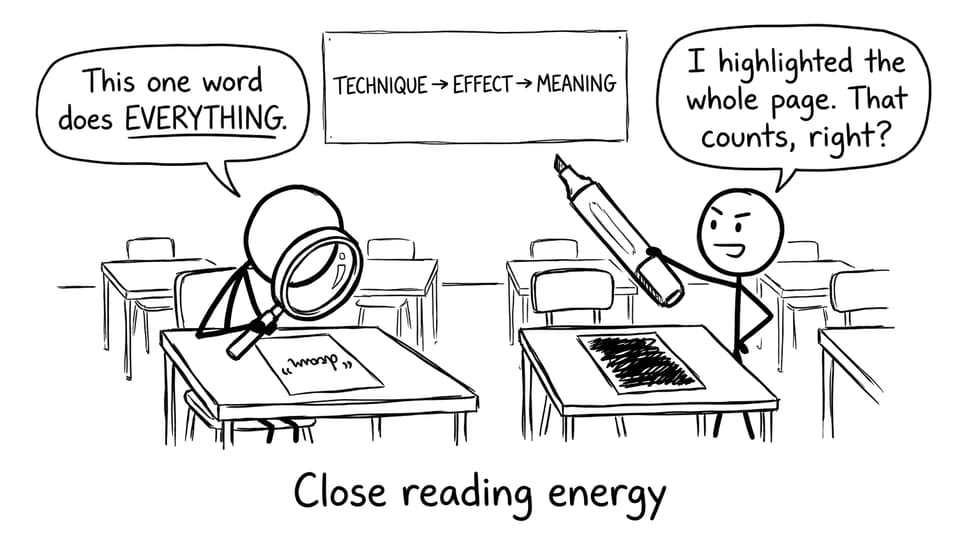
Analyse immediately: technique -> effect -> meaning.
-
Link back to the thesis or the question.
This same checklist shows up again and again in top responses, whether you’re working on unseen analysis or a prepared comparative argument.
Choosing quotes that actually earn marks in IB English
Strong quotation integration starts before you write: it starts with selection.
Aim for quotes that contain craft, not just content. You’re hunting for diction, imagery, tonal shifts, symbolism, narrative voice, structure, the parts you can unpack.
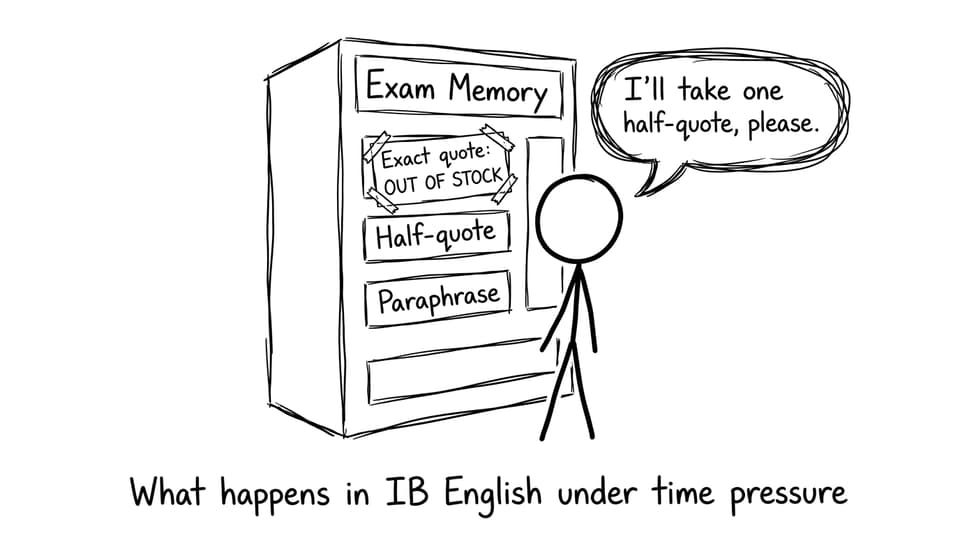
A helpful mental model is “high leverage.” One short phrase that lets you talk about two techniques is worth more than three lines you never truly analyse.
For Paper 2 practice, RevisionDojo’s guidance on “super quotes” is especially useful: IB English Paper 2 Quotes: How to Use Them Effectively.
How to integrate quotations smoothly (without breaking flow)
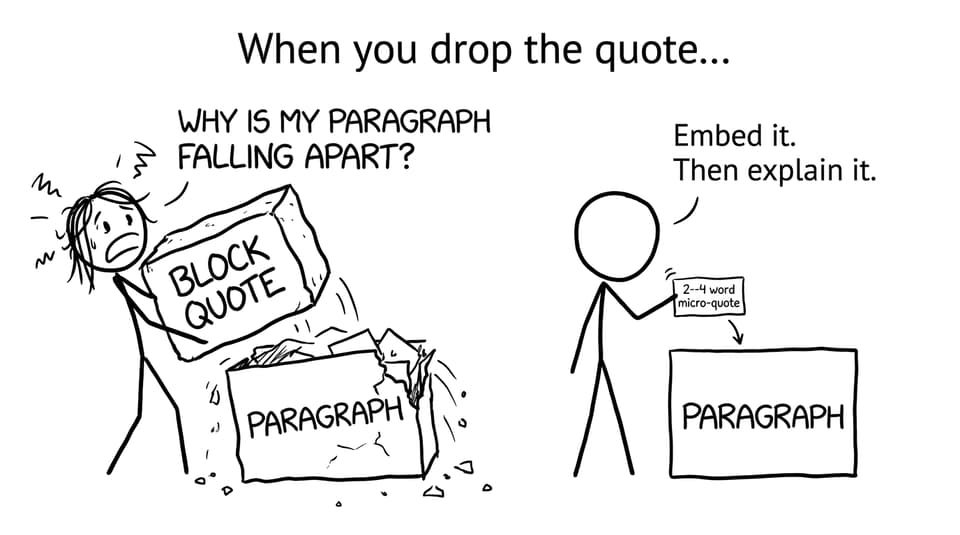
In IB English, “dropping” a quotation usually looks like this:
- The writer states, “…”
It’s not incorrect, but it often sounds bolted-on. A smoother method is to let the quotation become part of your grammar.
Use embedded fragments
Instead of quoting a whole sentence, borrow the most meaningful words:
-
Weak: The narrator says, “The street was silent,” which shows loneliness.
-
Strong: The “silent” street externalises the narrator’s isolation, using soundlessness to make absence feel physical.
Notice what changed: the quote became a texture inside your sentence, and the analysis arrived immediately.
Use “that” or “as” to stitch ideas together
These small words help quotes slide in naturally:
-
The image suggests that “…”
-
The author implies this as “…”
If you want more targeted drills, RevisionDojo’s focused lesson is built for this exact skill: Embedding Quotes in English Lit and the companion notes page IB English A Lang & Lit Embedding Quotes Notes.
Blend commentary with evidence: the 1:3 rule
A practical ratio for IB English exam writing: for every one line of quotation, aim for roughly three lines of explanation.
Your analysis should answer:
-
What technique is operating here?
-
What effect does it create for the reader?
-
Why does that effect matter for the text’s meaning or purpose?
This is the heartbeat of Paper 1. If you’re training for that specifically, keep Tips for Writing Strong IB English Commentaries open during practice and compare your paragraphs against the expectations.
Comparative essays: balanced quotes, balanced control
In IB English Paper 2, quotation integration has one extra constraint: fairness. If you quote heavily from Text A and barely from Text B, your comparison starts to feel lopsided even if your ideas are good.
Try a simple habit: plan your paragraph with paired micro-quotes (one from each text) before you write. Then build parallel analysis that compares method, not storyline.
RevisionDojo has strong planning support for this, including Comparative Essay Planning: Theme vs. Form vs. Content and a clear structural overview in IB English Paper 2 Structure: Lang & Lit Guide.
A calm way to practise this skill (and make it stick)
One of the quiet advantages in IB English is that quotation integration improves fast with repetition. Do ten short paragraph drills, and you’ll usually see more progress than from writing one full essay and hoping for the best.
Use RevisionDojo as a loop:
-
Pull targeted practice from the Questionbank and build short responses.
-
Store strong evidence in Flashcards as micro-quotes by theme/technique.
-
Use AI Chat to challenge your interpretation and generate counter-readings.
-
Run your drafts through Grading tools to spot where evidence is dropped or under-analysed.
-
Scale up with Mock Exams and Predicted Papers when your method feels stable.
-
If you need personal feedback on phrasing and clarity, RevisionDojo Tutors can help you polish the “embed + explain” rhythm that earns marks.
Conclusion: make quotes feel inevitable
In IB English, the best quotations don’t announce themselves. They arrive as if your sentence naturally needed them, and your analysis follows so quickly the reader feels guided rather than interrupted.
Practise choosing micro-quotes, embedding them cleanly, and explaining their effect immediately. Then use RevisionDojo to turn that habit into muscle memory through timed drills, smart feedback, and exam-style practice. When the exam clock starts, you won’t be searching for the perfect quotation. You’ll be building paragraphs that sound inevitable.


