


The night the case study started talking
Three months before the exam, the pre-release statement lands like a polite interruption.
Not a full case. Not a full syllabus update. Just enough new language to remind you that real businesses never wait for guide updates.
That's why Abraca ABC terminology IB Business Management matters. It's not trivia. It's the vocabulary of the concrete industry colliding with the economics of e-waste, and the exam expects you to speak both dialects, clearly, briefly, and with application.
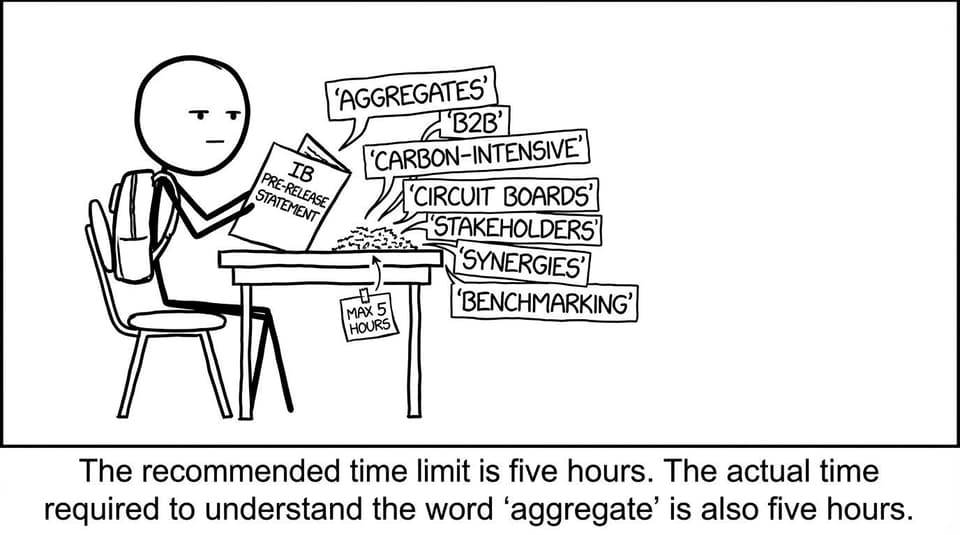
The good news: you're only expected to spend a maximum of five hours researching. The better news: if you learn the terms in the way examiners reward, definition + context + decision impact, you'll turn that five hours into marks.
Quick checklist: how to learn Abraca terms in 5 hours
Use this mini-plan to master Abraca ABC terminology IB Business Management without drowning in side quests.
- Read the first four paragraphs twice: first for story, second for numbers, stakeholders, and constraints.
- Make a one-page glossary: each term gets (1) definition, (2) where it appears in ABC, (3) why it matters to a decision.
- Sort terms into functions: operations, marketing, finance, ethics/sustainability.
- Create 10 micro-sentences you can reuse in Paper 1: "Because ABC is B2B, its promotion is relationship-based rather than mass-market."
- Practice application using RevisionDojo:
- drill definitions with IB Business Management Key Definitions
- train exam phrasing with Understanding the IB Business Management 10 Marker Rubric
- simulate timed conditions with IB Business Management Predicted Papers
Abraca (ABC) context in one paragraph (so you can apply terms)
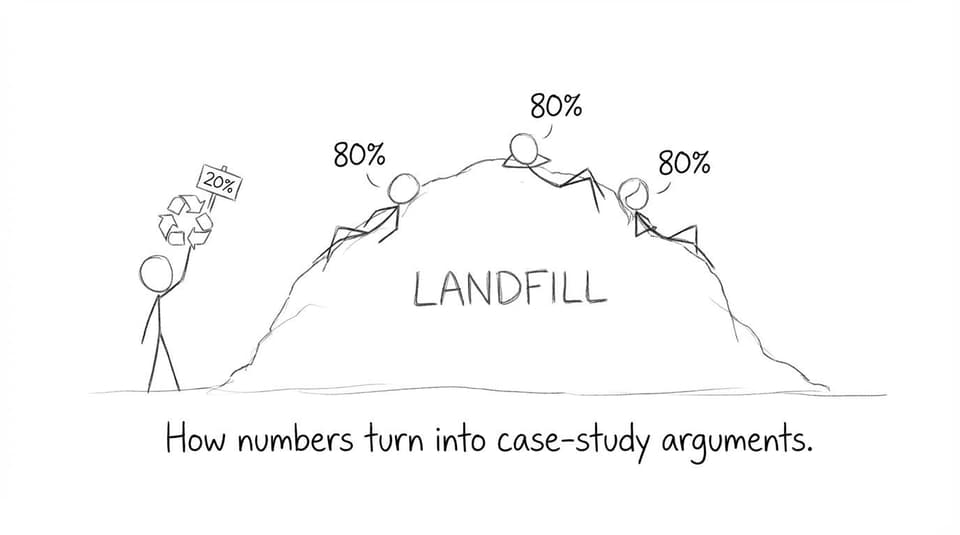
Abraca (ABC) is Country Z's largest concrete producer, publicly held, buying limestone and clay aggregates to manufacture cement to make concrete. During research into recycled aggregates, ABC's scientists discovered a room-temperature process to recover gold and other precious metals from electronic circuit boards (e-waste). Globally, 50 million tonnes of e-waste is produced yearly; 20% is recycled and 80% goes to landfill. ABC opened an e-waste processing factory in 2024, processing 100 tonnes of circuit boards weekly and selling recovered gold to jewellery makers. ABC is considering efficiency improvements, environmental impact reduction, becoming more market-orientated, and growth options.
That paragraph is your application engine. The terms below are the fuel.
Abraca ABC terminology IB Business Management: operations and materials terms
These are the words that help you sound like you understand what ABC actually makes and how.
Aggregates (as construction materials)
Aggregates are granular materials used in construction, commonly mixed into concrete to provide bulk, strength, and stability.
In Abraca ABC terminology IB Business Management, aggregates matter because ABC buys huge quantities of limestone and clay aggregates, and it is researching recycled aggregates. That links directly to operations strategy (input sourcing), costs (cheaper inputs vs processing costs), and quality management (strength, durability, consistency). In Paper 1, you can evaluate recycled aggregates by weighing brand and sustainability benefits against technical risk (defects, regulation, product performance).
Limestone, clay, cement, concrete
- Limestone: a key raw material used to make cement.
- Clay: another raw material used in cement production.
- Cement: the binding material produced from processed raw materials; a key input into concrete.
- Concrete: the final construction product made using cement plus aggregates, water, and other components.
Why it matters: cement production is typically energy-intensive, so when the case mentions "carbon-intensive," it's often pointing at this part of the value chain. In Abraca ABC terminology IB Business Management, knowing the materials helps you build credible analysis of efficiency investments (new kilns, process improvements, energy sourcing) and sustainability trade-offs.
Plastic-shredding machinery
Plastic-shredding machinery breaks down plastics into smaller pieces for recycling or processing.
In the case context, it signals ABC's broader interest in recycling technologies and circular inputs. This is useful in Paper 1 when discussing methods to reduce environmental impact: machinery investment can reduce landfill waste but raises questions about capex, training, capacity, and operational risk.
Abraca ABC terminology IB Business Management: e-waste and recovery terms
These terms explain ABC's second business engine: turning discarded tech into valuable metals.
E-waste
E-waste is discarded electronic equipment and components, such as phones, computers, and game consoles.
In Abraca ABC terminology IB Business Management, e-waste matters because it creates both a sustainability problem and a resource opportunity. ABC's new factory makes e-waste part of its operations strategy, not just CSR. In answers, treat e-waste as a resource stream with supply uncertainty, regulatory scrutiny, and reputational upside.
Circuit boards
Circuit boards are the internal electronic boards that connect components and conduct electricity; they often contain small amounts of precious and toxic metals.
For application: ABC processes circuit boards weekly. That gives you concrete operational scale to reference in analysis (capacity utilization, throughput, bottlenecks, economies of scale).
Toxic metals
Toxic metals are hazardous metallic substances (often present in electronics) that can cause environmental and health harm if mishandled.
This term is a gift for stakeholder evaluation: employees (health and safety), communities (pollution risk), governments (regulation), and investors (liability). In Abraca ABC terminology IB Business Management, toxic metals let you show ethics without sounding generic; you can point to waste handling, training, and compliance costs.
Recycling and landfill
- Recycling is processing waste materials to reuse them as inputs.
- Landfill is disposal of waste by burying it, often with long-term environmental consequences.
The case gives global proportions (20% recycled, 80% landfill). Use those numbers to justify urgency and opportunity. In Paper 1, numbers become leverage: they strengthen your evaluation of ABC's environmental strategy and legitimacy.
Abraca ABC terminology IB Business Management: market and strategy language
These terms are how you translate "interesting science" into business decisions.
Business-to-business (B2B)
B2B means a business sells to other businesses, not directly to final consumers.
For ABC, concrete sales are likely B2B (construction firms, developers, governments). That changes marketing: relationships, tendering, long contracts, reliability, and reputation matter more than mass advertising. In Abraca ABC terminology IB Business Management, B2B helps you evaluate "becoming more market-orientated" by discussing customer responsiveness, key account management, and service levels.
Carbon-intensive
Carbon-intensive describes a process that produces high greenhouse gas emissions per unit of output.
The old method of recovering metals by burning circuit boards at very high temperatures is described as carbon-intensive; cement production is also commonly carbon-intensive. This term can anchor strong evaluation: ABC's room-temperature recovery process may reduce emissions, improve brand legitimacy, and lower energy costs, but may require R&D spending, quality control, and scaling challenges.
Market-orientated
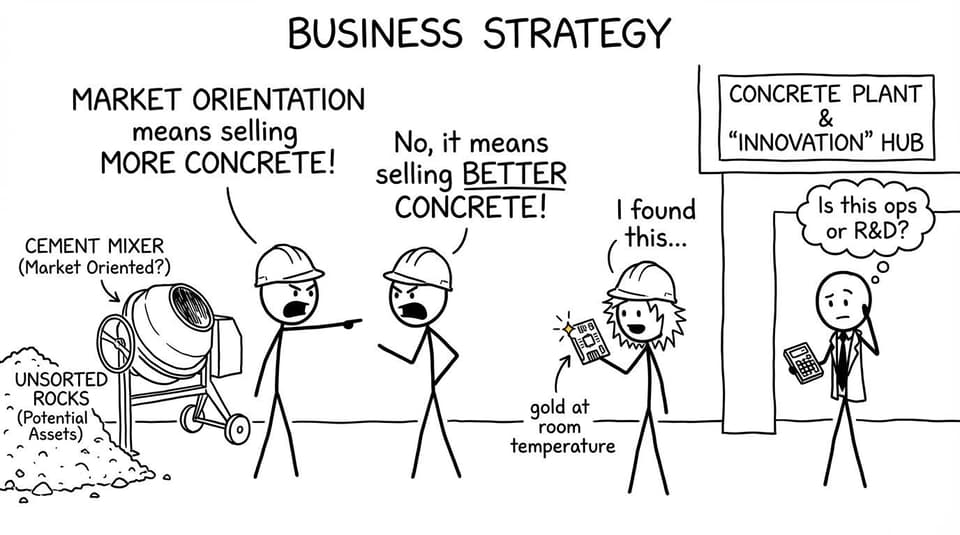
Market orientation is a business approach focused on identifying and meeting customer needs, supported by market research and responsiveness.
In Abraca ABC terminology IB Business Management, being market-orientated might mean ABC gathers feedback from construction clients about low-carbon concrete, adjusts product specifications, or creates new value propositions around recycled aggregates. It could also apply to the gold side: jewellers may care about traceability, ethical sourcing, and purity standards.
To sharpen this, practice applying the term using RevisionDojo's 4.4 Market research Questionbank.
Growth options
Growth options are strategic choices to increase a firm's size, market share, or product range.
ABC's situation hints at multiple paths: expand e-waste processing capacity, improve efficiency in concrete operations, develop new recycled concrete lines, or diversify further. If you want a clean tool-based structure, review RevisionDojo's BM Toolkit hub for SWOT and Ansoff-style thinking.
How to turn terminology into exam marks (definition is not enough)
A definition gets you started. Application gets you credit. Evaluation gets you the top band.
Here's a repeatable structure for using Abraca ABC terminology IB Business Management in any response:
- Define the term in one clean sentence.
- Apply it to ABC using a case detail (publicly held, 100 tonnes weekly, jewellers, B2B, etc.).
- Analyze the implication (costs, risks, capacity, stakeholder impact).
- Evaluate with a balanced judgement (short vs long term, financial vs ethical, feasibility).
To train this habit fast, use:
- IB Business Management Marks Format Explained to match depth to marks.
- RevisionDojo's Business Management subject hub to connect terminology back to syllabus areas (operations, strategy, ethics).
- The RevisionDojo homepage to access the full toolkit: Questionbank, Study Notes, Flashcards, AI Chat, Grading tools, Predicted Papers, Mock Exams, Coursework Library, and Tutors.
A mini "terminology bank" you can lift into answers
Use these as sentence starters (and adjust to the question).
- Because ABC is B2B, its marketing focus may shift toward long-term contracts, tendering, and reliability rather than mass promotion.
- Using recycled aggregates could reduce ABC's environmental impact, but it may increase quality control costs and risk inconsistent concrete performance.
- ABC's room-temperature recovery method may be less carbon-intensive, improving sustainability and potentially lowering energy costs.
- Processing circuit boards exposes ABC to stakeholder pressure due to toxic metals, increasing compliance and health-and-safety priorities.
- The global imbalance between recycling and landfill suggests reputational and regulatory opportunities for ABC if it scales responsible recovery.
Closing: make the terminology do work
The Abraca case is built on a quiet idea: modern businesses don't live in one category. A concrete producer can become an e-waste processor. An operations decision can become a sustainability argument. A technical discovery can become a growth strategy.
That's why Abraca ABC terminology IB Business Management isn't just language to memorize. It's language to think with.
If you want to turn these terms into consistent Paper 1 marks, RevisionDojo is the fastest path: the Questionbank to practice application, Study Notes to connect concepts, Flashcards to retain terms, AI Chat to test understanding, Grading tools to refine writing, Predicted Papers and Mock Exams to simulate exam conditions, the Coursework Library for exemplars, and Tutors when you want human feedback on your reasoning.
Build the glossary. Then make it speak in paragraphs. That's how Abraca ABC terminology IB Business Management becomes exam confidence, not just vocabulary.