



If you have ever stared at your draft and thought, “But I explained it so clearly… why does it still feel average?” you are not alone. In an IB IA, clarity matters. But clarity without thinking is like a perfect map with no destination. The examiner can see you know the content, yet the marks often cap because the IA rubric is built to reward reasoning, interpretation, and judgment, not long, careful explanation.
The hard part is emotional: explanation feels safe. It feels like school. Analysis feels like stepping onto a shaky bridge you built yourself. And that is exactly why the IB rewards it.
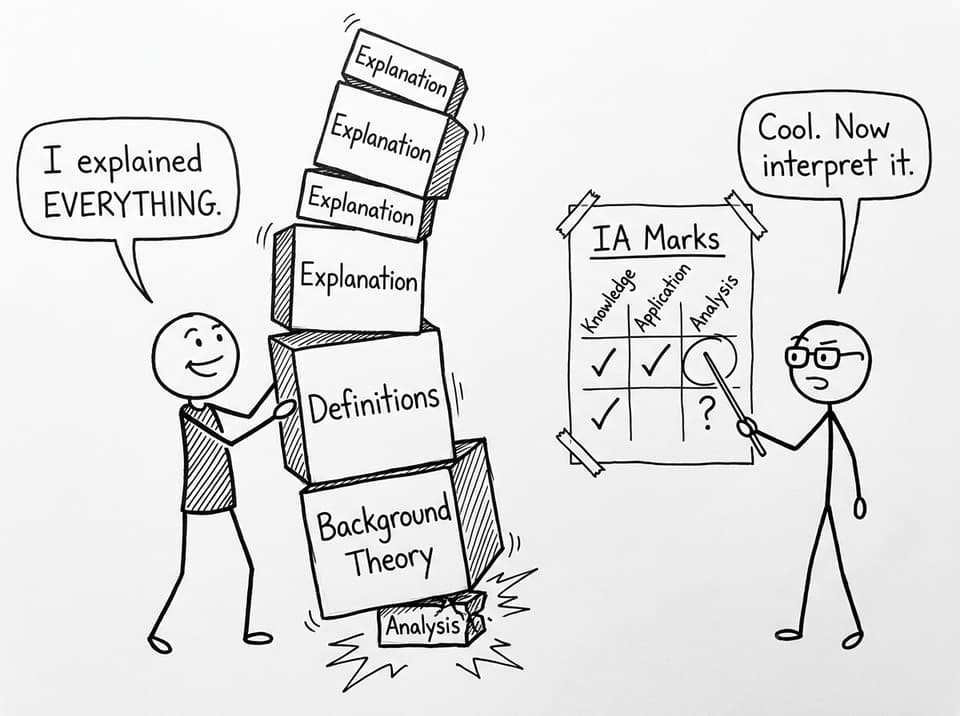
The IA checklist: when explanation helps (and when it hurts)
Use this quick diagnostic before you edit your IA:
-
Keep explanation only when it directly supports your research question (RQ) or aim.
-
After every explanation, add one sentence of interpretation (what it implies).
-
After every result, add one sentence of meaning (why it matters).
-
For every method choice, add one sentence of justification (why you did it that way).
-
In evaluation, avoid generic limitations; tie each limitation to its impact on your conclusion.
If you want a bigger structure to lean on, start with IB Coursework Guides and the subject-specific IB IA Guides.
Explanation proves knowledge; the IA rewards thinking
Explanation is what a textbook does: define, describe, summarize. In an IA, that is the entry ticket, not the performance.
Examiners assume you have studied the syllabus. What separates a top-band IA is not whether you can restate theory, but whether you can use it: interpret patterns, make decisions, weigh alternatives, and communicate a conclusion that feels earned.
A helpful move is to treat background theory like salt. Necessary. Powerful. But once you can taste it, you added too much.
Why “textbook paragraphs” cap your IA marks
The most common way explanation loses marks in an IA is subtle: it becomes writing that could belong to any investigation.
Try this test: if you deleted your RQ from the first page, would most paragraphs still make sense? If yes, your IA is probably floating in explanation rather than anchored in argument.
This is why strong students still get stuck. They write accurate content, but the examiner is scanning for criteria-linked signals: interpretation, justification, evaluation, and conclusion-building. A perfectly explained concept that does not move the RQ forward is, in rubric terms, expensive clutter.
For planning that protects analysis time, see How to Plan an IB IA Without Falling Behind.
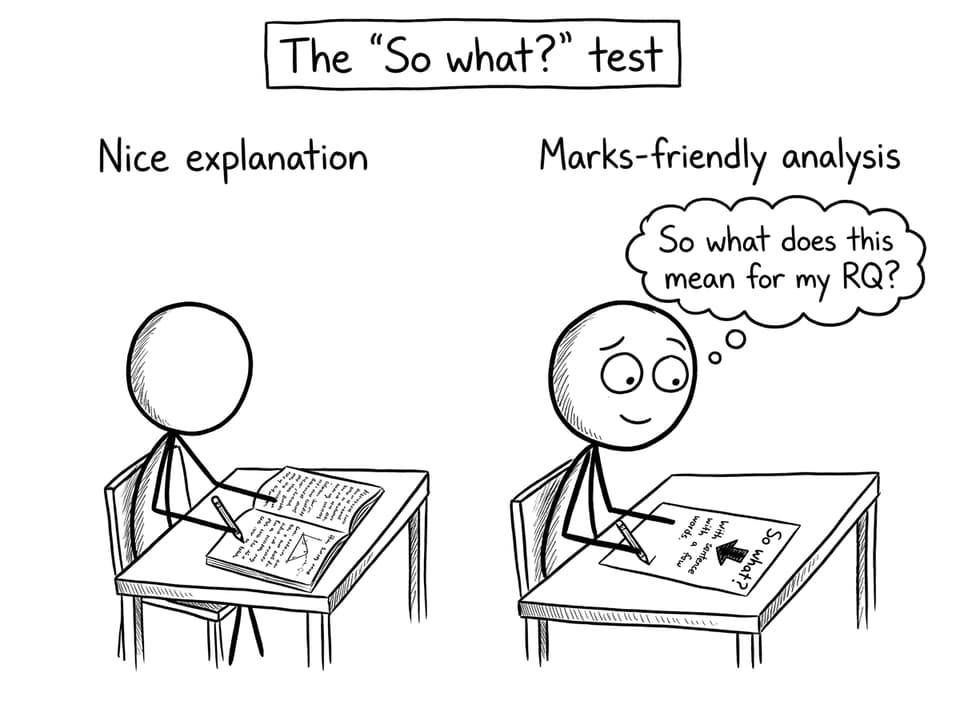
Turn explanation into analysis inside your IA (the “So what?” habit)
A simple editing habit upgrades your IA fast: after any explanatory sentence, force a “So what?” sentence.
Example moves that examiners reward:
-
Link to the RQ: “This suggests X, which supports/weakens the claim that…”
-
Interpret a trend: “The increase levels off, indicating a limiting factor such as…”
-
Address uncertainty: “Given the scatter, confidence is moderate; this affects the strength of…”
-
Compare alternatives: “Method A was chosen over B because it reduces…, though it introduces…”
When you do this consistently, your IA stops reading like a lesson and starts reading like an investigation.
Evaluation collapses when the IA is mostly explanation
Generic evaluation is often the final symptom of an over-explanatory IA. If you have spent your word count teaching theory, you end up with limitations like “human error” and improvements like “do more trials.”
High-mark evaluation is specific: it names the most important limitation, explains how it changes the result or conclusion, and proposes an improvement that actually targets the limitation.
Use these as anchors:
-
If your draft is bloated, Can an IA Be Too Long? The Real IB Answer
How RevisionDojo helps your IA shift from “explaining” to scoring
At some point, you need feedback that speaks the language of criteria. RevisionDojo is built for that.
Use IB Coursework Grader to see where your IA is descriptive versus analytical, then tighten the draft with targeted edits. If you are still shaping your direction, pair it with How to Write a Strong IA Research Question so your analysis has something sharp to aim at.
And when you are juggling exams too, RevisionDojo’s Questionbank, Study Notes, Flashcards, AI Chat, Grading tools, Predicted Papers, Mock Exams, Coursework Library, and Tutors let you keep coursework progress steady without losing exam momentum.
Conclusion: make your IA a story of decisions
A strong IA is not a story about what the textbook says. It is a story about what you did, what you found, what it means, and how confident you are in that meaning. Keep explanation short, then spend your best words on interpretation and evaluation.
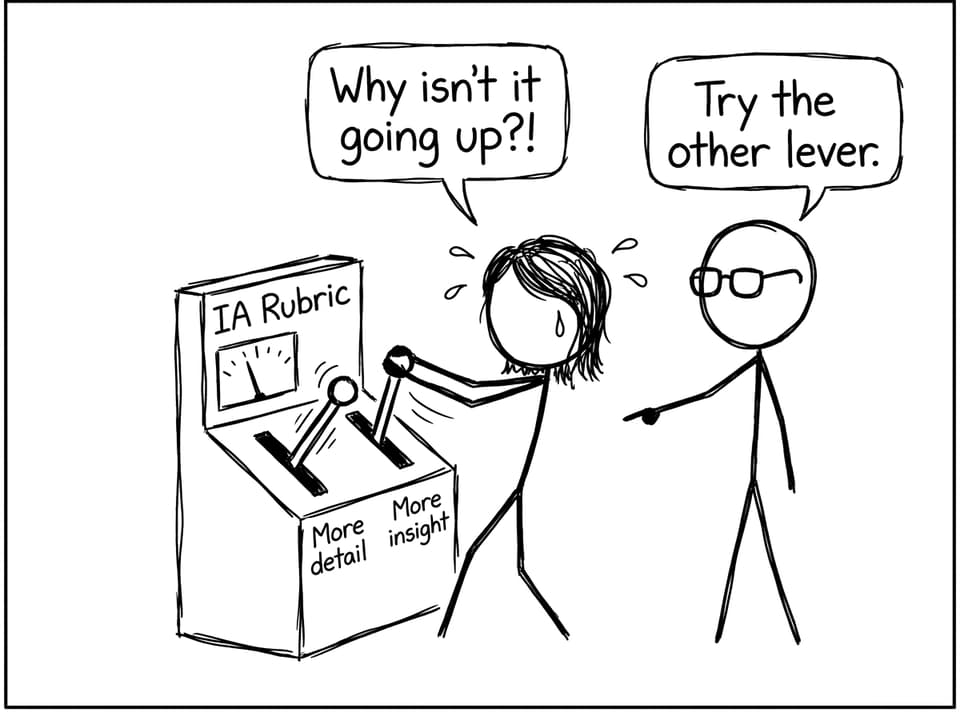
If you want a clear path from “I explained it” to “I earned the marks,” start with the IB IA Guides and run one draft through the IB Coursework Grader. Your IA does not need more detail. It needs more insight.


