


Getting stuck halfway through your IA can feel weirdly personal. One day you’re flying: topic chosen, data collected, a neat little plan. Then the middle arrives and everything turns foggy. The page looks back at you like it’s waiting for a version of you who is more confident, more certain, more… finished.
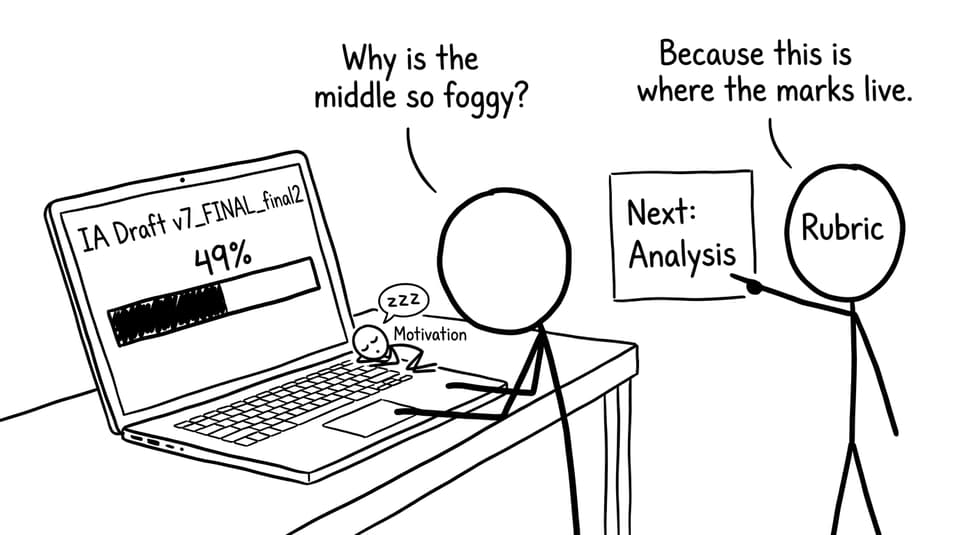
Here’s the quiet truth: the midpoint slump is not a sign your IA is failing. It’s usually a sign you’ve reached the part where you stop reporting what you did and start proving what it means. And that shift is where marks are earned.
A 10-minute IA reset checklist
When your IA stalls, don’t “push through” blindly. Diagnose first.
-
Re-write your research question in one plain sentence.
-
Write one line: “This section earns marks by…”.
-
Highlight anything that is description without analysis.
-
Pick one small output for today (one paragraph, one table, one evaluation point).
-
Decide: refine, don’t restart.
If you want a structured roadmap by subject, start with IB IA Guides or the broader IB Coursework Guides.
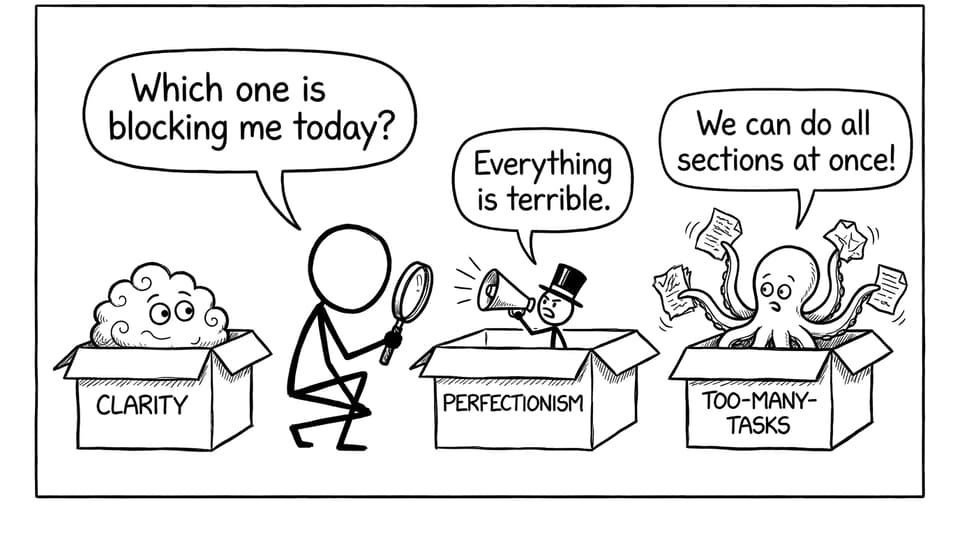
Why your IA gets stuck halfway
Your IA lost clarity
Early IA work is concrete: choose, collect, outline. Midway, you’re asked to interpret, justify, evaluate. If your research question is slightly broad or your sections don’t clearly connect back to it, your brain hesitates.
A fast fix: review how examiners reward focus in What IB Examiners Look for in a Strong IA. Then tighten the question using How to Write a Strong IA Research Question.
Perfectionism is disguising itself as “editing”
Many students re-read the same IA paragraphs for days because rewriting feels safer than moving forward. But draft-quality writing is allowed to be ugly. What matters is whether your ideas are relevant and traceable.
If you’re stuck on quality, get rubric-aligned feedback quickly with the IB Coursework Grader and then ask RevisionDojo’s AI Chat the one question you’ve been avoiding: “What am I not explaining clearly?”
You’re trying to solve everything at once
Analysis, evaluation, structure, citations, and wording are connected. That’s why the middle of an IA can feel like juggling. The trick is to separate tasks: do analysis first, then polish.
What to do next (without restarting your IA)
Diagnose the bottleneck, then write one “micro-section”
Choose one:
-
Explain one trend in your data.
-
Compare one result to theory.
-
Add one limitation and its impact.
Momentum returns when the IA becomes small again.
Borrow structure from strong examples
When you can’t picture what “good” looks like, you stall. Use IB Coursework Examples: IA, EE and TOK Exemplars and the broader Coursework feature hub to calibrate structure and depth.
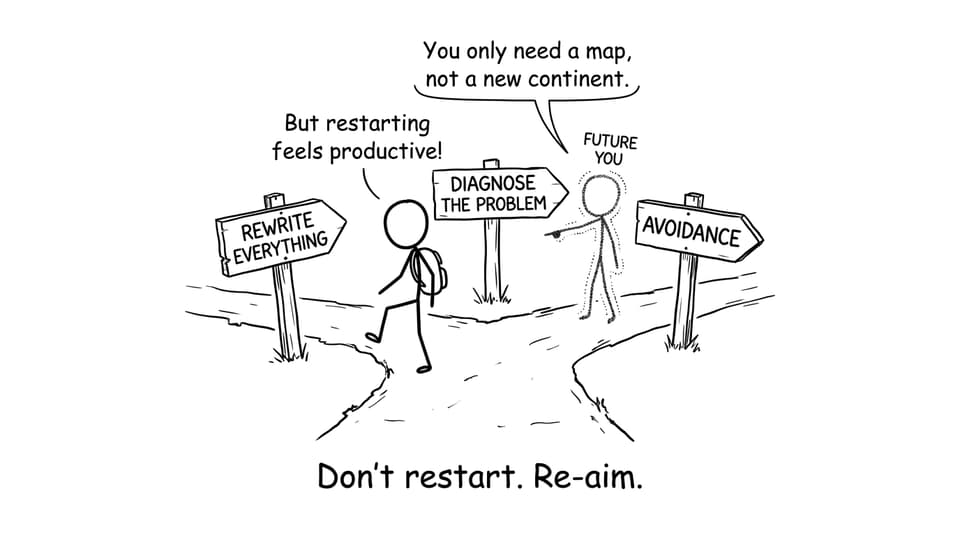
Avoid the classic restart trap
Restarting a half-built IA feels clean, but it usually creates stress and deletes progress. Most drafts don’t need replacement; they need refocusing and clearer links to criteria.
Finish your IA like someone who plans to sit exams too
Your IA doesn’t live in isolation. You still have IB exams to prepare for, and mental clutter from unfinished coursework is expensive. Use RevisionDojo to keep both sides of the diploma moving: Coursework Library and Grading tools for the IA, plus Study Notes, Flashcards, Questionbank practice, Mock Exams, and Predicted Papers for exam readiness.
If you’re stuck halfway through your IA, treat it as a signal: you’ve reached the thinking part. Open All #IA Posts, pick one fix, and earn your momentum back, one clear paragraph at a time.