


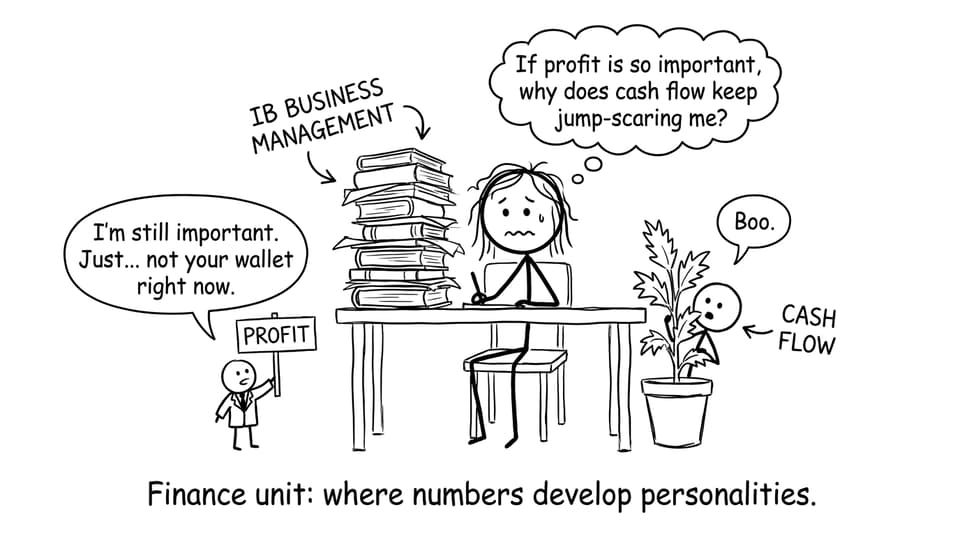
Profit sounds like a cold word until you picture a small business on a rainy Tuesday: rent is due, a delivery is late, and one machine decides today is the day to break. In IB Business Management, that moment is the whole point of profit. Profit is not just “extra money.” It’s the buffer that keeps decisions calm, wages paid, and options open.
In exam terms, profit is the financial surplus after a business covers its costs. In real terms, profit is what buys time.
Quick checklist: what profit actually does (IB-ready)
In IB Business Management, you can frame profit as enabling:
-
Survival (paying bills, avoiding insolvency)
-
Growth (reinvestment and expansion)
-
Rewards (returns to owners and investors)
-
Resilience (reserves for shocks)
-
Better decisions (measuring what works)
If you want the finance unit context, start with IB Business Management Unit 3: Financial Management.
IB Business Management: Profit keeps a business alive
A business can have a great product and still fail if it can’t cover costs consistently. Profit supplies the funds to pay employees, maintain equipment, purchase inputs, and deal with unexpected expenses. Without profit, the firm’s cash position typically weakens over time, forcing cuts that reduce quality, service, or capacity.
This links neatly to final accounts. Your examiner loves clear definitions and references to core documents like the statement of profit or loss. Review this through 3.4 Final Accounts Notes and the more detailed 3.4.2 Final Accounts Notes.
IB Business Management: Profit funds growth, not just comfort
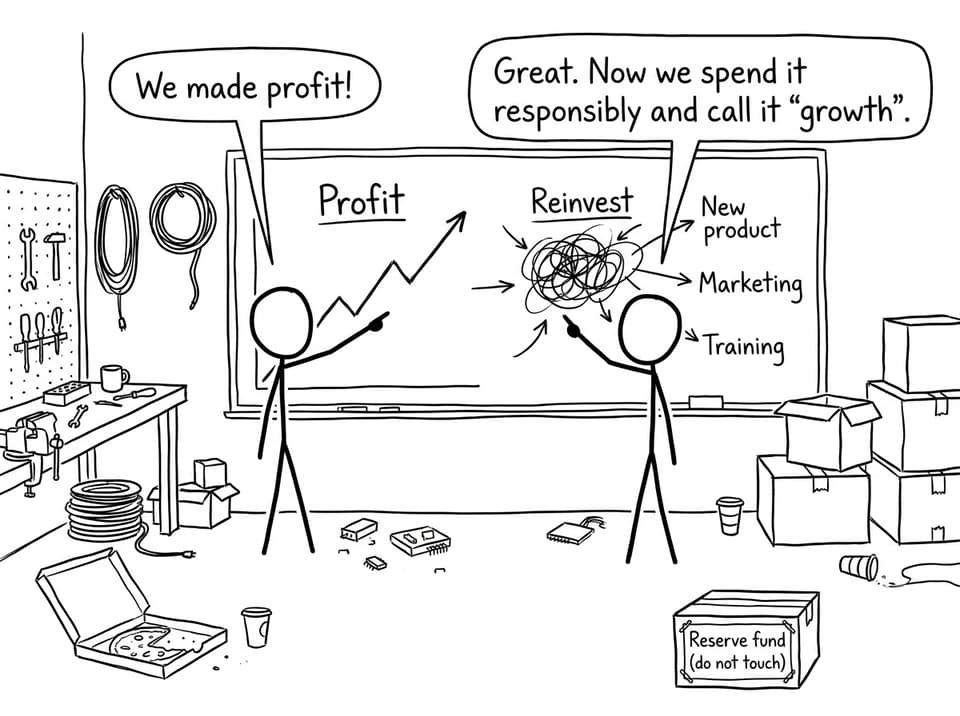
Profit becomes powerful when it gets reinvested. That reinvestment can look like R&D, staff training, marketing, new technology, or opening a new location. In IB Business Management, you can describe this as retained profit being an internal source of finance that reduces reliance on external borrowing.
This is also where students mix up profit with related concepts like contribution and cash flow. A strong way to refine your understanding is to connect profit to cost structure in 3.3 Costs and Revenues and to profit planning via contribution in What Is Contribution, and Why Is It Essential for Understanding Profit.
IB Business Management: Profit reassures stakeholders
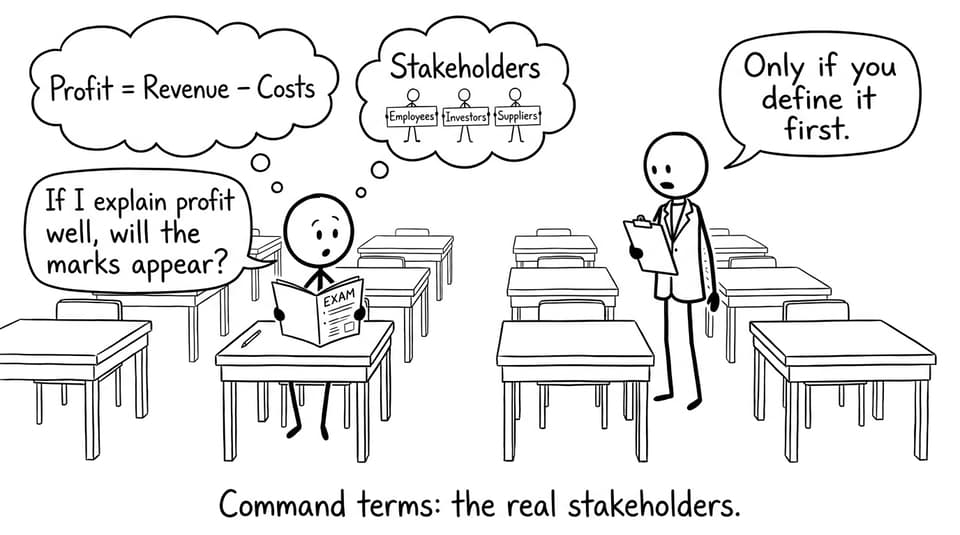
Profit matters because stakeholders notice it.
-
Owners and shareholders may expect dividends or capital growth.
-
Banks and lenders prefer profitable businesses because repayment risk is lower.
-
Employees often associate profit with job security and may benefit through bonuses or improved conditions.
In IB Business Management, you can strengthen answers by linking profit to ratio analysis: profitability ratios help stakeholders judge performance over time and against competitors. Use Notes for 3.5.1 Profitability Ratios and then turn that into evaluative points with Notes for 3.5.2 Strategies to Improve Profitability Ratios.
Profit improves decisions (and your exam answers)
Profit is also information. It helps managers identify which products, services, or segments create value and which quietly drain resources. That’s why tools like cost and profit centres exist: they make performance measurable and accountability clearer. For a clean example you can reuse in Paper 1 or Paper 2, see 3.9.1 Cost and Profit Centres.
Conclusion: profit is a buffer, a fuel, and a signal
In IB Business Management, profit is the clearest way to explain why businesses survive and how they grow: it keeps operations running, funds reinvestment, rewards stakeholders, and supports smarter decisions.
If you want to turn this into marks fast, RevisionDojo is built for that: practise with the Questionbank, lock definitions with Flashcards, clarify tricky links like profit vs cash flow using AI Chat, and test yourself with Predicted Papers and Mock Exams. Start here: IB Business Management Resources, and then sharpen your exam technique with 3.4 Final Accounts Questionbank.