If you have a business idea, the first scary moment isn’t the logo or the pricing. It’s the quiet question you don’t want to get wrong: what legal structure am I actually building? In IB Business Management, this decision shows up as more than vocabulary. It’s a case-study lever that changes risk, control, funding, and growth.
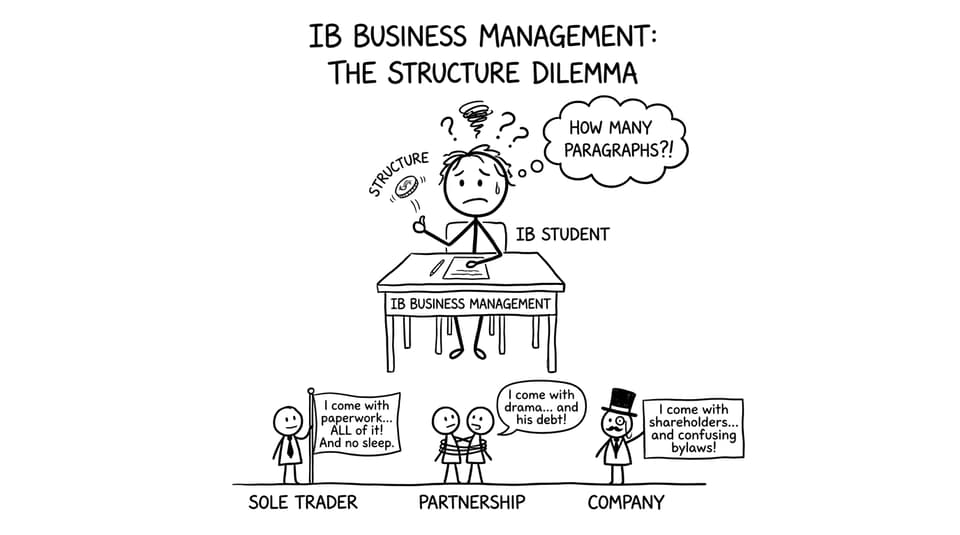
In this post, you’ll learn how to decide whether a sole trader, partnership, or company best fits a business idea, and how to write it cleanly in IB Business Management exam style.
Quick decision checklist (exam-friendly)
Use this mini-checklist when a case asks you to recommend a structure in IB Business Management:
-
Control: Do you need fast, solo decisions?
-
Liability: Can the owners risk personal assets (unlimited liability) or do they need protection (limited liability)?
-
Funding: Will the business need significant finance and outside investment?
-
Scale: Is growth likely to be small/local or rapid/expensive?
-
Administration: Is the founder ready for regulation, reporting, and formal governance?
If you want the syllabus wording and examples, anchor your revision in 1.2 Types of business entities.
Sole trader: maximum control, maximum personal risk
A sole trader is the simplest structure: one owner, fast decisions, low setup complexity. In IB Business Management, it’s often the best fit for testing an idea, freelancing, or running a small service.
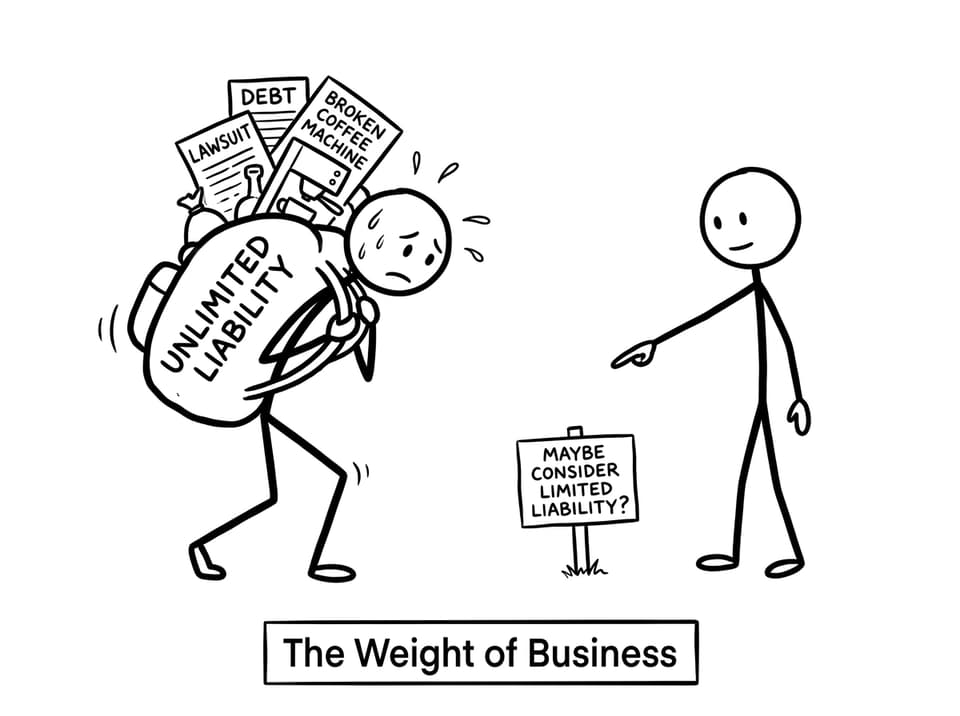
The trade-off is the one phrase examiners love: unlimited liability. If the business fails, the owner is personally responsible for debts and legal claims.
For clean definitions and pitfalls, revise with Sole traders notes.
Partnership: shared skills, shared responsibility
A partnership makes sense when two or more people bring complementary strengths: one is great at marketing, another at finance, another at operations. In IB Business Management, partnerships are a common recommendation when the business idea needs more than one brain and more than one set of hands.
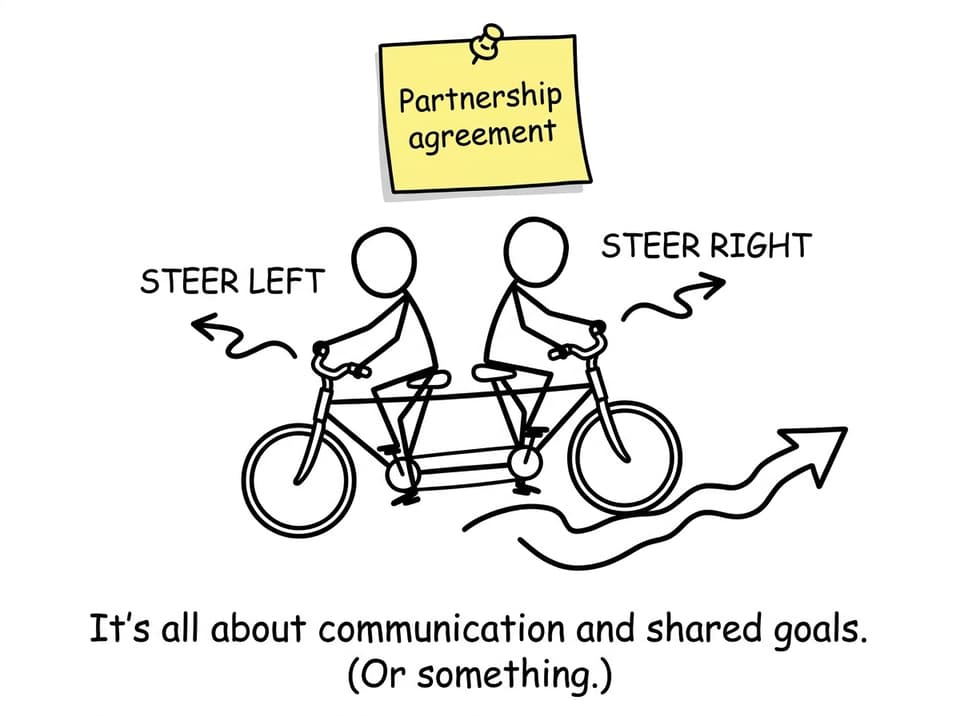
But partnerships introduce human risk. Decision-making can slow down. Disagreements become operational problems. And in many traditional partnerships, liability can still be unlimited and shared.
To sharpen your exam phrasing (and avoid the “all partnerships have limited liability” mistake), use Partnerships notes.
Company: limited liability, bigger growth potential (and paperwork)
A company is legally separate from its owners. In IB Business Management, the key advantage is limited liability: personal assets are protected because the business is its own legal entity.
Companies often suit:
-
High-investment ideas (equipment, R&D, scaling)
-
Businesses seeking external finance
-
Ventures where credibility and continuity matter
The cost is complexity: more regulation, more reporting, and more formal decision-making.
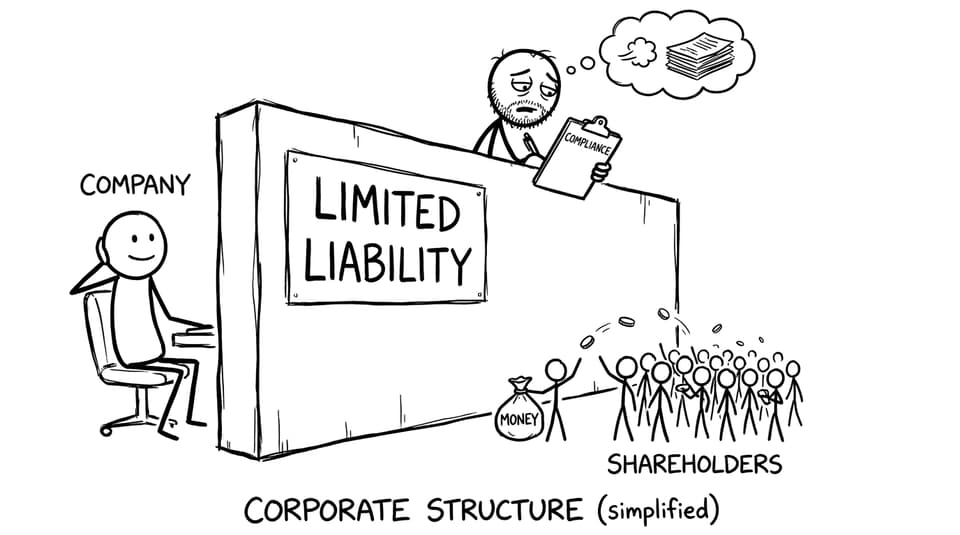
To practice recommending structures like an examiner, try 1.2 Types of business entities Questionbank.
How to write this in an IB Business Management answer
A strong IB Business Management paragraph usually goes: define -> apply -> analyze -> evaluate.
Example sentence frames:
-
“As a sole trader, the owner retains full control; however, unlimited liability increases personal financial risk if cash flow worsens.”
-
“A partnership could pool skills and capital, but shared liability means each partner is exposed to the other’s decisions.”
-
“Forming a company provides limited liability and may improve access to finance, although administrative costs could reduce short-term profitability.”
For planning language that helps your application marks, see Business plan notes.
Bring it home: choose the structure that fits the story
The smartest IB Business Management answers treat legal structure like a strategy choice: match the structure to the idea’s risk, funding needs, and growth ambition. Then evaluate the downside honestly.
When you’re ready to turn this into marks, RevisionDojo is built for it: revise the definitions with IB Business Management Key Definitions, drill application with the Questionbank, lock in memory with 1.2 Types of business entities Flashcards, and pressure-test your writing with AI Chat, Grading tools, Mock Exams, Predicted Papers, the Coursework Library, and Tutors, all in one place.



