Join 650k+ students breezing through the IBReady to breeze through the IB?
Population decline doesn’t usually arrive with drama. It shows up quietly: a primary school merges with another, a bus route gets cut, a town centre feels a little emptier each year. For IB Geography, that quiet change is exactly what makes it powerful in exams, because it forces you to explain not just what is happening, but why different places end up shrinking.
In IB Geography, population decline means a sustained period where deaths exceed births (negative natural change), often combined with net out-migration. The causes tend to cluster, and once they begin reinforcing each other, decline can become surprisingly hard to reverse.
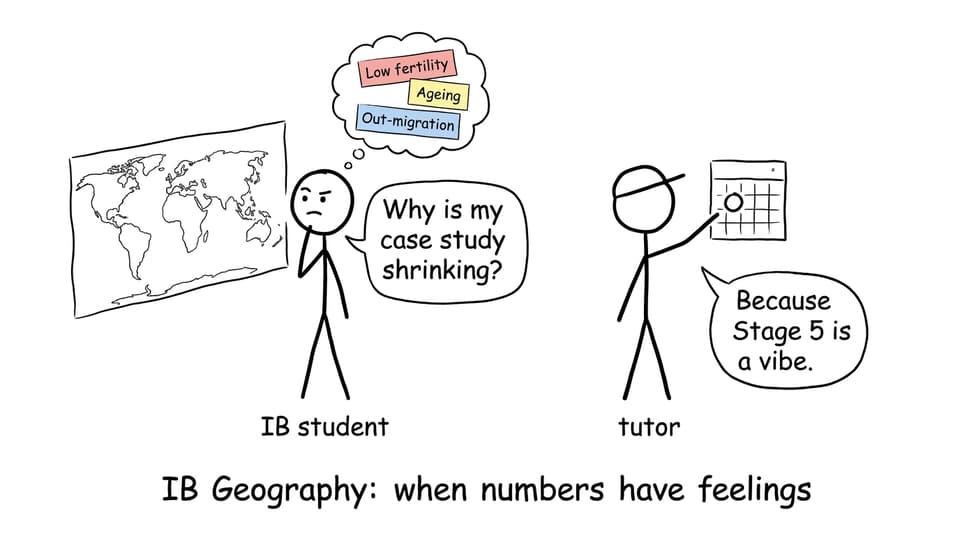
IB student vs shrinking case study
A quick IB Geography checklist for population decline
Use this as a fast plan for a 6-10 mark response in IB Geography:
Low fertility rates: the “slow leak” in the system
A country can look wealthy, stable, and successful, and still experience population decline. In IB Geography, low fertility is often the first domino.
Fertility drops for reasons that feel personal at the household level but become structural at the national scale: high housing costs, expensive childcare, later marriage, longer education pathways, and careers that reward delay. Access to contraception and family planning also matters because it increases control over family size. When fertility stays below replacement for long enough, births cannot “keep up” with the population’s eventual deaths.
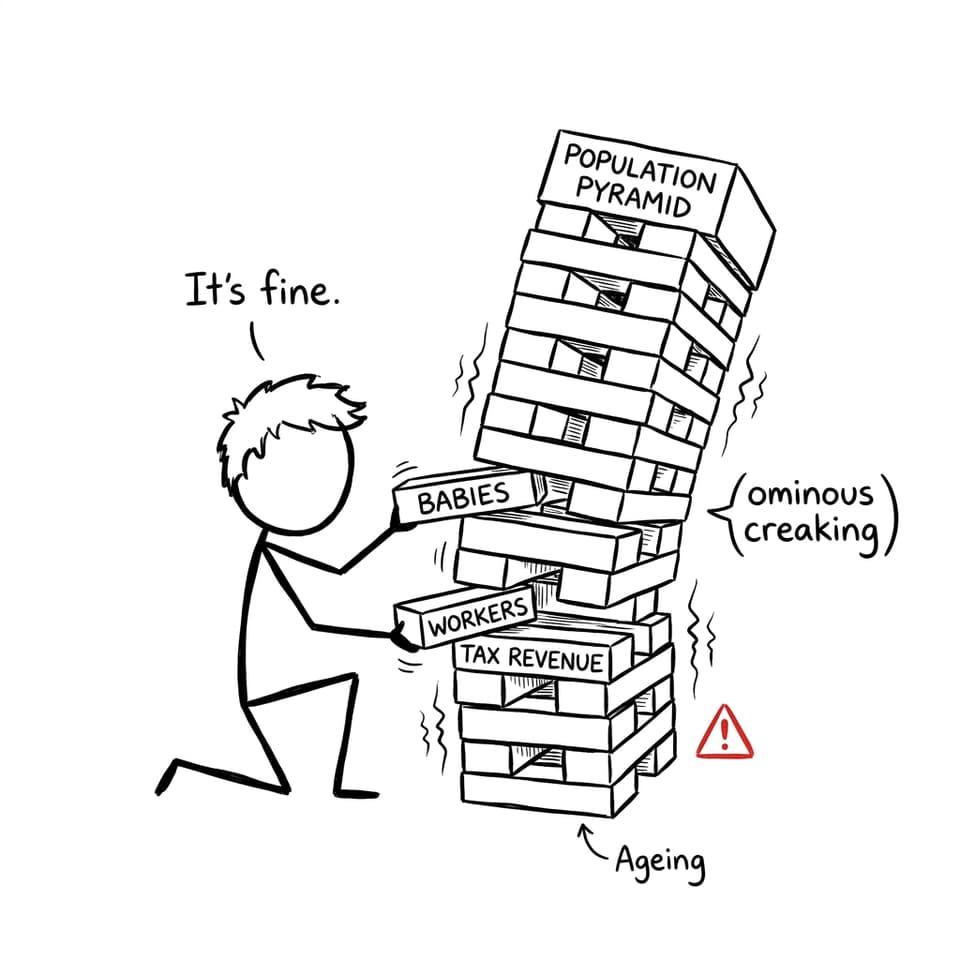
Ageing is not just “more older people.” In IB Geography, it’s a change in population structure that shifts dependency ratios, labour supply, and the balance between births and deaths.
As life expectancy rises and fertility falls, the base of the population pyramid narrows. Eventually, a large older cohort moves into high-mortality age groups. Even if healthcare is excellent, the crude death rate can rise simply because the country has more people at ages where death is statistically more common.
Out-migration: shrinking the present and the future
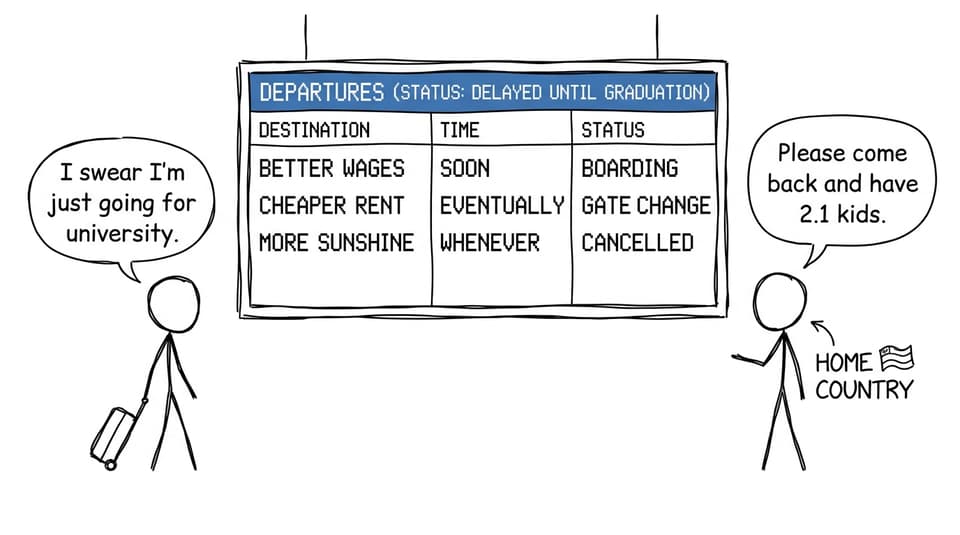
Out-migration accelerates decline because it usually removes the very group most likely to have children: young adults. In IB Geography, it’s not enough to say “people leave.” You want to explain the selective nature of migration.
When graduates and workers move abroad for higher wages, more stable employment, or better quality of life, the origin country loses current labour and potential future births. That can create a feedback loop: fewer workers -> weaker tax base -> reduced services -> even more push factors.
What population decline means in exams (impacts + responses)
In IB Geography, impacts are where you can earn evaluation marks. Population decline can lead to labour shortages, slower economic growth, pressure on healthcare and pensions, school closures, and regional inequality (some places hollow out faster than others).
Typical responses include encouraging immigration, offering family subsidies, expanding childcare, improving housing affordability, and raising the retirement age. A strong answer weighs trade-offs: policies can be expensive, slow to work, and politically contested.
For structured practice, RevisionDojo is built around exam performance: the Questionbank for targeted drills, Study Notes for clean theory, Flashcards for definitions like CBR/CDR/TFR, AI Chat for quick clarification, and Mock Exams plus Predicted Papers for timed runs. If you’re working on longer responses, RevisionDojo’s Grading tools help you tighten analysis and command terms.
Bringing it together
Population decline is rarely just “not enough babies.” In IB Geography, it’s the story of incentives, life expectancy, migration choices, and feedback loops that reshape a country’s future one cohort at a time. If you can explain how low fertility, ageing, and out-migration connect, and evaluate the policy trade-offs; you’re writing the kind of answer examiners trust.
Build that confidence with RevisionDojo’s IB Geography ecosystem: focused Study Notes, high-yield Flashcards, tough-love Questionbank practice, and realistic Mock Exams that turn understanding into marks.