


If you’ve ever stared at your IB subject choices and felt your brain quietly power down, you’re not alone.
Group 2 is a special kind of pressure. It’s where ambition meets reality: you want a language that helps your diploma, doesn’t sink your timetable, and still feels like progress. For many students navigating IB Languages, German Ab Initio shows up as a calm, structured doorway. Not a shortcut. Not a trap. Just a course that starts where beginners actually are.
This 2025 guide breaks down who should take IB German Ab Initio, who shouldn’t, and how to decide with the kind of clarity that makes the rest of your IB plan feel lighter.
A quick decision checklist for IB Languages (German Ab Initio)
Use this as a fast filter before you commit:
-
You have little to no German background (or only very light exposure).
-
You’re choosing German because it fits your future plans or interests, not because it “sounds easy.”
-
You can handle a language course that expects consistent practice across listening, speaking, reading, and writing.
-
You’re willing to speak imperfectly, often.
-
You want a course aligned to communication and real-life themes, not grammar drills in isolation.
If most of those feel true, German Ab Initio can be one of the smartest picks inside IB Languages.
What IB German Ab Initio actually is (and what it isn’t)
IB German Ab Initio is a Standard Level (SL) course designed for beginners and delivered across roughly 150 teaching hours. In the architecture of IB Languages, it sits below Language B in starting proficiency, but it still expects IB-level thinking: you learn to communicate meaningfully in familiar contexts.
The course builds through five familiar themes:
-
Identities
-
Experiences
-
Human Ingenuity
-
Social Organization
-
Sharing the Planet
That structure matters because it stops language learning from turning into random vocabulary collecting. You learn words because you need them to describe your life, explain an opinion, or respond to an authentic text.
By the end, many students reach a basic user level (around A2 CEFR): enough to handle everyday conversations, write short texts, and understand clear, simple listening and reading materials.
If you want a clearer breakdown of what the course covers, start with What Is IB German Ab Initio? Complete 2025 Guide and the dedicated German ab initio IB Resources page.
Who should take IB German Ab Initio in 2025?
The best way to answer this is to picture the student the course is built for. Not the “ideal” student. The real one.
You’re a true beginner (or close enough)
If your German is limited to a few phrases, a short unit from years ago, or the occasional sign you’ve translated on holiday, German Ab Initio is likely appropriate.
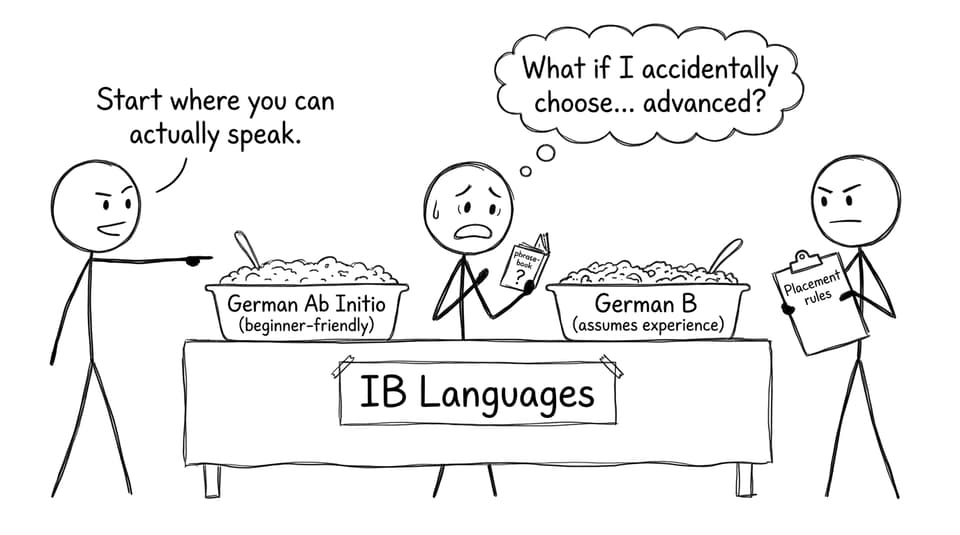
In IB Languages, the point of Ab Initio is fairness: it gives beginners a path that doesn’t punish them for not having years of prior schooling. If you start at zero, the course starts at zero.
You need a Group 2 option that’s structured and manageable
Some students want the diploma breadth without language becoming the subject that steals oxygen from everything else.
German Ab Initio is manageable when you treat it like a skill, not a cram subject. A little practice daily beats heroic weekend sessions. If you need help building that routine, Balancing Language Learning with Work, School, and Extracurriculars is a practical companion for IB Languages students.
You like clear progress markers
German is rewarding because progress is measurable. You go from “I can’t say anything” to “I can survive a conversation” faster than you expect, as long as you practice.
This is especially true if you use resources designed for IB outputs: short texts, theme-based vocabulary, and recurring exam-style prompts. What Study Resources Are Best for IB German Ab Initio? lays out what to prioritize.
You’re genuinely interested in German-speaking cultures or future options
German can be a bridge language: travel, university pathways, internships, family ties, or simply curiosity about European history, science, engineering, and media.
In IB Languages, interest is not a “nice extra.” It’s fuel. It determines whether you’ll keep showing up for the unglamorous parts: listening drills, verb forms, oral practice, and rewriting a text because the register was wrong.
Why choose German (instead of another Ab Initio language)?
German is often chosen for four reasons:
-
Reach and relevance in Europe (German is widely spoken across multiple countries).
-
Cultural access (film, music, philosophy, literature).
-
Academic opportunities (many students explore higher education options connected to German-speaking regions).
-
Career usefulness in fields that value cross-border communication.
But the most honest reason is simpler: German is worth choosing if you’ll actually practice it. In IB Languages, the “best” language is the one you’ll keep using when motivation dips.
The question everyone asks: is German Ab Initio the “easy option”?
It’s beginner-friendly, yes. But easy is the wrong word.
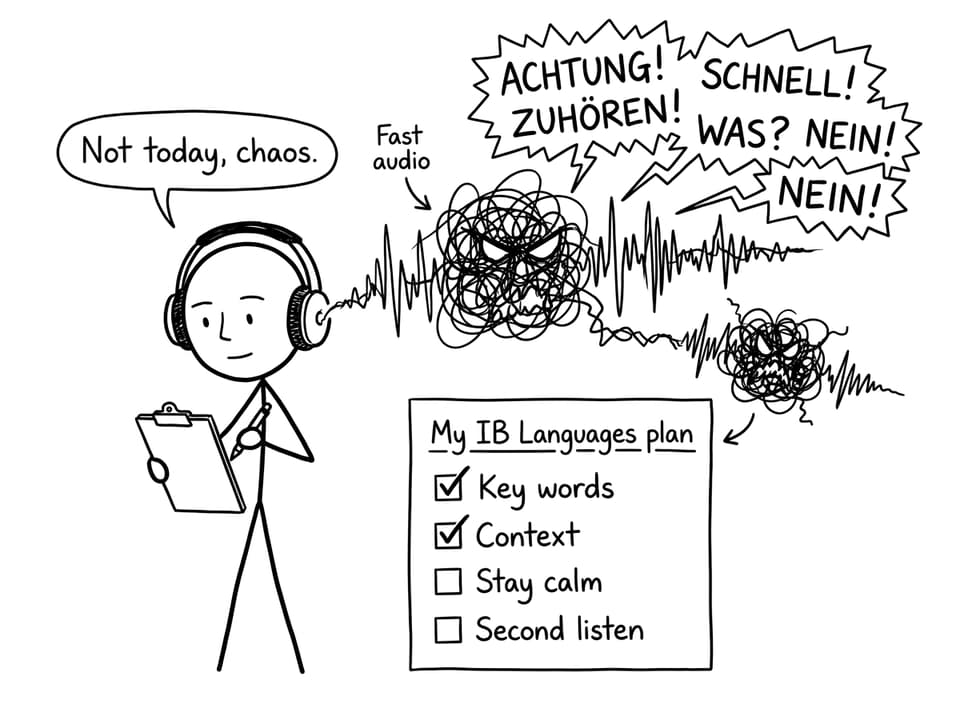
German Ab Initio is fair. The course assumes you don’t already know the language, but it still expects you to build competence across all four skills. You’ll write. You’ll speak. You’ll listen to recordings that feel fast at first. You’ll read texts that contain unfamiliar words and still need to extract meaning.
If you want a realistic view of difficulty, read Is IB German Ab Initio Hard? (Complete 2025 Guide). In IB Languages, the students who struggle most are often the ones who assumed Ab Initio meant “effort optional.”
Who should NOT take IB German Ab Initio?
This part matters because wrong placement creates two kinds of pain: boredom for stronger students and panic for those who needed a slower starting point.
You already have significant German experience
If you’ve studied German for several years and can already write comfortably, hold conversations, or understand extended texts, Ab Initio is unlikely to be the right course. The IB expects students to be placed appropriately within IB Languages, which protects assessment integrity.
If this sounds like you, talk to your coordinator about German B.
You’re choosing it purely to avoid speaking
German Ab Initio includes speaking and interaction. You can’t “hide” in the language classroom forever, and the assessment model rewards communication. If the idea of speaking is the whole reason you’re avoiding other options, you may be avoiding the very skill the course is designed to build.
The good news: fear of speaking is normal and trainable. If you want a plan, How to Improve Your Language B Speaking Skills contains drills that also help Ab Initio students inside IB Languages.
You’re looking for a shortcut rather than a system
Languages punish inconsistency. Not cruelly, just predictably.
If you rarely revise in small daily blocks, German Ab Initio will feel harder than it needs to. In IB Languages, success is less about talent and more about repetition with feedback.
What the assessment feels like (so you can picture the real work)
German Ab Initio assessment is designed to sample the full skill set, not just one strength.
You’ll typically see:
-
Writing tasks where you produce an appropriate text type and register.
-
Reading and listening comprehension where you extract meaning and detail.
-
An individual oral where you respond to a stimulus and extend discussion.
To get the structure straight early, use IB German Ab Initio Exam Format (2025 Guide). When IB Languages feels overwhelming, knowing the format turns vague anxiety into specific practice.
How to know you’ll thrive: the “steady practice” profile
German Ab Initio rewards students who do three things consistently:
They build theme vocabulary that can be used, not just recognized
Knowing a word is different from being able to use it in a sentence under time pressure. Organize vocabulary by theme, then force it into writing and speaking tasks.
They keep grammar simple and accurate
Accuracy beats complexity, especially at beginner level. If you want to focus your effort, What Grammar Topics Are Most Important in IB German Ab Initio? (2025 Guide) helps you choose the highest-impact topics.
They practice like the exam asks
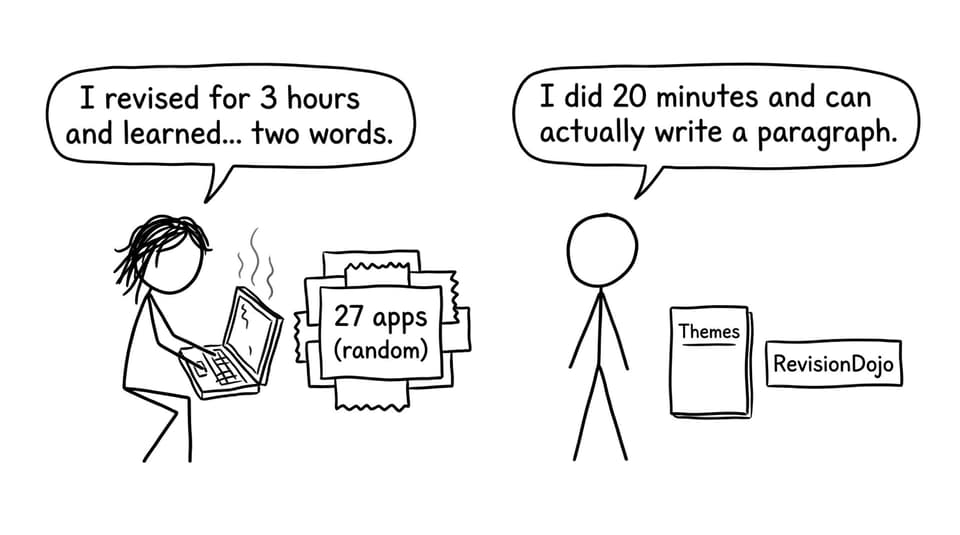
General apps can help, but IB success comes from IB-aligned practice. That’s why RevisionDojo exists: you get targeted pathways for IB Languages that match real tasks.
How RevisionDojo supports IB Languages students taking German Ab Initio
There’s a moment in every language course where you realize the hardest part isn’t learning the language.
It’s organizing your effort.
RevisionDojo is built to make IB Languages practice feel structured and measurable:
-
Questionbank practice that mirrors exam-style demands: Questionbank
-
Study Notes that follow the course themes, so your revision isn’t scattered: IB German ab initio Revision Notes
-
Flashcards for high-yield vocabulary and grammar patterns you need on demand
-
AI Chat to clarify confusing grammar, rephrase sentences, and practise quick responses when you’re stuck
-
Grading tools to understand criteria and improve faster (especially for writing and coursework-style drafts)
-
Predicted Papers and Mock Exams to rehearse timing and reduce surprise
-
A Coursework Library for exemplars and structure guidance
-
Tutors when you need real-time correction and accountability
If you’re also deciding between different language pathways across IB Languages, Top Language Learning Tools for IB Students explains what matters most for IB-aligned progress.
Closing: the right choice inside IB Languages is the one you can sustain
German Ab Initio is for beginners who want a real start, not a symbolic one. It’s for students who don’t have years of prior study but are willing to practice steadily and speak imperfectly until it becomes natural. In the wider world of IB Languages, that willingness matters more than the language you pick.
If German Ab Initio sounds like your fit, build your plan now while the course is still fresh. Start with RevisionDojo’s German ab initio IB Resources, use the IB German ab initio Revision Notes to stay aligned to themes, and practice with the Questionbank so exam tasks never feel unfamiliar.
In IB Languages, confidence isn’t something you wait for. It’s something you build, one small session at a time.