



A small sentence that hides a big problem
"None of this matters."
It’s the kind of line a teen throws out when they’re tired, behind, or staring at another deadline. And in the IB, that moment shows up often: an oral recording to prepare, a writing task to polish, a listening paper that felt unfair, and a growing suspicion that life is just a sequence of due dates.
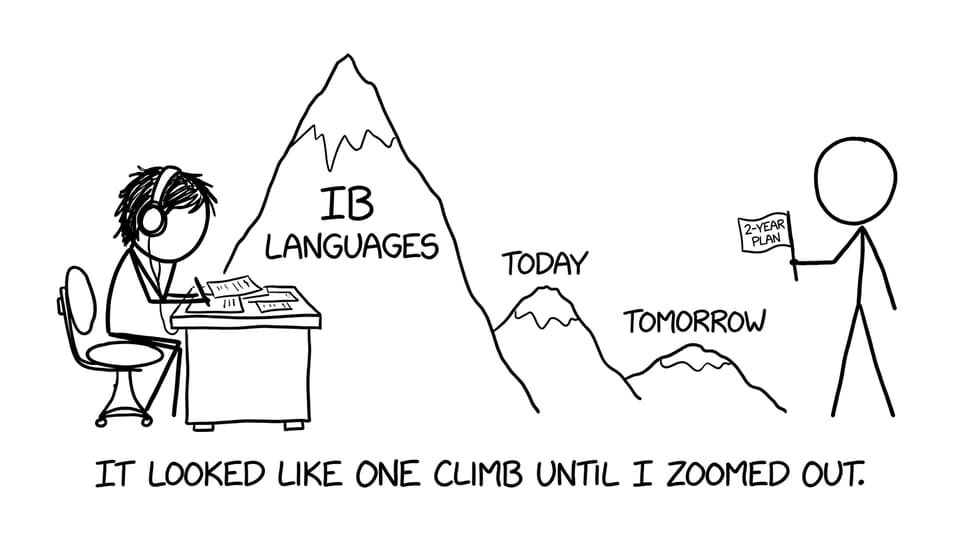
If your teen is preparing for exams, the goal isn’t to lecture them into motivation. It’s to help them see time differently: today as part of a system, not a trap. That’s especially true in IB Languages, where progress is slow, cumulative, and almost invisible until it suddenly isn’t.
Quick checklist: long-term thinking your teen can actually use
Before the deeper strategies, here’s a simple checklist you can return to when stress spikes:
-
Link IB Languages to a real-world identity: travel, culture, future study, confidence.
-
Replace "final exams" with weekly milestones.
-
Make progress measurable: vocabulary retention, writing structure, oral fluency.
-
Reduce overload: fewer resources, better routine.
-
Use a platform that turns effort into feedback loops (RevisionDojo does this well).
Why teens struggle to think long-term in the IB
Long-term thinking sounds like a character trait. In reality, it’s a skill that collapses under pressure.
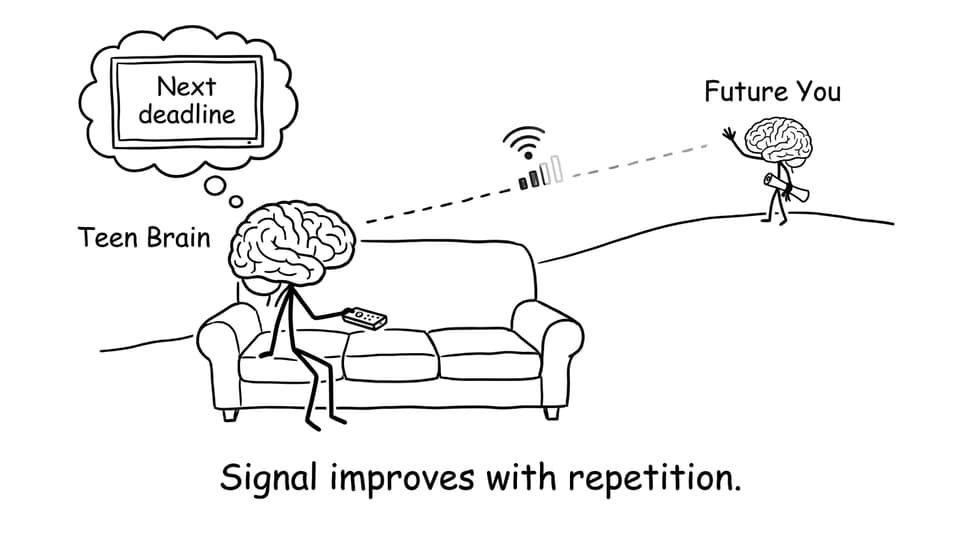
Immediate stress is louder than future rewards. A deadline tomorrow feels real. A university application next year feels like a story happening to someone else.
The workload fragments attention. IB students don’t have "one big task". They have six subjects, plus coursework, plus constant evaluation. Long-term planning gets drowned out by short-term survival.
Peers shape the narrative. If a friend group treats the programme like a pointless endurance test, your teen will borrow that mindset, even if they secretly care.
For IB Languages, there’s an extra twist: improvement is hard to spot day-to-day. You can write three pages and still feel like you "didn’t say anything well." That gap between effort and visible progress is where motivation goes to disappear.
Why long-term thinking matters (especially for IB Languages)
Long-term thinking isn’t about being intense. It’s about building a calmer relationship with effort.
IB Languages reward accumulation, not cramming
A language is a compounding asset. Vocabulary, grammar patterns, and register control build slowly, then combine into fluency. When your teen treats IB Languages as a two-year project, practice stops feeling like punishment and starts feeling like investment.
Long-term thinking reduces exam anxiety
Students panic when they don’t know what matters. But if they track theme vocabulary, text types, and oral routines over time, the exams become predictable. Predictability is calming.
It protects confidence
A teen who believes "I’m bad at languages" often just hasn’t had enough reps with feedback. Long-term thinking reframes the story from talent to training.
If your teen needs clarity on what exams look like, point them to IB Language B exams: format, timing, and strategy. It’s hard to commit long-term when the finish line is fuzzy.
How to encourage long-term thinking without turning it into a fight
Connect IB Languages to a future they actually care about
Skip vague promises like "it’ll help later." Get specific.
-
If they want independence: languages make travel and university life less intimidating.
-
If they like debates: languages train precision and tone.
-
If they care about belonging: languages are social currency.
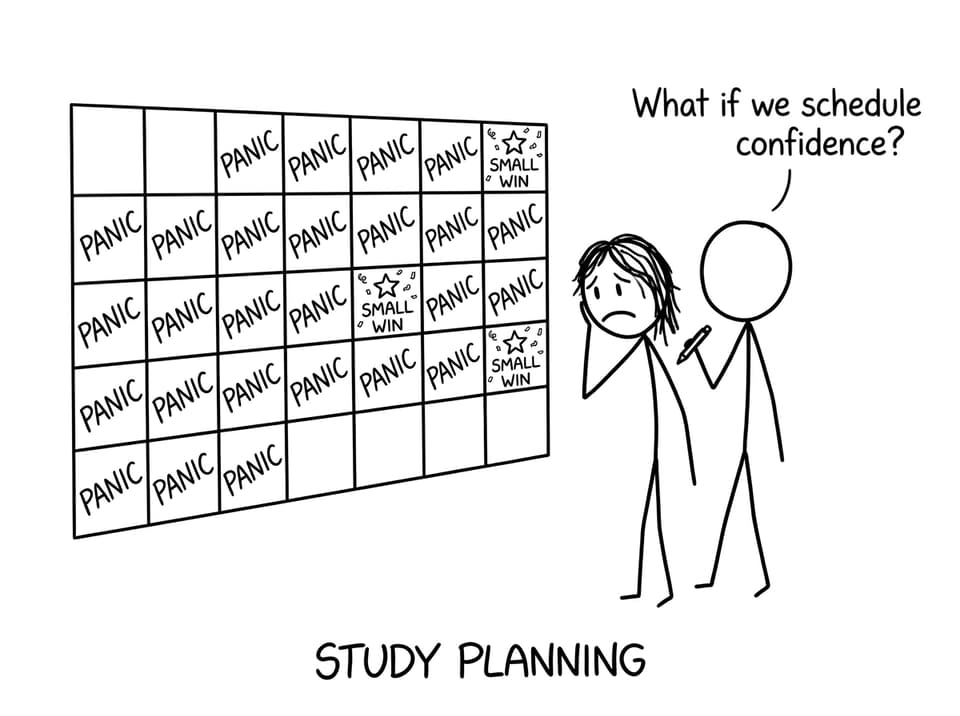
Then make it practical. Ask: "Which theme do you want to feel strongest in by next month?" That shifts the conversation from moral pressure to choice.
A useful companion piece for students is How to effectively revise for Language B exams, which breaks revision into manageable habits.
Use milestones, not speeches
Teens rarely change because they were convinced. They change because they experienced progress.
Try weekly milestones like:
-
25 theme words retained (not collected, retained)
-
one timed writing plan + one edited final version
-
one oral stimulus practice with a self-recording
And when they hit it, acknowledge the behaviour, not the identity: "You kept a routine even when it was annoying." That builds durable motivation.
Reduce daily overwhelm by shrinking the resource pile
More resources often creates less studying. Pick one primary system and let everything else be secondary.
RevisionDojo works well here because it’s designed as an ecosystem: Study Notes lead into Flashcards, which lead into the Questionbank, which leads into feedback via AI Chat and Grading tools. When a student doesn’t have to decide what tool to use next, they conserve willpower.
If they want a simple overview of the all-in-one workflow, share RevisionDojo app: the smarter way to prep for IB exams.
Make practice feel like training, not judgment
For IB Languages, students avoid practice when every attempt feels like proof they’re "not good." You can help by normalising a training loop:
-
Draft fast
-
get feedback
-
rewrite smaller, cleaner
RevisionDojo supports this loop with Mock Exams, Predicted Papers, and quick feedback through Jojo AI Chat. It turns "I tried" into "I improved," which is the real fuel for long-term thinking.
(If your teen likes seeing progress data, tools like the RevisionDojo Questionbank make improvement visible.)
Give them autonomy, but keep a shared structure
The sweet spot is: they control the choices, you protect the rhythm.
Offer two options, not ten:
-
"Do you want to do 15 minutes of listening or 20 minutes of writing planning?"
-
"Do you want to review flashcards before dinner or after?"
When IB Languages becomes part of a predictable routine, it stops demanding emotional energy every day.
Where RevisionDojo fits into the long-term plan
Long-term thinking needs two things: direction and feedback.
RevisionDojo gives students both, without making parents become full-time coaches:
-
Study Notes to clarify what good answers look like
-
Flashcards for consistent, low-friction daily recall (IB Flashcards with spaced repetition)
-
Questionbank for targeted practice and progress tracking
-
AI Chat for quick explanations when they get stuck
-
Grading tools to improve writing with criteria in mind
-
Mock Exams and Predicted Papers to build stamina and timing
-
Coursework Library for models and structure
-
Tutors when a human conversation is the missing piece
If you want to explore what’s included, start at RevisionDojo for IB or the broader IB hub. And if logistics matter, RevisionDojo pricing lays out the options clearly.
Closing: teach them to zoom out
The real trick isn’t convincing your teen that the IB is important. It’s helping them notice that their effort can stack, quietly, into something powerful.
In IB Languages, long-term thinking is the difference between "I’m stuck" and "I’m training." Start small, keep the routine stable, and measure progress in weeks, not moods.
If your teen needs a clear system for that long game, RevisionDojo gives them the tools and feedback loops to stay future-focused: from Flashcards and Study Notes to Mock Exams, Predicted Papers, and supportive Tutors. When the path is visible, long-term thinking becomes easier to choose.
Explore the full workflow here: RevisionDojo for IB.