

If you’re an IB student, you already know what it’s like to live inside long-term pressure: internal deadlines, IAs that never feel finished, and exams that reward calm thinking more than last-minute effort.
So when you hear “SAT not required,” it can feel like someone quietly removed a weight from your backpack.
But there’s a catch most IB students miss at first: “no SAT” can mean two very different things. And the difference changes how you plan your application while you’re still preparing for IB exams.
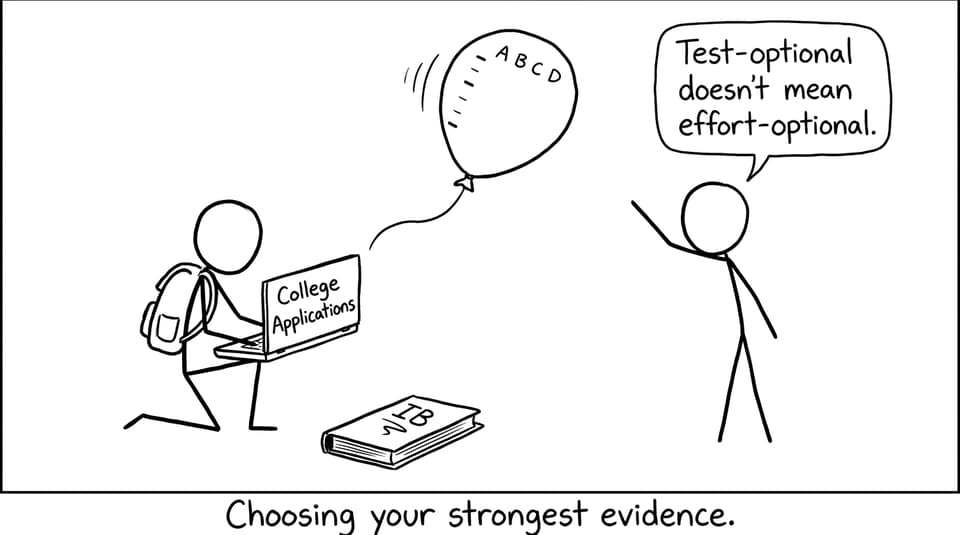
Test-optional vs test-blind (the part that actually matters)
For IB applicants, the policy wording is the whole game.
Test-optional
A test-optional university lets you apply without SAT/ACT scores. If you don’t submit, you’re not supposed to be penalized. Your transcript, rigor, essays, recommendations, and activities carry more weight.
Test-blind
A test-blind university does not consider SAT/ACT scores at all, even if you submit them. In other words: you cannot “win extra points” by adding a score.
The practical advice for IB students: always read the admissions testing policy on each school’s website (and for each campus). One sentence can change your strategy.
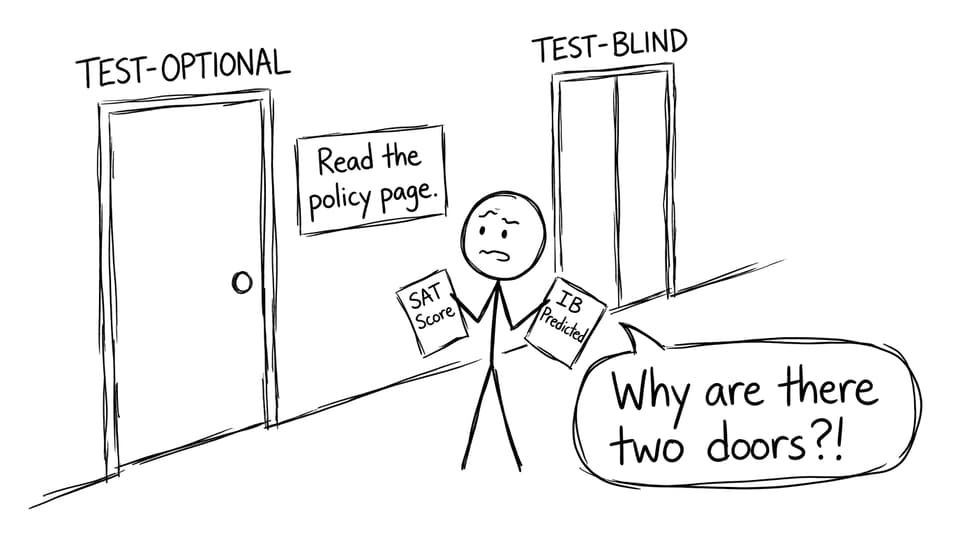
Which US universities do not require the SAT for IB students? (2025 snapshot)
Admissions policies can shift year to year, so treat this as a 2025-oriented guide and verify on each school’s official page.
Test-blind universities (SAT truly irrelevant)
These are the clearest “SAT doesn’t matter” cases for IB students:
- University of California (UC) campuses (including UCLA and UC Berkeley) are widely known as test-blind.
If you’re in the IB Diploma Programme, that means your course rigor, grades, and writing will do the talking.
Test-optional universities (SAT not required)
Many highly selective US universities remain test-optional for applicants in 2025 cycles or have continued flexible policies. Examples frequently cited include:
-
Princeton University (test-optional through 2025, per prior policy announcements)
-
University of Pennsylvania
-
Columbia University (has maintained test-optional language)
-
Duke University
-
Northwestern University
-
Johns Hopkins University
And beyond the ultra-selective list, many strong public and private universities have test-optional pathways, including:
-
University of Washington (test-optional)
-
University of Texas at Austin (often listed as test-optional)
-
Boston College
-
Rice University
-
Vanderbilt University
-
University of Southern California
Liberal arts colleges (early adopters of test-optional)
Liberal arts colleges often align naturally with the IB style: writing, discussion, and interdisciplinary thinking.
Common examples:
-
Sarah Lawrence College
-
Bowdoin College
-
Pitzer College
-
Wesleyan University
-
Bates College
How IB students can look “complete” without SAT scores
Here’s the quiet truth: when you remove a standardized test, you don’t remove evaluation. You just change the evidence.
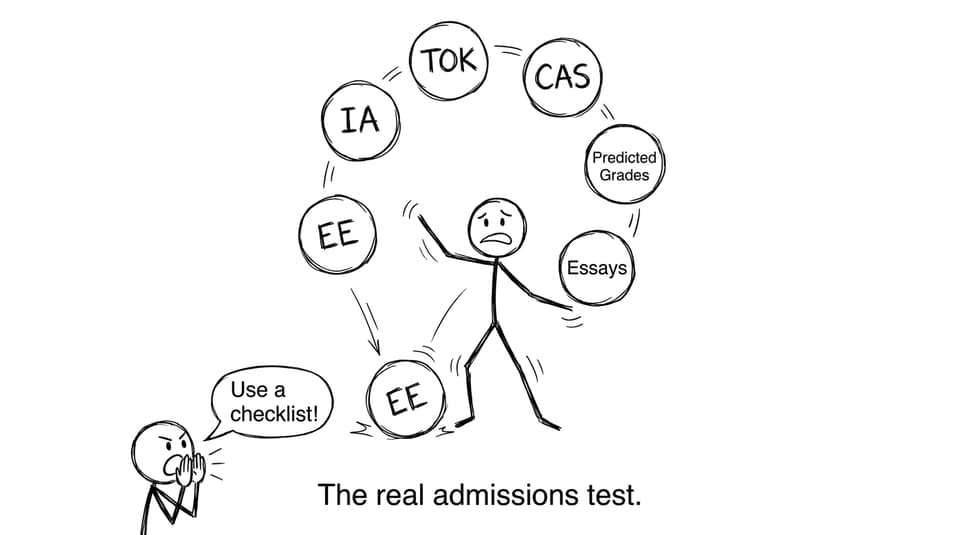
Quick checklist for a strong SAT-free application
-
Clear IB subject rigor (especially HL choices that match your intended major)
-
Strong predicted grades (if finals aren’t available yet)
-
Essays that show thinking, not just achievement
-
Recommendations that confirm your academic habits over time
-
Activities that suggest consistency, leadership, or real curiosity
A useful way to prepare while studying for IB exams is to build a “proof folder”: best essays, a one-page activity summary, a short paragraph on your Extended Essay topic, and a running list of what you learned from each IA.
That folder becomes your calm anchor in a busy season.
Where RevisionDojo fits (without stealing time from your IB revision)
Most IB students don’t need “more resources.” They need fewer decisions.
RevisionDojo is built like a home base you can return to even on tired days:
-
Use the RevisionDojo for IB hub to keep your revision structured across subjects.
-
Turn weak topics into automatic wins using the Questionbank (targeted practice, markscheme logic, and feedback).
-
Use exam-season structure from How to Study for IB Exams: Step-by-Step Guide.
-
Reduce panic by rehearsing timing with IB Predicted Papers and then consolidating errors.
-
Build clarity fast with IB Subject Note Collections and Digital IB Study Notes.
-
If your routine feels messy, borrow the systems from How to Organize Your IB Notes Throughout the Year and IB Note-Taking Strategies.
-
When you’re ready for the final rehearsal phase, use the mindset from IB Predicted vs Specimen Papers: What They Mean.
RevisionDojo’s ecosystem (Study Notes, Flashcards, AI Chat, Grading tools, Predicted Papers, Mock Exams, Coursework Library, Tutors) is most valuable when you’re balancing applications and IB exams, because it keeps the next step obvious.
Closing: use IB as your advantage, not your excuse
The best part of test-optional and test-blind admissions is not that you “avoid a test.” It’s that your real work can finally count more.
If you’re an IB student preparing for exams, you’re already building the kind of long-horizon discipline universities claim to value. Put that evidence where it belongs: clear predicted grades, sharp writing, and a story that links your IB subjects to your future plans.
And when the workload starts to sprawl, let RevisionDojo be the quiet structure underneath it: Questionbank practice, Study Notes, Flashcards, AI Chat feedback, Grading tools, Predicted Papers, Mock Exams, Coursework support, and Tutors when you need a human checkpoint.
Your application is a narrative. Your IB routine is the proof.