There’s a quiet moment in every library when you realise knowledge used to be scarce on purpose.
In IB History, the printing press matters because it changed that scarcity into abundance. Johannes Gutenberg’s press (c. 1440) didn’t just make books faster. It changed who could learn, who could argue, and who could challenge authority. If your Renaissance and communication unit ever feels like a list of “effects,” think of it instead as a new technology colliding with old power.
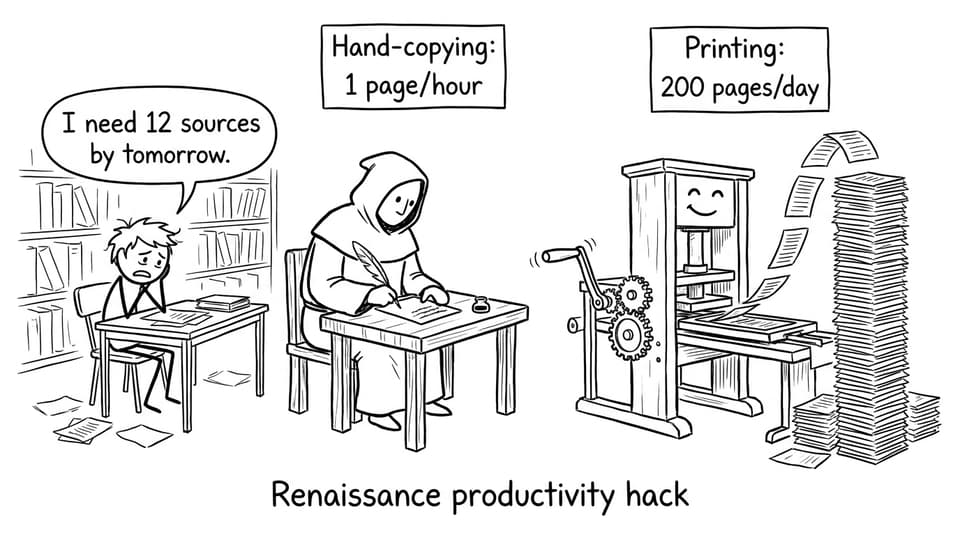
Student meets the printing press
IB History quick checklist: what to remember
Use this when building an essay plan or revising a theme question in IB History:
Gutenberg’s press combined movable metal type, oil-based ink, and a press mechanism.
Before printing, books were hand-copied manuscripts: slow, rare, expensive.
By 1500, presses existed in 200+ European cities (rapid diffusion).
Big impacts cluster into: Renaissance humanism, Reformation, Scientific Revolution, and politics/public opinion.
Best essay framing: change and continuity + causation + significance.
The invention: why Gutenberg’s printing press worked
4.8
X
Share on WhatsApp
Share on LinkedIn
Share on Facebook
A lot of technologies are invented twice: once as an idea, and once as a system that actually spreads.
Gutenberg’s breakthrough was not “printing exists.” It was building a repeatable production line: movable type that could be rearranged and reused; oil-based ink that stuck; and a press that created consistent impressions. The Gutenberg Bible (c. 1455) became the symbol because it made visible what the system could do: multiply a text without multiplying scribes.
The printing press spread quickly because it fit existing urban networks. Cities like Venice, Paris, Nuremberg, and London already had merchants, universities, and literate elites. Printing turned those networks into something closer to an early information economy: printers, booksellers, translators, and customers.
One underrated impact for IB History essays is language. As more texts appeared in vernacular languages, reading became less tied to Latin education. That shift widened audiences and strengthened local identities. It didn’t create nationalism overnight, but it helped ordinary people imagine themselves as part of a shared public.
The impact of the printing press on Renaissance ideas
Renaissance humanism relied on circulation. You can have brilliant thinkers and still have a small intellectual world if ideas travel slowly.
Printing helped humanist works move across borders and generations. Texts could be copied accurately, referenced widely, and debated with shared quotations. That matters for IB History because it supports stronger claims about cultural change: the Renaissance becomes not just “new art,” but a communication shift that made education and argument scalable.
For revision loops that turn content into marks, use the IB History resources hub alongside RevisionDojo’s Study Notes and Flashcards so your examples stay sharp.
The impact of the printing press on the Reformation
The Reformation is where print looks less like a tool and more like a force.
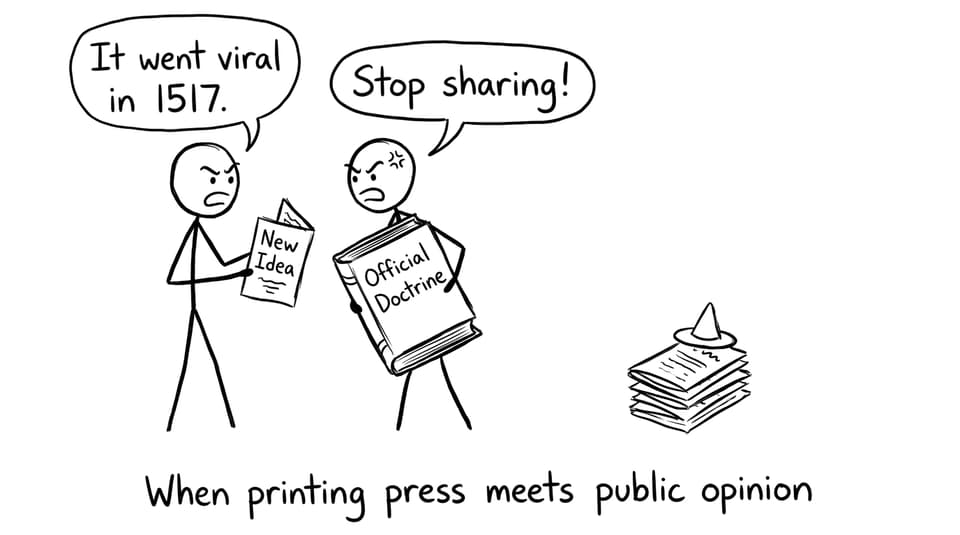
Martin Luther’s 95 Theses (1517) and later pamphlets travelled in ways that handwritten copying could not match. Short texts were cheap, portable, and emotionally direct. Vernacular Bibles and sermons brought religious debate into homes and marketplaces, challenging the Catholic Church’s control over interpretation.
In IB History, this is a great place to show causation carefully: printing did not “cause” reform by itself. But it accelerated communication, reduced gatekeeping, and made dissent harder to contain.
The impact of the printing press on science and politics
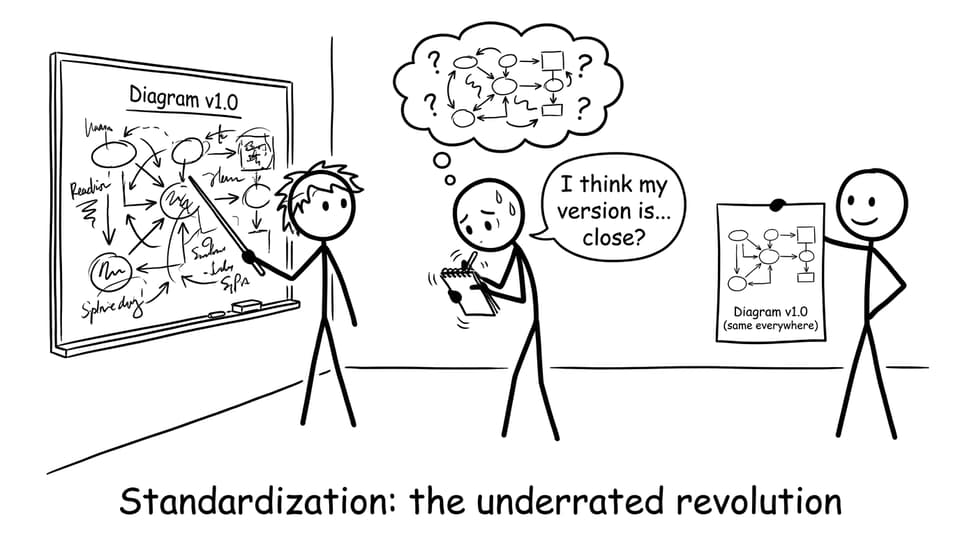
Science depends on replication: of methods, diagrams, and claims. Printing supported that by standardising information. Copernicus, Galileo, and Newton could build on each other’s work more reliably when texts and diagrams appeared consistently.
Political change followed the same logic. Governments could use print for propaganda and administration, but the public could also use print to argue back. The long-term result is the rise of more visible public opinion and pamphlet debate, a foundation for later political participation.
Standardized diagrams joke
How to turn this topic into marks in IB History
When an examiner reads your paragraph, they’re asking: do you know facts, or do you know how history works?
Try this exam-friendly structure:
Claim: Printing press increased the speed and scale of communication.
Proof: Gutenberg c. 1440; Gutenberg Bible c. 1455; 200+ cities by 1500; Luther 1517.
Evaluation: printing accelerated existing tensions (church criticism, humanism, state-building) rather than creating them from nothing.
Then practise it under pressure. RevisionDojo’s Questionbank and AI Chat help you generate and refine thesis statements, while Grading tools show where analysis becomes narrative.
For essay technique, these are worth keeping open during revision:
Conclusion: the impact of the printing press, remembered properly
The printing press is easy to memorise and surprisingly hard to explain well. In IB History, your edge comes from showing the mechanism: how cheaper, faster, standardised text reshaped culture, religion, science, and political debate.
If you want to turn this topic into reliable marks, build a short practice loop: Study Notes for coverage, Questionbank for pressure, AI Chat for clarification, Grading tools for feedback, then timed Mock Exams to make it stick. Start at the RevisionDojo IB History hub and let your revision feel less like rereading and more like training.
David holds a PhD in History from the University of Manchester and has taught IB History for 20 years. His focus is the IB History Paper 1 source questions, Paper 2 comparative essays, and Paper 3 depth study, teaching students to argue from evidence rather than narrate.