



The Cold War, explained like you’re actually about to write it
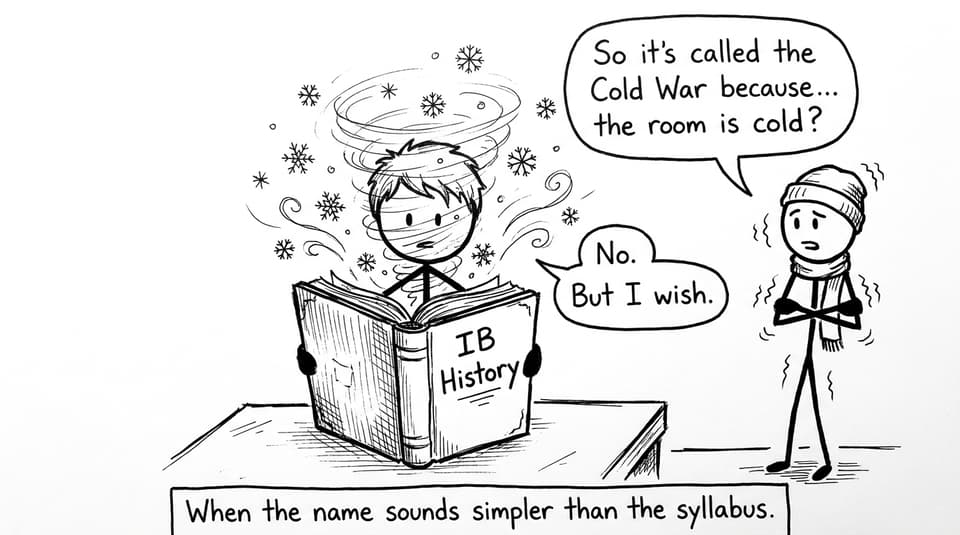
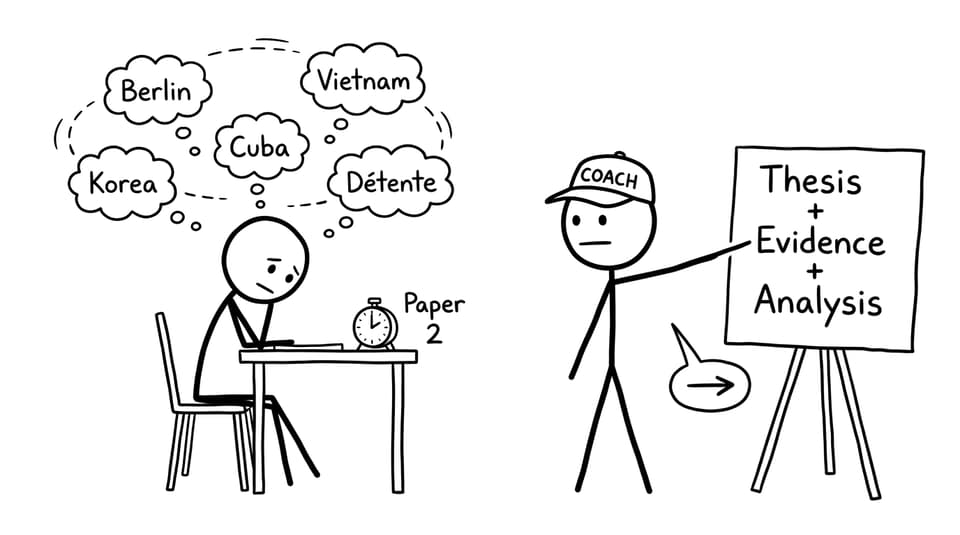
In IB History, the Cold War can feel like a story everyone already knows--until you try to explain it under exam timing. You sit down to plan a Paper 2 essay, and suddenly your brain becomes a messy timeline: Berlin, Korea, Cuba, Vietnam, détente, Afghanistan, Gorbachev. The pressure isn’t just remembering what happened. It’s choosing what matters, and proving you understand why it matters.
At its core, the Cold War was the ideological, political, and strategic rivalry between the United States and the Soviet Union from 1945 to 1991. It wasn’t a direct, continuous war between the superpowers. Instead, it unfolded through propaganda, alliances, nuclear competition, diplomacy, and proxy wars that shaped global life for decades.
If you’re revising superpower relations, keep the bigger frame open while you go detailed: the RevisionDojo IB History hub is the fastest way to jump between topics, skills, and practice.
A quick Cold War checklist for IB History revision
Use this as your IB History “minimum viable understanding” before you write essays:
-
You can define the Cold War (1945--1991) and explain why it was “cold.”
-
You can explain two causes with clear links to ideology and security.
-
You can use three turning points as evidence (with dates).
-
You can show change over time (early hostility, mid-crises, détente, renewed tension, collapse).
-
You can evaluate consequences (political blocs, economic competition, social fear/propaganda).
For targeted Cold War content coverage aligned to Paper 2, use Paper 2: The Cold War -- notes and then tighten memory with Cold War flashcards.
What was the Cold War in IB History terms?
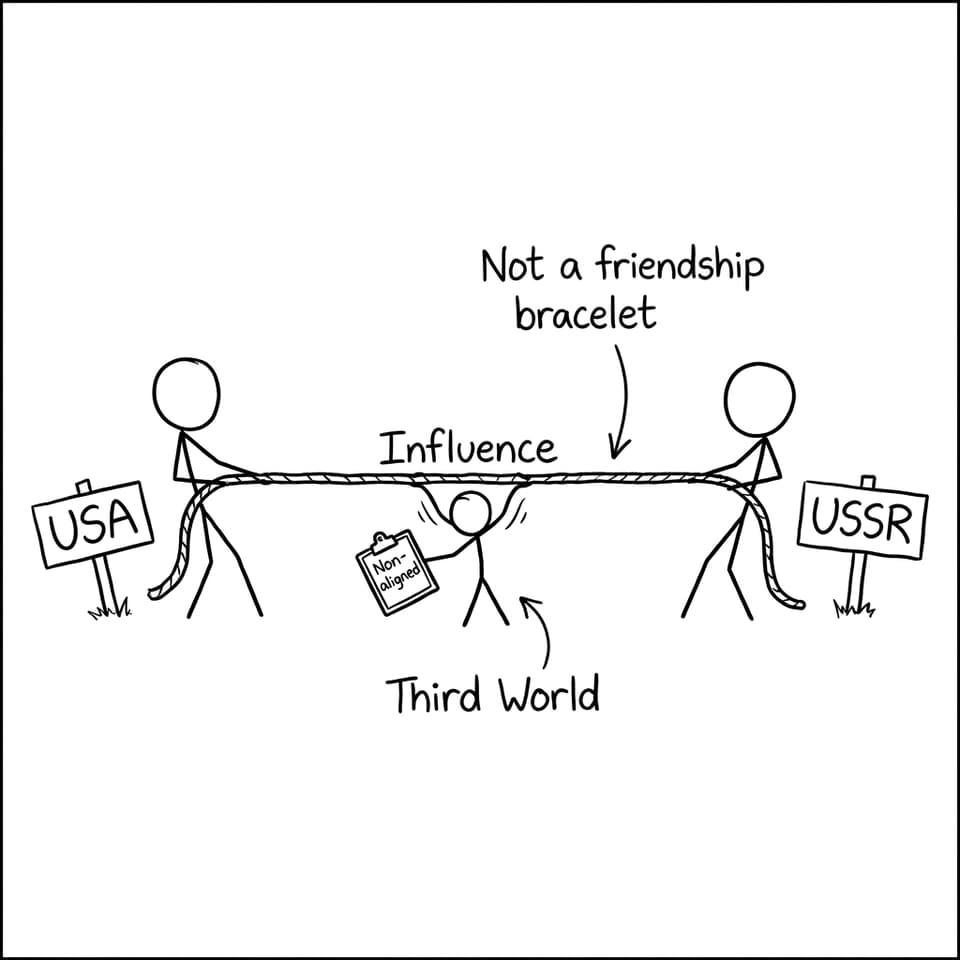
In IB History, the Cold War is best described as a struggle over ideology, influence, and security in a bipolar world. The USA promoted liberal democracy and capitalism; the USSR promoted communism and one-party state control. After World War II, both believed their system was not only superior but also necessary for survival.
That’s why the Cold War shows up everywhere in the syllabus: it’s a case study in how fear shapes policy. Each side interpreted the other’s defensive moves as aggressive expansion. And that mutual suspicion hardened into blocs, treaties, and escalating crises.
Causes of the Cold War (the exam-ready explanation)
Ideological conflict plus security anxiety
A strong IB History explanation doesn’t stop at “capitalism vs communism.” It shows how ideology translated into policy. The USA feared communist expansion would destabilize markets and democracies. The USSR feared invasion and encirclement, especially after suffering massive wartime losses.
Postwar conferences and disagreement over Europe
By 1945, cooperation inside the wartime alliance was already fraying. Conferences like Yalta and Potsdam exposed disagreements about Germany, reparations, and the political future of Eastern Europe. The Soviet establishment of friendly regimes in Eastern Europe looked like protection to Stalin--and like expansionism to Washington.
Containment and the hardening of blocs
Churchill’s “Iron Curtain” framing (1946) captured the growing division, but policy made it real. The Truman Doctrine (1947) and Marshall Plan (1948) signaled long-term American commitment to containment. The USSR responded by tightening control and building its own structures of cooperation and discipline.
If you want a focused breakdown of the early split, RevisionDojo’s notes on Grand Alliance breakdown (1947--49) are perfect for building a “causes” paragraph that stays analytical.
Key Cold War events you actually need for Paper 2
Berlin Blockade and Airlift (1948--49)
Berlin tested whether the West would hold its ground. The Soviet blockade tried to force the Allies out of West Berlin; the airlift showed resolve without direct fighting. In IB History essays, Berlin is useful because it links to alliances, escalation, and symbolism.
Korean War (1950--53)
Korea is your proof that the Cold War could turn hot through proxy conflict. It widened the confrontation into Asia and reinforced the idea that ideology and security concerns would be fought through other states.
Cuban Missile Crisis (1962)
The crisis is the clearest example of nuclear brinkmanship and the logic of deterrence. It also matters because it pushed both sides toward more controlled communication and later arms limitation.
For high-precision evidence, use RevisionDojo’s Cuban Missile Crisis causes notes and Cuban Missile Crisis significance notes.
Vietnam War (1955--75)
Vietnam helps you evaluate limits of containment, domestic pressure, and the complexity of local nationalism inside superpower rivalry. It’s also a strong example of how ideology alone can’t explain outcomes.
Détente, renewed tension, and the end (1970s--1991)
Détente (SALT I, Helsinki) shows that rivalry could soften when costs rose. Renewed tension came with the Soviet invasion of Afghanistan (1979) and an intensified arms race. Finally, reforms under Gorbachev (glasnost and perestroika), the fall of the Berlin Wall (1989), and the dissolution of the USSR (1991) ended the bipolar structure.
For an end-of-period essay, go straight to End of the Cold War resources.
How to write stronger Cold War answers in IB History
The fastest upgrade in IB History is moving from “timeline retell” to “argument with selected evidence.” Use a simple structure:
-
Thesis (your answer in one sentence)
-
2--3 analytical paragraphs (each with a line of argument)
-
Evidence (events) used as proof, not as the paragraph itself
-
Mini-evaluation (significance, limitations, or alternative view)
If you want a clear planning method, use Mastering IB History Essay Structure and Planning and then build exam routines with How to Ace IB History Paper 1 and Paper 2.
RevisionDojo helps you practice this like a system: use the Questionbank for exam-style prompts, Study Notes for clean explanations, Flashcards for recall, AI Chat to test your thesis and counterarguments, and grading tools to see what examiners reward. When exams get close, Predicted Papers and Mock Exams help you rehearse pressure without guessing what to do next.
Cold War revision that actually sticks
The Cold War is one of those IB History topics that rewards calm selection. You don’t need every detail--you need the right examples, organized around causes, crises, and change over time. Start with clean notes, convert them into recall, then train essays until the structure feels automatic.
When you’re ready to turn knowledge into marks, use the RevisionDojo IB History resources, drill skills with the Questionbank, and sharpen your writing with targeted feedback. The Cold War is big, but your approach doesn’t have to be.