



Failing a test in IB Languages doesn’t feel like “one bad grade.” It feels like proof. Proof that everyone else has a secret talent you missed, proof that your brain “just isn’t wired” for languages, proof that the oral will be a slow-motion disaster.
But grades aren’t prophecy. They’re signals.
In IB Languages, most students don’t struggle because they’re incapable. They struggle because they practiced the wrong thing (or practiced the right thing in a way the exam never rewards). The good news is that signals can be read, and study systems can be rebuilt.
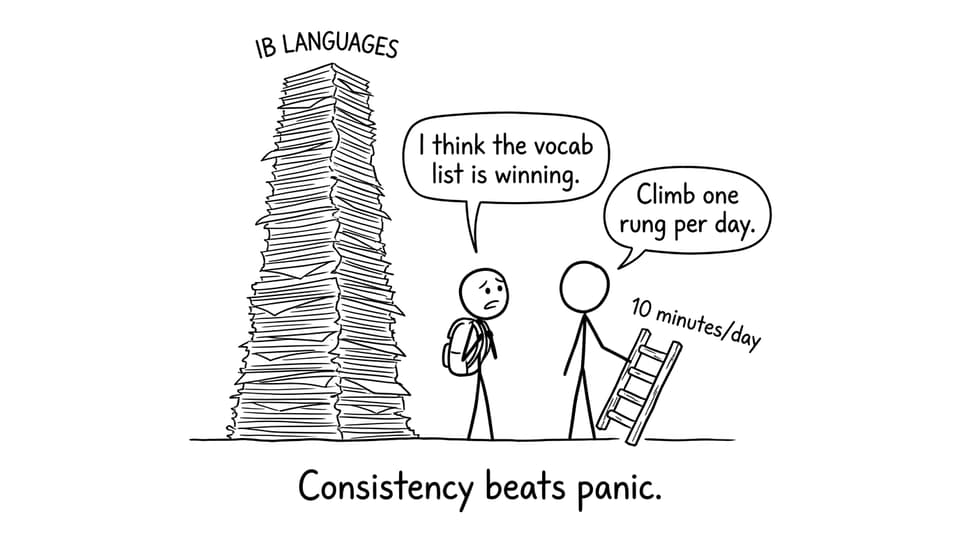
A quick recovery checklist for IB Languages
Use this as your reset button for IB Languages:
-
Pick one skill to fix first: writing, listening, reading, or speaking.
-
Diagnose errors from your last task (not just the score).
-
Build a 10-20 minute daily routine you can actually keep.
-
Practice in the same formats you’ll be assessed on.
-
Get fast feedback (teacher, peer, or tools) and rewrite/re-record.
If you need a home base, start with RevisionDojo for IB and keep everything in one loop: Study Notes, Flashcards, Questionbank, AI Chat, Grading tools, Mock Exams, Predicted Papers, Coursework Library, and Tutors.
Stop calling it “failure” and start calling it data
Here’s a quieter truth: a low score in IB Languages usually comes from a small set of repeatable issues.
-
You know grammar rules, but can’t produce them under time pressure.
-
You understand texts slowly, then run out of time.
-
You have vocabulary, but not the connectors and sentence frames that make it usable.
-
You can speak in your head, but freeze when it’s real.
That’s not a personality flaw. It’s a training gap.
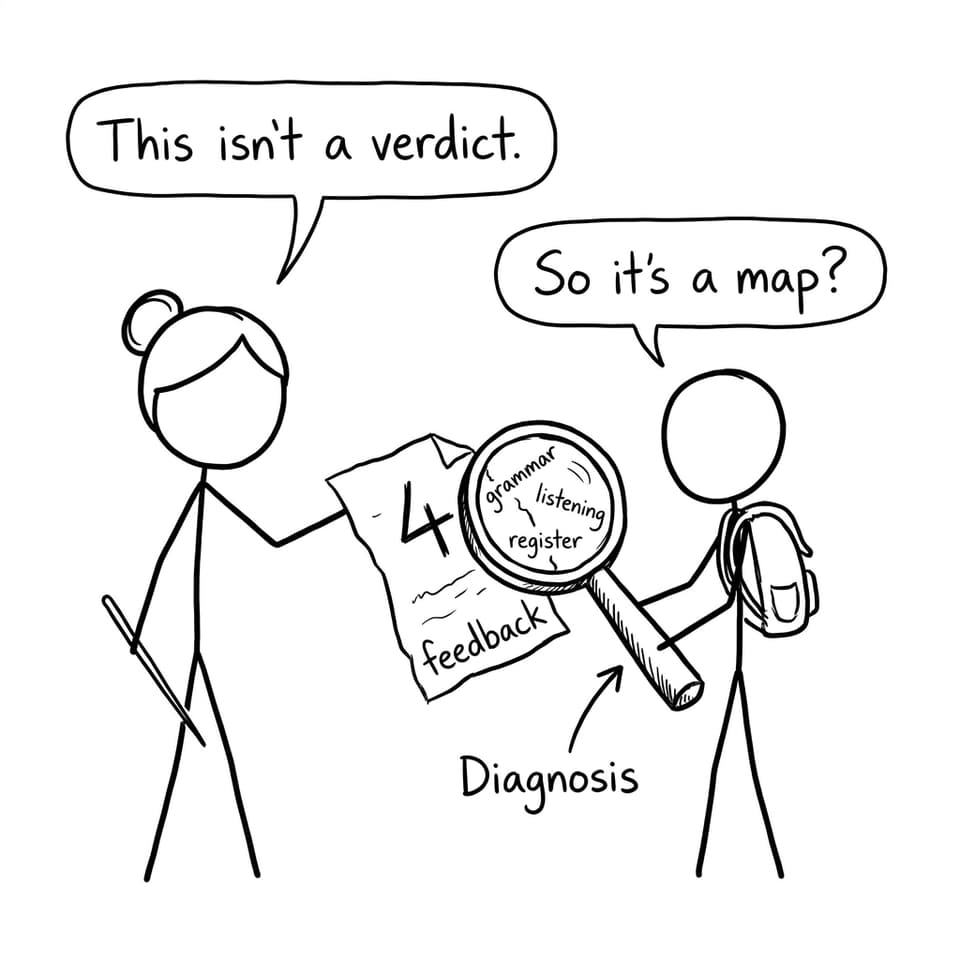
Diagnose your bottleneck (the 15-minute audit)
Before you “work harder,” work smarter. Take your last writing task, reading comprehension, or speaking recording and label every mistake into one of these buckets:
Grammar and accuracy
Errors repeat because you don’t have a correction routine. Build a tiny “error bank” and drill it with targeted practice. If you’re studying Spanish, you can lean on structured grammar notes (for example, El Futuro Notes or El Pretérito Perfecto Notes).
Vocabulary and range
Most students try to memorize nouns. Exams reward phrases. Practice opinion frames, contrast, cause-effect, and “repair phrases.” Then convert them into spaced repetition with Flashcards.
Register and structure (especially writing)
You don’t lose marks for not sounding like a poet. You lose marks for not meeting the task. Use a clear plan and text-type framework. This guide helps: How to Write the Perfect Essay in a Foreign Language Exam.
Oral confidence and fluency
Fluency is often just familiarity under a timer. Train the format directly: 10 Proven Tips to Prepare for Your IB Language B Oral Exam and How to Improve Your Language B Speaking Skills.
Rebuild your routine: small, daily, and exam-shaped
A comeback in IB Languages is rarely dramatic. It’s boring in the best way.
Aim for:
-
Daily (10-20 min): Flashcards + one micro-output (3 sentences, 60-second speaking note, or a short listening clip summary).
-
Twice a week (25-40 min): One exam-style task (writing or reading/listening set).
-
Weekly (15 min): Review mistakes and rewrite or re-record.
If you struggle to fit it around everything else, borrow the scheduling logic from Balancing Language Learning with Work, School, and Extracurriculars. The goal is consistency, not heroic study nights.
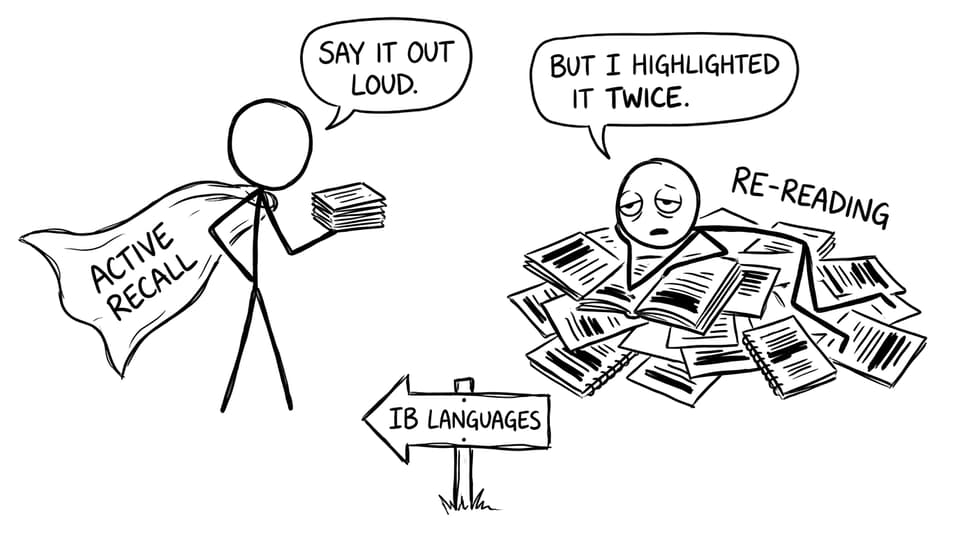
Use RevisionDojo like a coach, not a library
When students improve fastest in IB Languages, it’s usually because they shorten the feedback loop.
-
Use Digital IB Study Notes to clarify what “good” looks like.
-
Turn weak points into Flashcards and review with spaced repetition.
-
Drill exam-style prompts using targeted practice from RevisionDojo’s subject hubs (for English A, start here: IB English A Lang & Lit Resources).
-
Ask Jojo AI Chat to explain why an answer is wrong, then try again.
-
Use Grading tools to get rubric-aligned feedback on writing, and store best drafts in your Coursework Library.
-
Run Mock Exams and Predicted Papers when you need stamina and timing.
-
If you need a human reset, book Tutors for one focused session on your bottleneck.
A calmer ending: you’re not behind, you’re rebuilding
If IB Languages has been rough, you don’t need a new personality. You need a tighter loop: diagnose, practice small daily outputs, train the exam format, and collect feedback like it’s directions.
Start today with one tiny action: open RevisionDojo, choose one weak skill, and build a 10-minute routine using Study Notes, Flashcards, and a short set from the Questionbank. Then repeat tomorrow. In IB Languages, that’s how the story changes.