
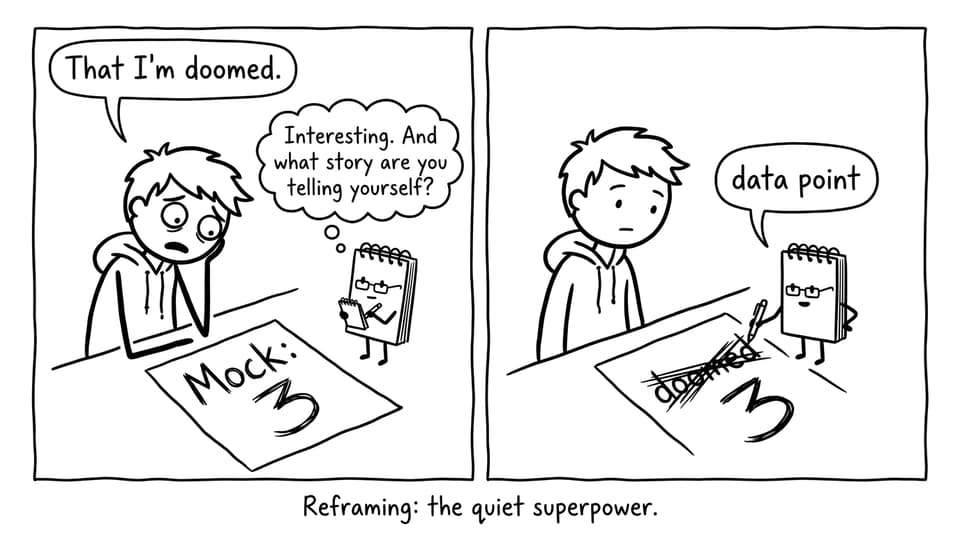
Failure in IB rarely arrives as a single dramatic moment. It’s usually quieter: a mock score that lands lower than expected, a teacher comment that stings, a timed practice that collapses under pressure.
And then your brain does what brains do under stress: it turns a result into a story. I’m behind. I’m not an IB person. This is going to spiral.
The best way to talk about failure and resilience during IB is to talk about it like an analyst, not a judge. Analysts look for patterns. Judges look for blame. One approach builds your future grade. The other just makes you smaller.
A quick IB resilience checklist (use it after any setback)
Keep this list somewhere you’ll actually see it. A notes app. A sticky note. The first page of your planner.
-
Name what happened (one sentence). “I scored a 3 on the mock.”
-
Name the emotion (one word). Embarrassed. Angry. Panicked.
-
Convert it to data. What topic? What question type? What time pressure?
-
Pick one fix. Not ten. One.
-
Rehearse the fix within 48 hours. So your brain learns “setback == action.”
If exam season is already tightening around you, pair this with Exam Stress Management Tips for IB Candidates for a calmer weekly structure.
Why failure is baked into IB (and why that’s not a flaw)
IB is designed to stretch you across multiple subjects, plus core requirements. That means you will eventually hit a wall somewhere: content density, timing, writing structure, or burnout.
The trap is assuming the wall means you’re incapable. In reality, the wall usually means one of three things:
-
A content gap (you don’t yet understand the concept)
-
A technique gap (you understand, but can’t express it in IB mark logic)
-
A pressure gap (you know it at home, but timing changes everything)
This is why an IB setback can be useful: it points to the type of gap. Your job is not to feel better immediately. Your job is to get specific.
If you want a broader view of why this curriculum feels intense, Is IB the Hardest Curriculum? A Calm, Honest Answer frames the challenge without the doom.
The best way to talk about failure in IB: a simple script
When you’re upset, your brain wants either comfort or control. The best conversations give you both, in order.
Step one: validate, don’t minimize
Try:
-
“That makes sense. Anyone would feel knocked.”
-
“You’re allowed to be disappointed.”
Avoid:
-
“It’s not a big deal.” (It is to them.)
-
“Just work harder.” (It doesn’t explain how.)
Step two: separate identity from outcome
In IB, it’s dangerously easy to merge grades with self-worth. Say it clearly:
-
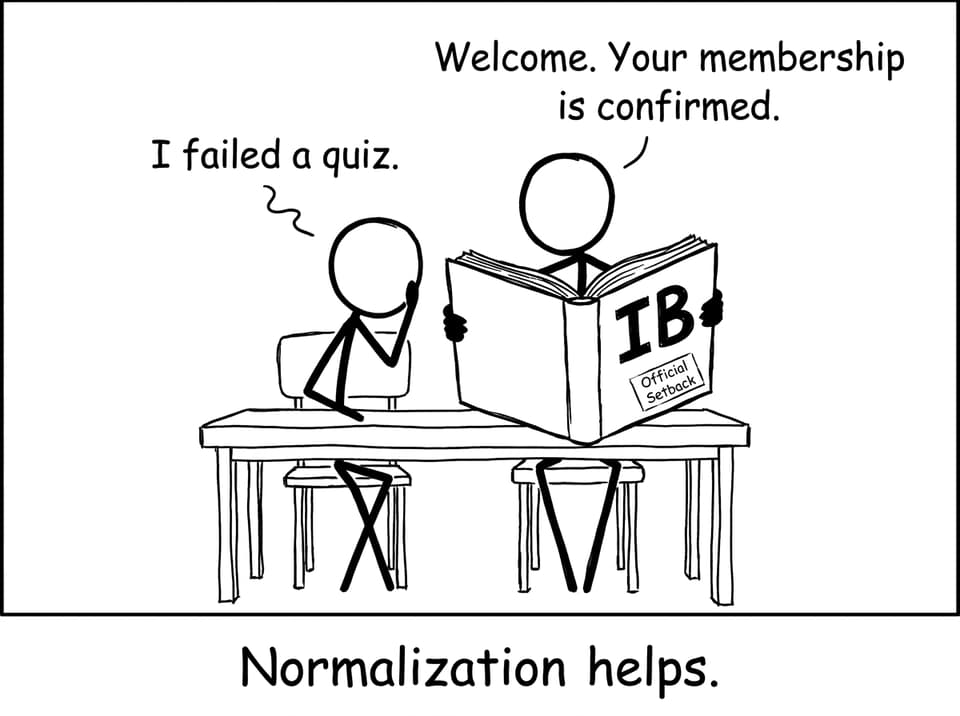
“A result is information, not a verdict.”
-
“This score describes today’s performance, not your ability.”
Step three: ask one diagnostic question
Not a lecture. One clean question:
-
“What was the first point where you got stuck?”
-
“Was it content, structure, or time?”
That single question turns failure into a map.
Turning IB failure into a repeatable resilience loop
Resilience in IB is less about motivation and more about building a loop you can trust on tired days.
A good loop looks like this:
-
Clarify with syllabus-aligned explanations (RevisionDojo Study Notes)
-
Retain with quick daily recall (RevisionDojo Flashcards)
-
Apply under exam logic (RevisionDojo Questionbank)
-
Unblock confusion fast (RevisionDojo AI Chat)
-
Pressure-test with realistic timing (RevisionDojo Mock Exams and Predicted Papers)
-
Close the loop with feedback (RevisionDojo Grading tools)
If you want the full philosophy behind this approach, You’re Not Lazy -- Your IB Study Method Is Broken is a strong reset.
And when you’re ready to make practice feel more like the real thing, use Custom IB Mock Exams: Build Practice Tests by Topic to train weaknesses without drowning in everything.
Common mistakes students make when talking about IB setbacks
Turning one bad day into a personality trait
“I’m bad at Math.” becomes the story. But IB improvement usually comes from small technical fixes. If you’re revising Math specifically, IB Math: Targeted Revision Using the Questionbank shows how to focus on the exact marks you’re losing.
Collecting resources instead of collecting reps
When you feel behind in IB, downloading more PDFs feels productive. It isn’t. Reps are productive: questions, marking, error logs, and retakes.
Avoiding feedback because it hurts
Feedback stings because it’s honest. But it’s also the fastest route to points.
Conclusion: make IB failure speak in a useful voice
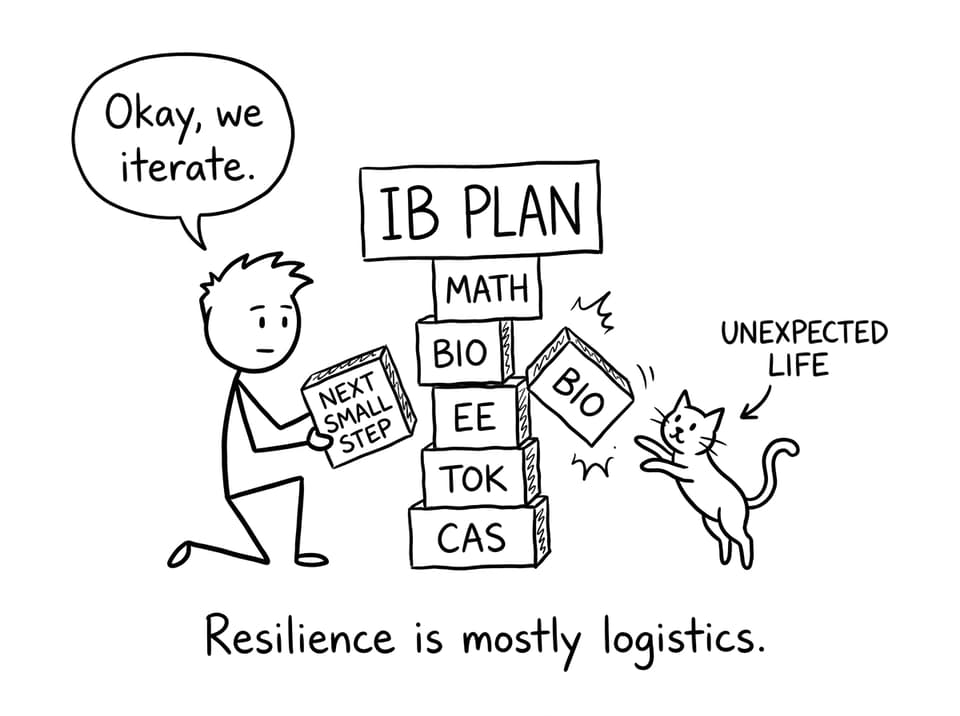
In IB, failure becomes dangerous only when it becomes vague. When it stays specific, it becomes feedback. A mock score can be painful and still be productive. A tough week can shake you and still teach you what to adjust.
Talk about setbacks like an analyst: name the result, name the emotion, find the pattern, choose one fix, and rehearse it soon. That is resilience in IB: not unbreakable confidence, but a reliable return to process.
If you want one place to run that process end-to-end, RevisionDojo is built for it: Study Notes, Flashcards, Questionbank, AI Chat, Grading tools, Predicted Papers, Mock Exams, a Coursework Library, and Tutors when you want a human plan. Your next IB setback doesn’t need a new identity. It just needs a better loop.
