The Silk Road starts with a simple mistake
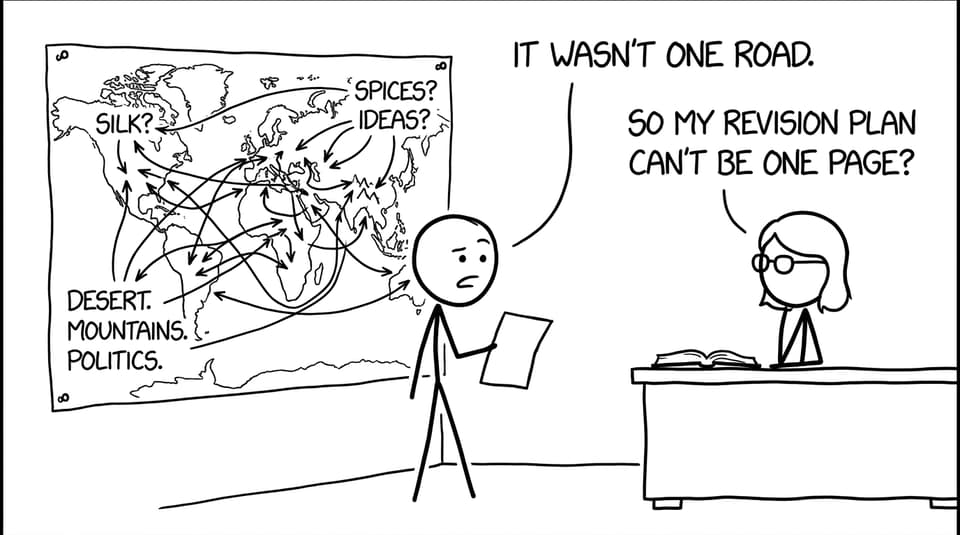
A lot of students picture the Silk Road like a single line on a map: China on the left, Europe on the right, and a neat arrow in between. It’s comforting. It’s also wrong in the way that makes IB History essays drift into vagueness.
The Silk Road was a network, not a highway: shifting routes by land and sea, shaped by deserts, mountains, and the politics of whoever controlled the safest passage that decade. And once you see it that way, your IB History revision becomes easier, not harder. Networks have patterns. Patterns can be argued.
Silk Road in one-minute IB History terms
Use this as a fast checklist before you write any IB History paragraph on trade and exchange:
-
Definition: A web of overland and maritime trade routes linking East Asia, Central Asia, the Middle East, South Asia, and parts of Europe.
-
Time frame (roughly): From about 200 BCE to the 15th century CE.
-
Core function: Movement of goods, people, and power, plus cultural and religious exchange.
-
Exam value: A perfect case study for interdependence, state control, and transmission of ideas.
If you want the official topic pathways and how it sits in the course, keep the RevisionDojo IB History hub open while you revise.
What the Silk Road actually was (and wasn’t)
In IB History, the Silk Road refers to the long-distance connections across Eurasia that enabled exchange between distant societies. But it wasn’t a single “road,” and it wasn’t only about silk.
Think of it like a chain of linked local journeys: merchants, envoys, pilgrims, and intermediaries moving goods and information from one node to the next. Cities like Xi’an, Kashgar, Samarkand, and Constantinople mattered because they were crossroads, not endpoints.
That network logic is exactly what Paper 2 and Paper 3 reward: you’re not listing items traded, you’re explaining how conditions created exchange. For quick definitional recall, the Cultural Interaction & Exchange Flashcards are useful when you want speed over rereading.
Origins and geography: why routes changed
The Silk Road gained momentum during the Han Dynasty (206 BCE to 220 CE) as Chinese silk became highly valued in the Mediterranean world. But geography set the price of every decision.
-
Deserts like the Taklamakan forced reliance on oasis towns.
-
Mountain ranges like the Pamirs shaped which passes were usable.
-
Borders and protection mattered because trade needs predictability.
A strong IB History point is that geography alone didn’t determine trade. Political stability did. Routes shifted as states rose, taxed caravans, offered protection, or collapsed.
For a focused syllabus-aligned case study, see Notes for The Silk Road under the Tang dynasty - IB.
Goods traded: what moved, and why it mattered
Silk is the headline, but the exam story is the logic of value.
East to West (high-value, portable goods): silk, porcelain, paper, tea, spices, and gunpowder.
West to East: gold and silver, wool and textiles, glassware, horses, and precious stones.
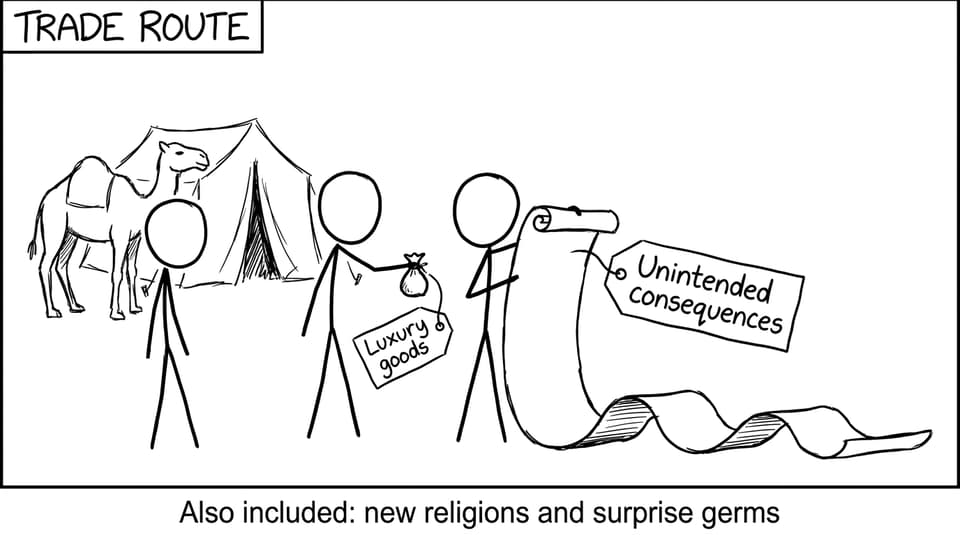
In IB History, you can turn this into analysis by asking: why luxury? Because long-distance transport is expensive and risky. The Silk Road often favoured goods that could “carry profit” without taking up much space.
Cultural and religious exchange: the invisible cargo
The Silk Road is sometimes described as an early form of globalization. In IB History, that’s only a strong line if you prove it with mechanisms.
Religions travelled with people
-
Buddhism moved from India into Central Asia and China through monks, merchants, and patronage.
-
Islam expanded across Central Asia through conquest, trade, and scholarly networks.
-
Forms of Christianity also reached eastward via missionary routes.
Ideas and technologies didn’t respect borders
Papermaking, printing methods, and gunpowder altered societies far from their points of origin. Medical and astronomical knowledge flowed between Islamic and European scholars. Artistic styles blended, producing hybrid forms that are hard to explain if you treat civilizations as sealed boxes.
This is a gift for IB History essays: exchange creates change, and change creates debates about significance.
Empires and stability: why “Pax” arguments work
Trade networks thrive when movement is safer. Your best IB History paragraphs often link the Silk Road’s success to strong states:
-
Han China and Rome: early long-distance demand and diplomatic contact, even when trade relied on intermediaries.
-
Byzantine and Sassanid power: key middle zones that could enable or restrict movement.
-
Mongol Empire (13th century): the famous Pax Mongolica created conditions for safer passage across Eurasia.
If you want practice phrasing these as evaluative claims, the IB History Essay Structure guide helps you turn “facts I know” into “arguments I can defend.”
Decline: why the Silk Road faded (and what replaced it)
By the 15th century, overland routes became less dominant due to a mix of:
-
Fragmentation after Mongol control weakened
-
Increasing efficiency of maritime routes
-
Disease shocks, including outbreaks that disrupted travel and trust
In IB History, avoid writing “it declined because sea trade was better” and stopping there. Better how? Cheaper bulk transport, different risk profile, new political incentives, and shifting centres of wealth.
How to use the Silk Road in IB History exam answers
Here’s a practical mini-routine:
-
Learn the network model (nodes, intermediaries, state control).
-
Memorise 6-8 anchor examples (Han, Tang, Mongols; Samarkand; Buddhism; papermaking; disease).
-
Practice turning examples into claims.
RevisionDojo makes this loop easier: revise content with IB History resources, drill weak areas using the Questionbank for History of Asia and Oceania, and rehearse timing with IB History Predicted Papers.
Closing: the Silk Road is a practice topic, not just a content topic
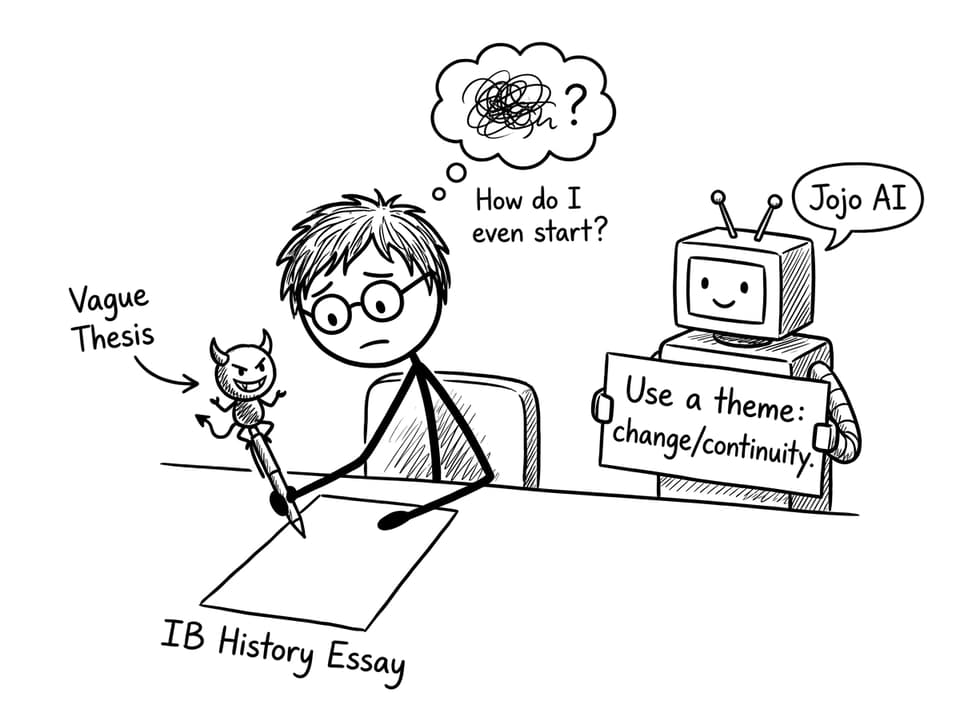
The Silk Road matters in IB History because it trains the exact skill examiners reward: explaining how systems connect people across distance, and how those connections change when power changes.
If you want to revise it like an examiner, build one tight set of notes, drill it with the RevisionDojo Questionbank, then rehearse exam pacing using IB History Predicted Papers. The goal isn’t to know everything about the Silk Road. The goal is to make a clear, defensible IB History argument under time.


