


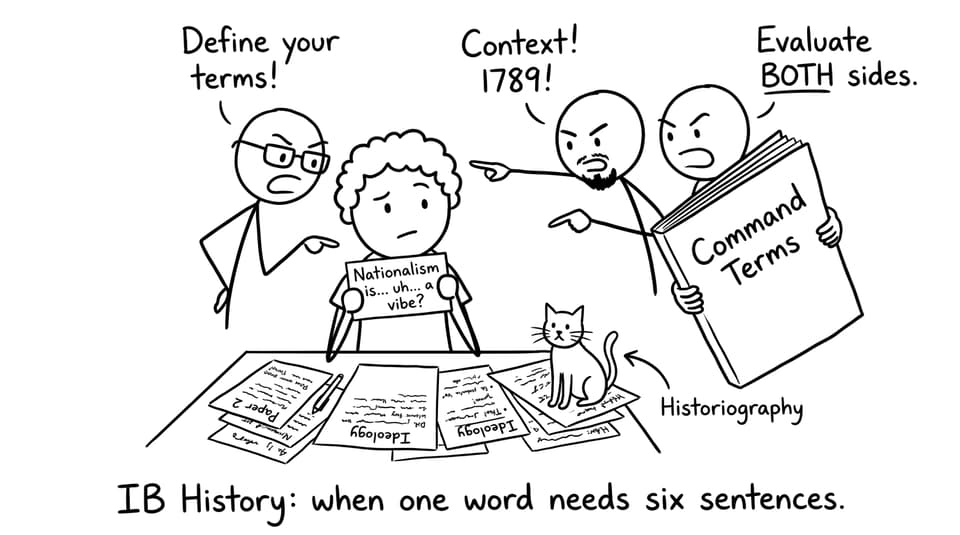
Nationalism is one of those words that sounds simple until you try to write it under timed conditions. In IB History, that moment usually arrives when a question asks you to explain ideology and state formation, and your brain supplies three examples, two counterarguments, and zero clean definitions. The good news: once you understand what nationalism is (and what it does), essay plans get calmer, paragraphs get sharper, and your evidence starts working for you.
What is nationalism in IB History?
In IB History, nationalism is the belief that people who share a common identity (language, culture, religion, ethnicity, shared history, or political values) should form a unified political community, often a nation-state. It is both an idea (how people imagine “us”) and a political force (how movements demand unity, autonomy, borders, and power).
Nationalism matters because it can be used to build states, break empires, and justify conflict. That range is exactly why IB History exam questions love it: you can argue it as a progressive force (self-determination) or a destructive one (exclusion and war), depending on context.
If you want a syllabus-aligned place to anchor definitions, examples, and exam practice, start with the RevisionDojo IB History hub.
A quick IB History nationalism checklist
Use this as a fast pre-essay scan in IB History:
-
Can I define nationalism in one sentence without giving an example?
-
Can I name two drivers (economic, political, cultural, international) that strengthened nationalism?
-
Can I compare two types (liberal/civic vs ethnic/conservative vs anti-colonial)?
-
Can I evaluate benefits and costs in the same paragraph?
-
Can I use 2-3 precise examples instead of narrating everything?
For skill practice (especially Paper 2 essay selection and structure), the IB History exam preparation guide helps you connect content to what the markscheme actually rewards.
Origins of nationalism: why it grows when states feel shaky
Nationalism becomes powerful when old systems of loyalty start to fail. In late 18th and 19th century Europe, people began shifting allegiance from monarchs and dynasties to “the nation.” Three broad forces appear again and again in IB History explanations:
Revolutionary ideas and popular sovereignty
The French Revolution (1789) popularized the idea that sovereignty belongs to “the people,” not a ruler. That changes the political question from “Who should inherit power?” to “Who are we?” National identity becomes something worth fighting for.
War and resistance
The Napoleonic Wars (1803-1815) spread revolutionary ideas across Europe, but also provoked backlash and resistance. Occupation often creates nationalism by giving people a shared enemy and a shared story.
Modernization: literacy, railways, and mass politics
Industrialization and modernization made identities scalable. Newspapers, schools, conscription, and railways helped people imagine themselves as part of one national community, even if they never met most of its members.
Core ideas of nationalism (what you can actually “analyze”)
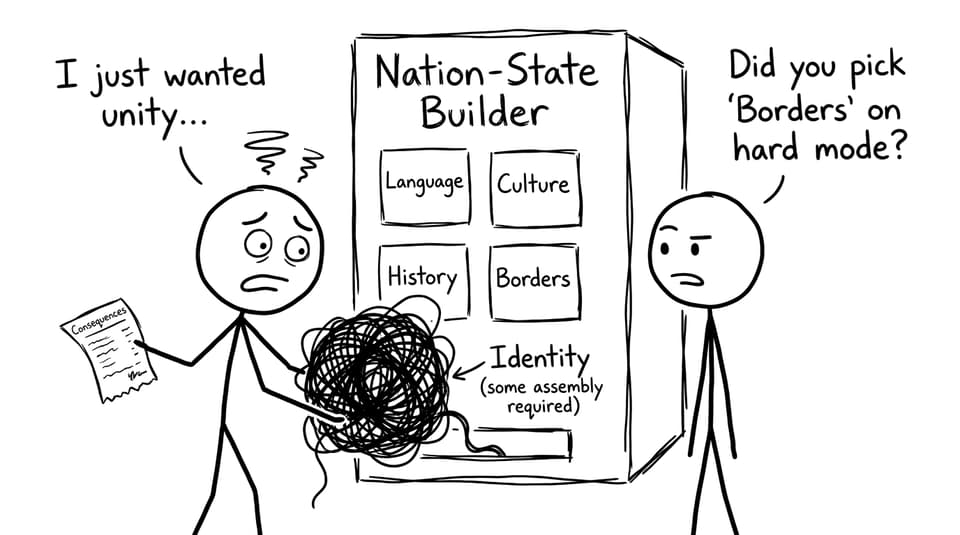
In IB History, nationalism is strongest when you treat it as a cluster of ideas you can test against evidence:
-
Common identity: a claim that a group shares something meaningful.
-
Self-determination: the belief that the nation should govern itself.
-
Unity and independence: a push to unite fragmented territories or end foreign rule.
-
Patriotism and mass loyalty: emotional attachment that can mobilize people.
When you revise, it helps to attach those ideas to specific content pathways. For example, anti-colonial nationalism often emphasizes self-determination and dignity, while ethnic nationalism may emphasize ancestry and exclusion.
IB History case studies: how nationalism reshapes states
You do not need “more examples.” You need comparative examples that do different jobs in an argument.
Italian unification: nationalism as a solution to fragmentation
Italy in the early 19th century was divided and heavily influenced by Austria. Nationalism operated as a unifying story: shared language, culture, and a future state. If you need evidence on the pressures and failed revolts that came before unification, RevisionDojo’s Italy (1815-1849) notes are a clean foundation.
German unification: nationalism plus power politics
German nationalism grew in a landscape of small states and Austrian influence. But unification was not simply “people power”; it was also diplomacy and war. For context on repression, liberalism, and nationalist momentum, use the Germany (1815-1849) notes.
Anti-colonial nationalism: nationalism as liberation (and a test of unity)
In the 20th century, nationalism became a language of independence. But it also created hard questions about borders, minority groups, and political systems after empire.
For India-focused content and exam-style practice pathways, see Section 10: Nationalism & Independence in India. For a Southeast Asia comparison (often useful in Paper 2 arguments about the impact of war and occupation), RevisionDojo’s Dutch East Indies notes are especially strong.
Evaluating nationalism: the paragraph move that earns marks
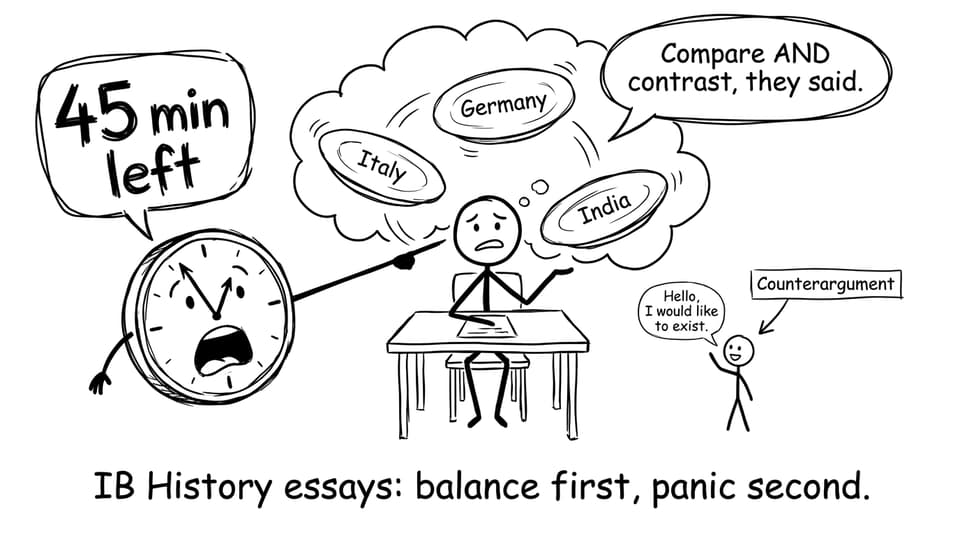
A reliable IB History evaluation structure is: nationalism helps create unity and legitimacy, but can also intensify exclusion and conflict. Then prove both sides.
Potential strengths
Nationalism can:
-
build political legitimacy through shared identity
-
motivate mass participation (revolutions, reform, resistance)
-
support self-governance and independence movements
Potential dangers
Nationalism can also:
-
fuel xenophobia or scapegoating
-
justify aggressive expansion
-
worsen ethnic conflict in multi-national empires or new states
To practise writing that evaluation under pressure, use targeted prompts from the IB History Paper 2 Questionbank, then check your balance with RevisionDojo’s Grading tools and AI Chat feedback.
How to revise nationalism in IB History without drowning in content
The fastest progress comes from a tight loop:
-
Study Notes for definitions and core context
-
Flashcards for leaders, dates, and key turning points
-
Questionbank for timed paragraphs and full essays
-
Mock Exams to train stamina and selection under time limits
-
Predicted Papers to rehearse realistic exam patterns
RevisionDojo is built for that loop, so you are not collecting resources; you are building performance.
Nationalism in IB History: the point is control
Nationalism is not just content to memorize in IB History. It is a way to explain why states form, why empires fracture, and why people accept sacrifice for an idea of belonging. When you can define it cleanly, compare it across contexts, and evaluate its trade-offs, you stop “revising nationalism” and start using it.
If you want one place to move from understanding to timed practice, keep the RevisionDojo IB History hub open while you revise; then reinforce it with Study Notes, Flashcards, the Questionbank, Predicted Papers, and full Mock Exams.