
If you’ve ever walked into an exam room feeling calm, then suddenly noticed your hands sweating and your heart racing, you’ve met the concept that quietly runs your body all day. Homeostasis is the reason you don’t overheat on a warm bus, collapse after skipping lunch, or drift into chemical chaos just because life got busy.
In IB Biology, homeostasis is one of those ideas that looks simple in a definition, but earns marks when you explain it like a system: signals in, decisions made, actions out. Let’s make it feel obvious.
What is homeostasis? (IB Biology definition)
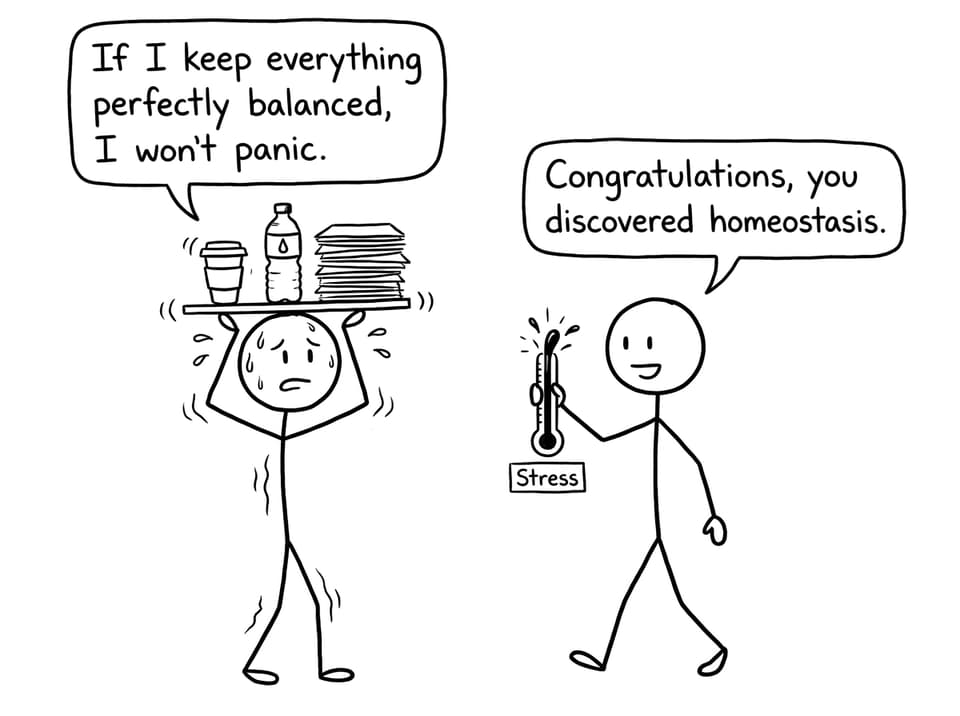
Homeostasis is the maintenance of a stable internal environment within narrow limits despite changes in the external environment. The key phrase for IB Biology exams is “within limits” (not perfectly constant). Your body is always adjusting to keep conditions suitable for enzymes, cells, and organs.
If you want a syllabus-aligned reference point, start with IB Biology Topic D3.3: Homeostasis and keep it open as your map.
Homeostasis mechanisms: the feedback loop you must describe
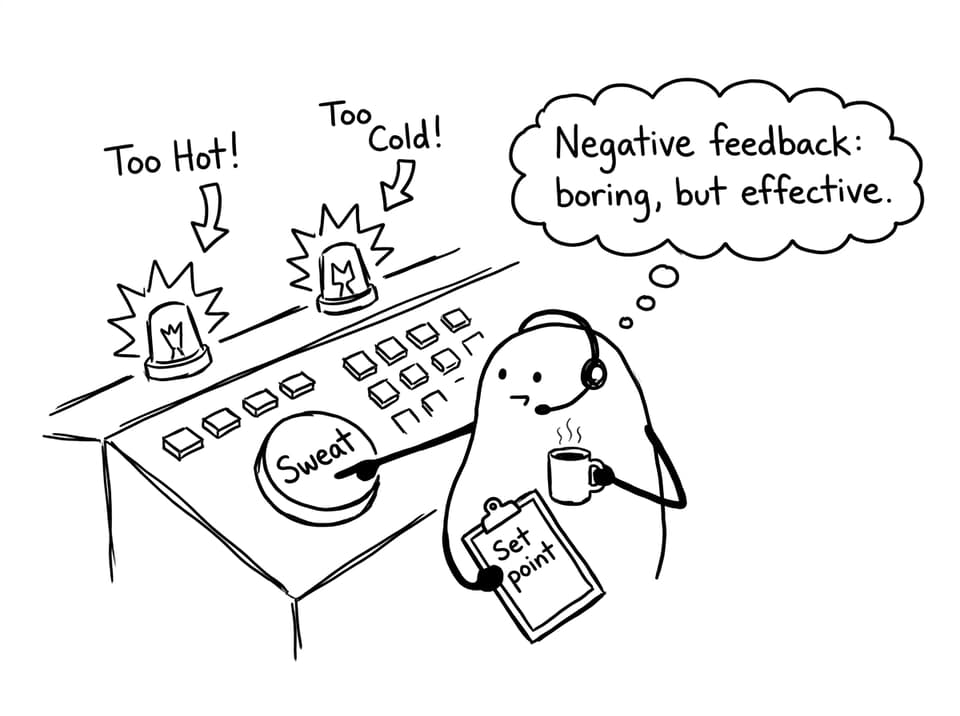
Most homeostatic control uses negative feedback. That means the response reverses the original change, nudging the variable back toward a set point.
Homeostasis checklist (exam-ready)
-
Stimulus: a variable changes (e.g., temperature rises)
-
Receptor: detects the change (thermoreceptors, chemoreceptors)
-
Control center: compares to set point (often hypothalamus, pancreas, endocrine glands)
-
Effector: carries out a response (sweat glands, muscles, kidneys)
-
Negative feedback: the response reduces the stimulus
For focused practice on how examiners phrase this, use the D3.3 Homeostasis Questionbank and then tighten your definitions with the D3.3 Homeostasis Notes.
Negative feedback in IB Biology: why it scores marks
In IB Biology, negative feedback is a scoring opportunity because it forces clear cause-and-effect writing. If you can name the receptor, control center, and effector (even in general terms) and show the reversal, you usually pick up method marks.
To reinforce the loop with quick active recall, use the Flashcards for D3.3 Homeostasis or the structured Lessons for D3.3 Homeostasis.
Real-life examples of homeostasis (the ones examiners love)
Below are the classic IB Biology examples, plus the mechanism behind each.
Thermoregulation (temperature control)
If body temperature rises, thermoreceptors send information to the hypothalamus. The hypothalamus activates effectors like sweat glands (evaporative cooling) and vasodilation (more heat loss at the skin). If temperature drops, shivering and vasoconstriction help generate and conserve heat.
Blood glucose regulation
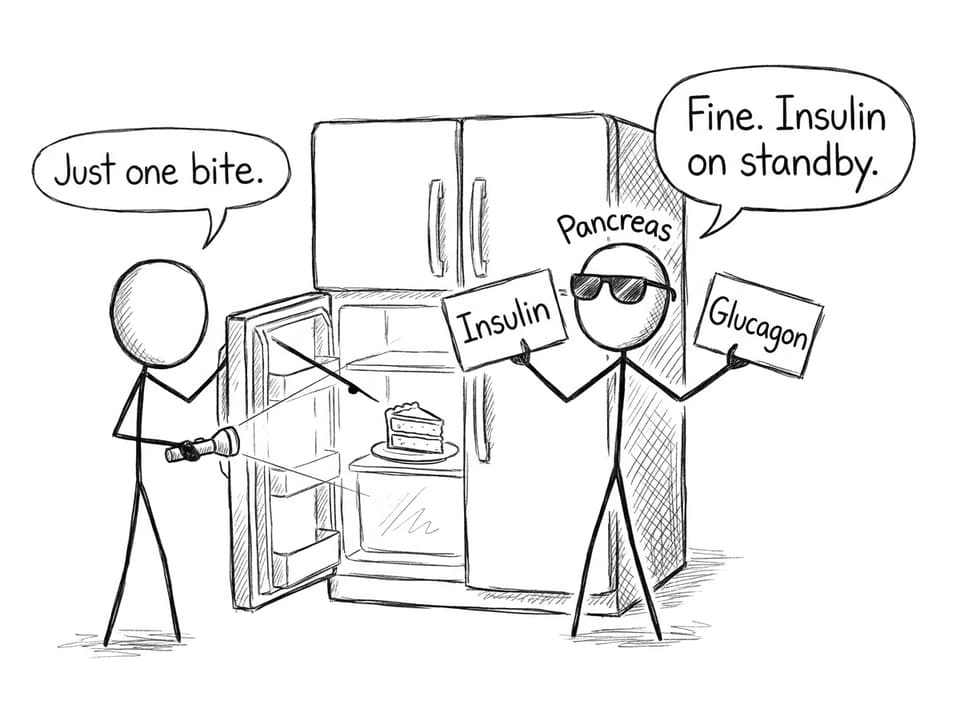
After a meal, blood glucose rises. The pancreas releases insulin, which increases glucose uptake by cells and promotes glycogen formation in the liver. When glucose falls, glucagon triggers glycogen breakdown and glucose release.
If you’re connecting hormones to homeostasis across the syllabus, the IB Biology Topic 6.6 Hormones, Homeostasis and Reproduction Notes are a useful cross-link.
Osmoregulation (water balance)
Kidneys adjust reabsorption of water and ions to keep blood water potential stable. When dehydrated, more water is reabsorbed and urine becomes more concentrated. When overhydrated, less water is reabsorbed and urine becomes more dilute.
pH and gas levels
Blood pH must stay within a narrow range for enzymes to function properly. Increased CO₂ can lower pH, which triggers changes in ventilation rate to remove CO₂ and restore balance.
How to revise homeostasis for IB Biology exams (without wasting time)
Homeostasis questions reward precision. Build a simple loop template, then practice applying it to new contexts.
On RevisionDojo, a fast workflow is:
-
Learn the core explanation from Notes for D3.3.1 Homeostasis
-
Drill exam-style prompts in the IB Biology Questionbank
-
Use AI Chat to re-explain any step you can’t teach back clearly
-
Use Grading tools to check your wording against markscheme logic
-
Run short Mock Exams to make the loop automatic under time pressure
Closing: turn homeostasis into easy marks in IB Biology
Homeostasis is the quiet engineering underneath life: receptors notice, control centers decide, effectors act, and negative feedback keeps you in the safe zone. In IB Biology, it’s also a reliable source of marks because the same mechanism shows up across temperature, glucose, water balance, and pH.
If you want to make homeostasis automatic before exams, use RevisionDojo’s Study Notes, Flashcards, and Questionbank, then pressure-test your understanding with Mock Exams, Predicted Papers, AI Chat, and Grading tools. When you can explain the loop calmly, your exam answers start to feel like they’re doing homeostasis too: steady, controlled, and hard to knock off course.