
A small document. A big advantage in IB History
One of the strangest moments in IB History is realizing that the “best” evidence is often messy. A diary contradicts a speech. A newspaper headline turns out to be propaganda. A photograph captures a truth and hides three others just outside the frame.
That mess is the point. If you can handle it calmly, you start writing like a historian instead of a memoriser. And in IB History, that shift shows up in your Paper 1 marks, your Internal Assessment, and even your essays.
If you want a single sentence to remember: a primary source is evidence produced in the time period you are studying, by someone directly involved or observing.
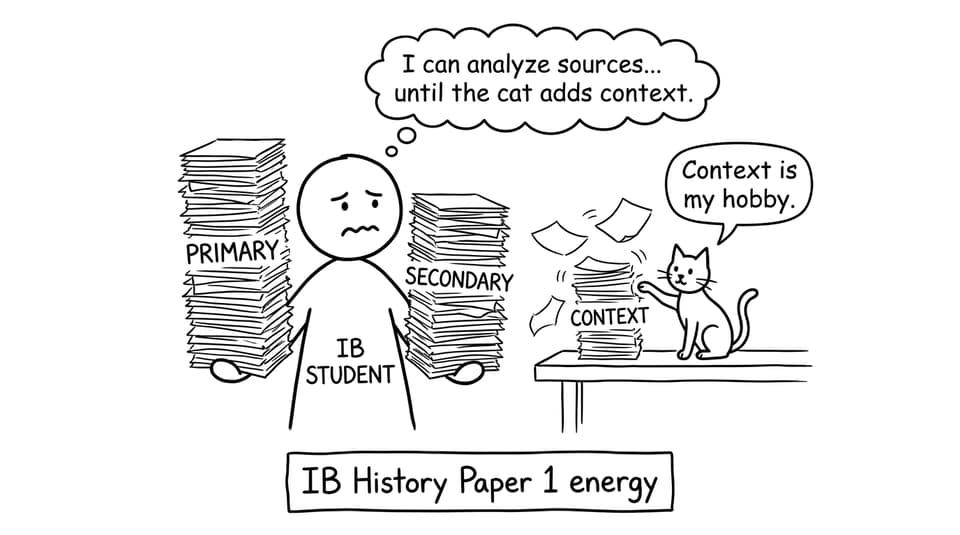
Primary source definition (with examples you actually see in exams)
In IB History, a primary source is a firsthand piece of evidence created during the historical event or era you are investigating. It gives you direct access to the voices, choices, and assumptions of the time.
Common primary source examples include:
-
Official records: treaties, constitutions, government reports
-
Personal accounts: letters, diaries, memoirs
-
Media and persuasion: newspapers, posters, political cartoons
-
Visual/audio evidence: photographs, maps, speeches, interviews
-
Objects from the era: artifacts, posters, edited collections of documents from the time
A soldier’s diary written in World War I is primary. A minister’s speech from the Cold War is primary. They are imperfect, but they are real--and that is exactly why IB History values them.
For more structured exam practice, start at the IB History Resources hub, where you can pair Study Notes with targeted Questionbank drills.
Primary vs secondary sources in IB History (the line that saves you marks)
Students lose time when they treat this as a vocabulary quiz. In IB History, the difference matters because it changes how you evaluate usefulness.
Primary sources
Created at the time. You read them as evidence of perspectives, priorities, and constraints.
Secondary sources
Created later by historians. You use them for interpretation, context, and debates (historiography).
A quick sanity check: if the author is trying to influence people living through the event, you are probably holding a primary source. If the author is trying to explain the event to readers later, it is likely secondary.
To see how this plays out in actual Paper 1 tasks, use IB History Paper 1 Notes alongside the Paper 1 explained guide.
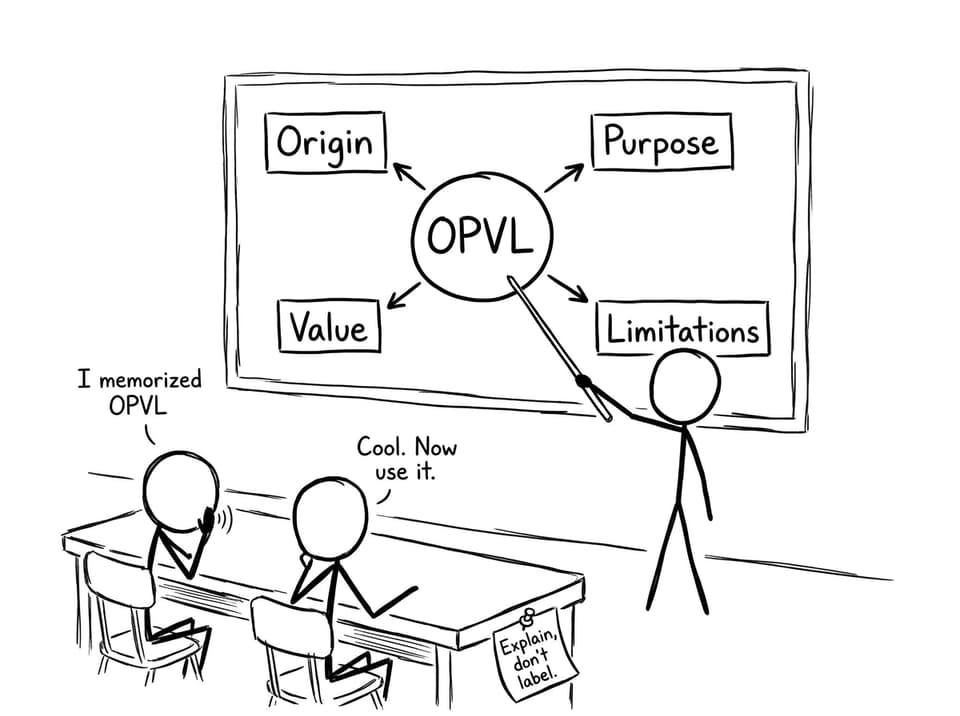
The OPVL method: how IB History wants you to judge a primary source
OPVL is not a box-ticking ritual. It is a way to make a careful claim about how useful a source is for a specific question.
Origin
Who created it, when, and under what conditions? In IB History, origin is where you spot proximity to events and likely access to information.
Purpose
Why does it exist? To persuade? justify? recruit? entertain? Purpose is where bias often becomes visible.
Value
What can this source help a historian understand? Value is not “it is primary.” Value is a specific insight: attitudes, policy priorities, fears, public messaging, or lived experience.
Limitations
What restricts reliability or scope? Limitations can be bias, censorship, missing context, narrow viewpoint, or the simple fact that one person cannot see the whole picture.
If you want to train OPVL under time pressure, mix quick drills from the How to ace IB History Paper 1 and Paper 2 article with timed Questionbank sets, like Move to Global War (Japan) Questionbank.
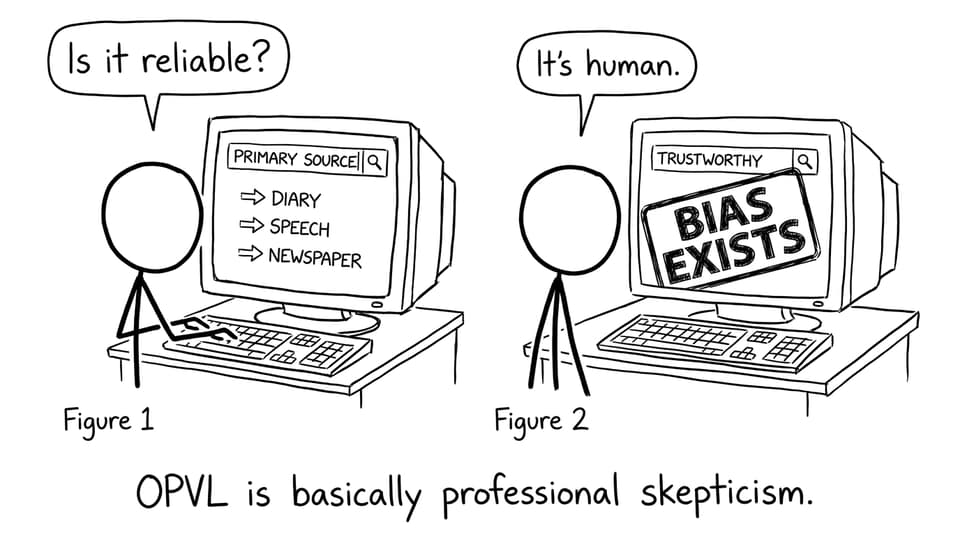
A fast checklist for Paper 1 and the IA (print this mentally)
Use this mini-checklist whenever you face a primary source in IB History:
-
Identify what the source literally says (or shows)
-
Add one sentence of context you know
-
Apply OPVL with specifics, not labels
-
Link usefulness to the question, not to the source type
-
Cross-check with another source or a historian’s interpretation
For IA work, it helps to plan before you collect too many documents. The IB History IA planning sheets keep your evidence tied to your research question, and the IB History IA Grader can flag where evaluation is thin.
Build the habit: primary sources, then practice
Every strong IB History student eventually learns the quiet trick: you do not “find” a primary source and hope it behaves. You question it, place it in context, and decide what it can and cannot prove.
If you want a system for that, RevisionDojo is built for it: Study Notes to anchor context, Flashcards for key terms and events, and Questionbank practice to make OPVL automatic. When you are ready to pressure-test your skills, use History Predicted Papers (Free) and explore annotated models in IB History Examples. Your future self, mid-exam, will feel the difference.
