A few words can change the temperature of a whole house:
“I think I regret choosing IB.”
In exam season, that sentence often doesn’t mean “I want to quit.” More often, it means: “I’m tired, I’m scared, and I don’t know what to do next.” The IB can feel like a treadmill that speeds up when you’re already out of breath. But regret is also data. It points to something that needs adjusting: workload, expectations, support, or strategy.
This guide is for IB students preparing for exams (and the adults who care about them). It’s not motivational fluff. It’s a calm plan.
The 10-minute checklist when IB regret hits
Use this quick reset before you make big decisions about IB:
-
Name the regret: is it stress, grades, time, or identity?
-
Pick one problem you can influence this week.
-
Do one small “proof” task today (a timed set, a short review, a teacher message).
-
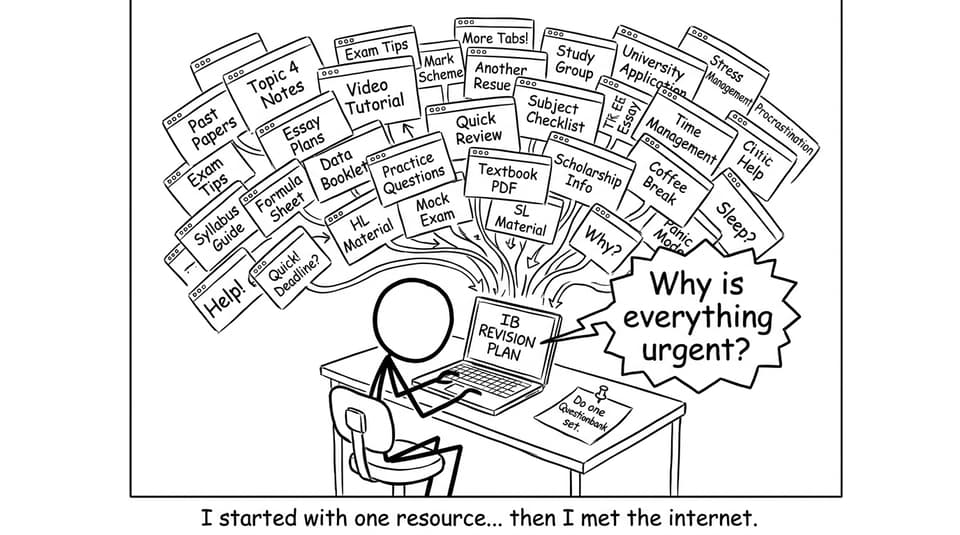
Reduce noise: fewer resources, fewer tabs, fewer vague plans.
-
Build a loop: learn, recall, apply, review.
If you need one place to run that loop, start with RevisionDojo for IB.
Why IB students regret the choice (and why it spikes before exams)
Regret in IB usually isn’t about intelligence. It’s about friction.
The workload becomes personal
The IB doesn’t only test content. It tests pacing: deadlines, revision cycles, and the ability to keep moving when motivation disappears. If your system is shaky, the programme feels unfair.
A strong fix is boring but powerful: time management that actually matches how your week works. Two helpful reads are Best Time Management Techniques for IB Students in 2025 and Time Management in IB: Tools and Techniques That Actually Work.
Burnout disguises itself as “I chose wrong”
In IB, burnout often shows up as irritability, brain fog, and the conviction that everyone else is coping better. That’s not a character flaw. That’s physiology.
If this feels familiar, read How Can I Avoid Burnout During the IB Diploma Programme? or Avoid Burnout in Year 2 of IB: 8 Proven Strategies.
What to try before you decide IB isn’t for you
Big choices should come after small experiments. In IB, tiny changes can create huge relief.
Adjust the programme before you abandon it
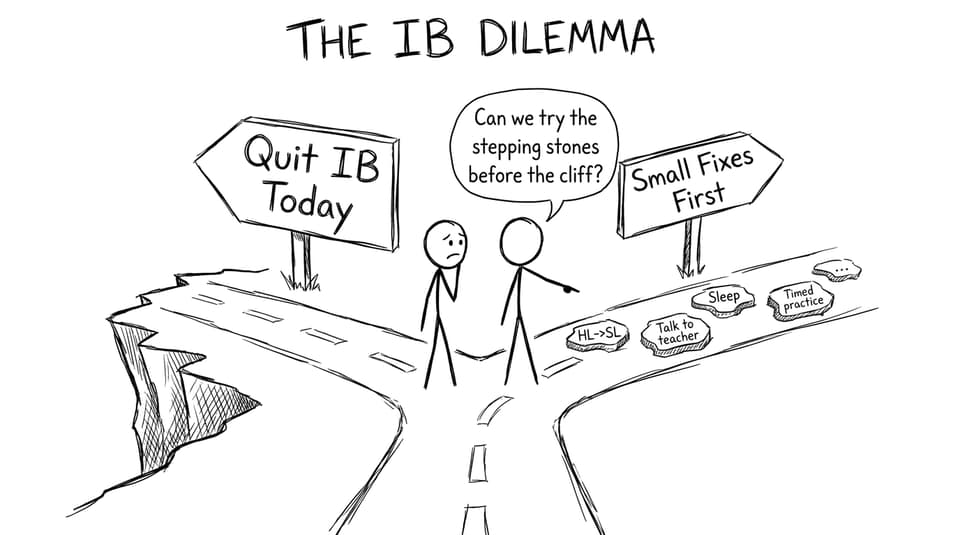
Some students can reduce pressure by changing an HL to SL, rebalancing subjects, or changing how they study. This isn’t “taking the easy route.” It’s choosing a route you can finish.
Switch from rereading to practice (the IB-relevant kind)
A lot of IB regret comes from studying for hours and not seeing improvement. That’s usually a method problem.
Try this three-step loop:
-
Clarify one topic quickly with IB Subject Note Collections
-
Test it with the Questionbank
-
Lock in weak spots with Flashcards
When you get stuck, use RevisionDojo’s AI Chat to ask for a command-term-focused explanation, then go right back to practice.
Train under exam conditions (a little at a time)
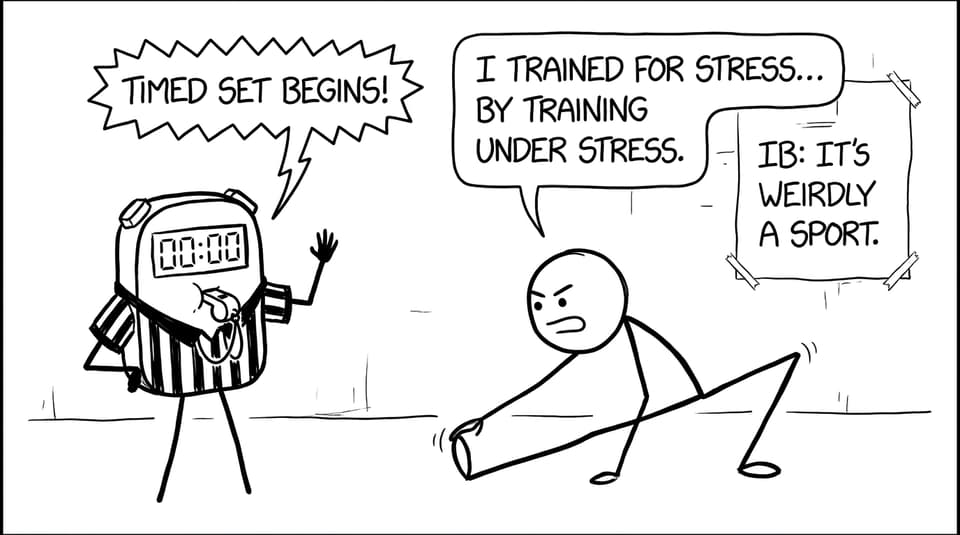
The IB is partly stamina. If you never practice timed work, exams feel like a shock.
A useful framework is explained in IB Predicted vs Specimen Papers: What They Mean and you can rehearse with IB Predicted Papers.
If you’ve had a rough mock season, you’ll also want Failed Mock Exams? You Can Still Pass IB.
A calmer way to finish IB
If you regret IB right now, don’t interpret it as prophecy. Interpret it as feedback. Tighten your plan, reduce the noise, and focus on the few actions that move marks: targeted practice, quick review, and timed rehearsal.
RevisionDojo exists for that exact moment: one platform with Questionbank practice, Study Notes, Flashcards, AI Chat, Grading tools, Predicted Papers, Mock Exams, a Coursework Library, and Tutors when you want a human to help turn stress into a plan.
If you’re staying in IB, don’t stay the same way. Start your next session on RevisionDojo and make it small, timed, and finishable.

