
When your IB choices suddenly feel “wrong”
It usually happens in a quiet moment, not a dramatic one.
An IB student opens a university course page, sees a line that reads like a locked door (“required subject”), and feels their stomach drop. They picked their subjects at 15 or 16, when “future” was a foggy word. Now exams are getting closer, university goals feel more real, and the timetable starts to look like a decision that can’t be undone.
If this is your situation, breathe. In most cases, an IB subject mismatch is not a catastrophe. It’s an information gap. And information gaps can be closed.
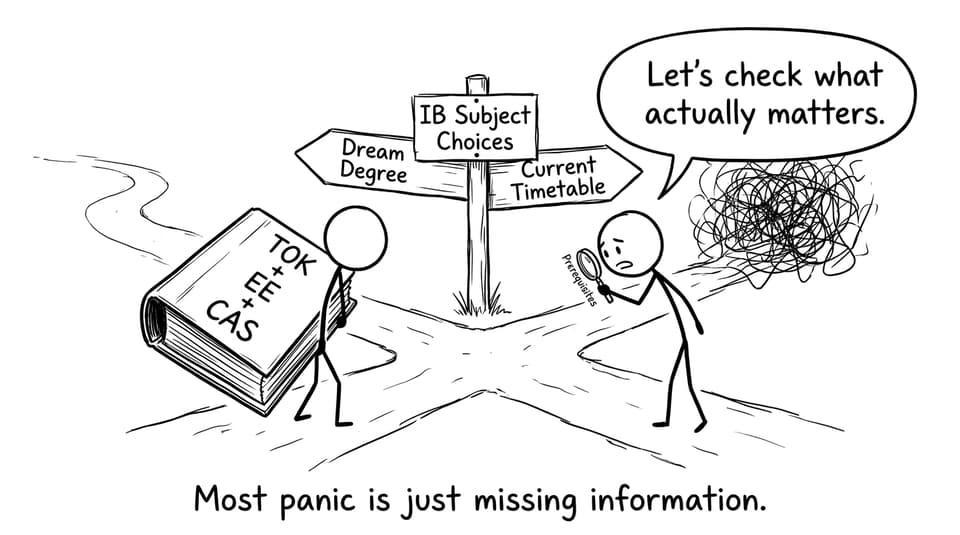
Quick checklist: what to do this week (not someday)
Use this as your calm-first plan before you spiral:
-
Check prerequisites for 3–5 target degrees (not just one dream course)
-
Identify “door subjects” (the few IB subjects that actually unlock entry)
-
Decide whether the issue is prerequisite-related or just preference-related
-
Protect your predicted/term grades: points still matter a lot
-
Create an explanation story for your choices (honest, not defensive)
-
Build exam momentum with targeted practice
If you want a structured way to do that last step, RevisionDojo is built around the loop that saves time: Study Notes → Flashcards → Questionbank → feedback → repeat.
Why IB subject mismatches happen (and why it’s normal)
Most students don’t “mess up.” They update.
At 16, you choose IB subjects with the information you have: what your school offers, what you enjoy, what your teachers recommend, what seems manageable. By 17 or 18, you’ve learned more about yourself. You’ve taken harder tests. You’ve met different role models. You’ve seen what different degrees actually study.
Three common reasons this mismatch shows up:
-
Your interests sharpened (law sounded cool; now you like psychology, economics, or engineering)
-
Your school’s options were limited (not every campus can run every subject)
-
You misunderstood prerequisites (many students assume “universities want everything,” when they often want one or two key subjects)
A useful reframe: universities rarely need a perfect IB match. They need evidence you can succeed.
Step 1: Separate “required” from “recommended”
When students panic, they treat every preference as a requirement.
Your job is to sort university course pages into two piles:
Required (non-negotiable door subjects)
These are the subjects that can truly block entry, especially in competitive STEM and health pathways. If a course requires specific HLs, that matters.
The easiest way to understand how universities interpret levels is to read: Do Universities Care About HL vs SL in IB Subjects?
Recommended (helpful, but flexible)
Many degrees list subjects they “prefer” because they make first-year content easier. Helpful does not mean mandatory.
If you’re still unsure how your overall diploma structure works, this guide gives a clear baseline: How Many Subjects Do You Take in the IB?
Step 2: Don’t trade a hypothetical advantage for real grade damage
A late switch can feel like a rescue plan. Sometimes it’s just a stress multiplier.
If you’re already deep into Year 2 content, swapping an IB subject often means relearning foundations while everyone else is revising. That can lower scores across multiple subjects, which is the opposite of what you need.
A more reliable strategy is to strengthen what you already have:
-
Use RevisionDojo Study Notes to close gaps fast
-
Convert weak topics into daily recall with IB Flashcard System
-
Prove improvement with timed practice via the Questionbank
Grades travel further than regret. A strong IB score plus a smart explanation often beats a messy last-minute rewrite of your entire schedule.
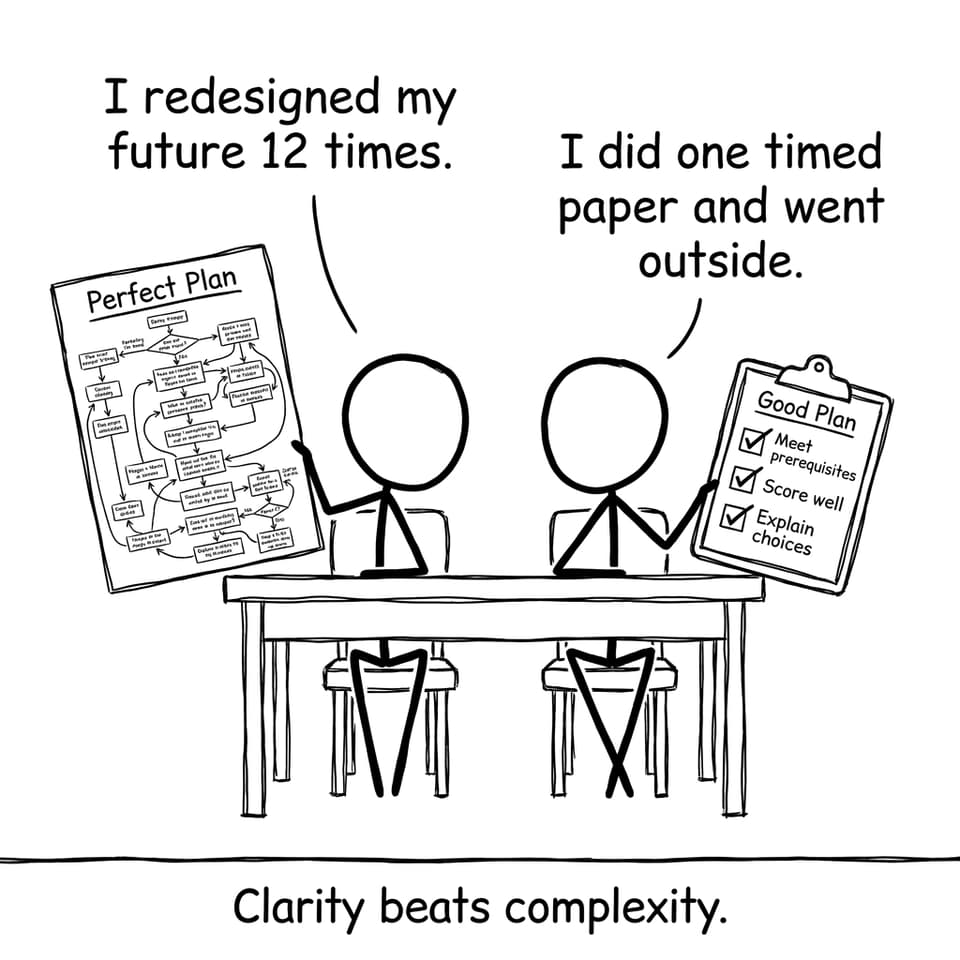
Step 3: Build a “bridge” story (the kind admissions understands)
When your IB subjects don’t scream your intended degree, you supply the missing sentence.
A good bridge story has three parts:
-
What you learned: skills and habits you gained (analysis, writing, modelling, lab method, structured argument)
-
Why it still fits: how those skills connect to the degree you want
-
What you did about it: reading, projects, competitions, online courses, or simply outstanding performance
If your choices feel broad because you were undecided, that can be framed as maturity: you kept options open, then made a deliberate decision with better information.
If you want help thinking through subject groups and flexibility, this is a useful companion: Which Subjects Should I Take at IB if I Don't Know What to Do in University Yet
Step 4: Use exam prep to regain control (fast)
Mismatch anxiety thrives when revision feels vague.
A simple way to regain control is to practice under real conditions and collect evidence that you are improving. RevisionDojo makes that practical:
-
Questionbank drills by topic so you stop revising blind
-
AI Chat (Jojo) helps you get unstuck without losing an hour
-
Grading tools show how marks are actually awarded
-
Predicted Papers and Mock Exams help you rehearse timing and stamina
-
Coursework Library reduces the background stress of IAs/EE/TOK uncertainty
-
Tutors give human diagnosis when you’re plateauing
For the practice-paper side of prep (and how to use it wisely), read: IB Predicted vs Specimen Papers: What They Mean
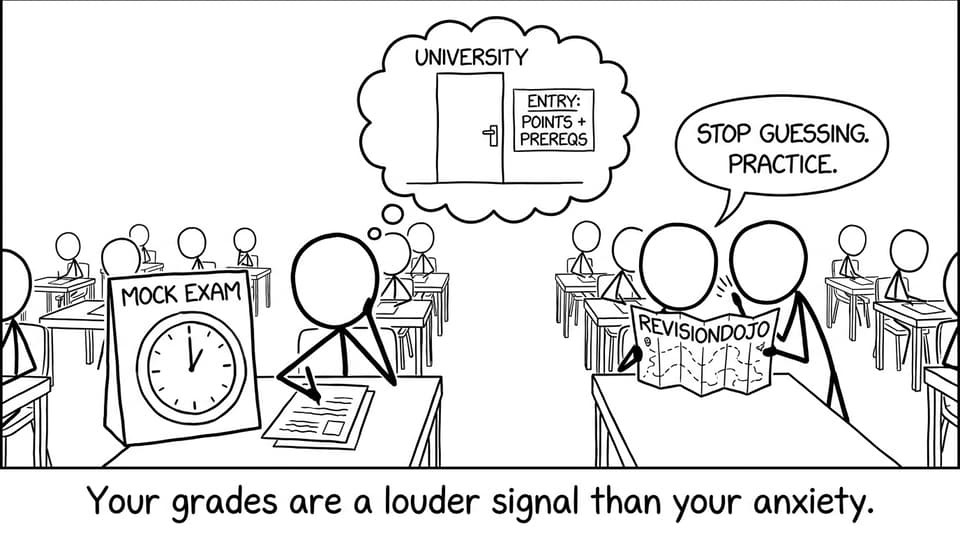
The calm takeaway: IB isn’t a prison, it’s a platform
If your IB subjects don’t match your university goals, you are not “behind.” You are simply at the point where choices become specific.
Do the adult thing early: check prerequisites, protect your grades, and craft a clear story about where you’re going next. Then put your energy where it compounds -- high-quality practice, fast feedback, and steady confidence.
If you want that system in one place, RevisionDojo gives IB students preparing for exams the tools that actually move scores: Study Notes, Flashcards, Questionbank, AI Chat, Grading tools, Predicted Papers, Mock Exams, Coursework Library, and Tutors. Your timetable is what it is. Your results are still negotiable.
