

The moment comparison hijacks an IB student
It usually starts small. Your child mentions a classmate who “always gets 7s.” Or they scroll for ten seconds and suddenly feel ten grades behind. In the IB, where deadlines stack and predicted scores feel like destiny, comparison can become a quiet habit that steals focus.
Here’s the twist: most high-achieving IB students compare themselves too. They just do it privately. So when your teen compares themselves to high-achieving IB peers, they’re not revealing weakness. They’re revealing that they care, and that they don’t yet have a system for turning pressure into progress.
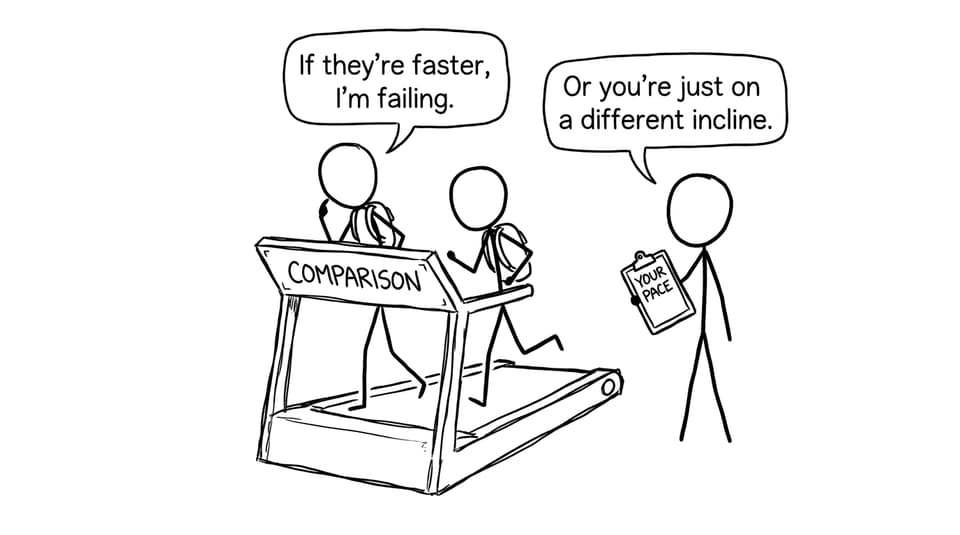
Quick checklist for when IB comparison shows up
Use this short list when the conversation gets emotional and fast:
-
Validate first: name the feeling before fixing the problem.
-
Separate identity from data: one test score is information, not a verdict.
-
Shift to controllables: time, strategy, feedback, rest.
-
Reduce exposure: comparison spikes with constant social checking.
-
Build a repeatable plan: small daily actions beat dramatic weekend marathons.
If your teen wants something concrete, point them toward an IB routine that prioritizes consistency and recovery, like the one in How to Study for IB Exams Without Burning Out.
Why IB students compare themselves to high-achieving peers
Comparison isn’t a character flaw. In the IB, it’s often a predictable response to the environment.
The IB makes performance visible
Grades, predicted scores, subject choices, university talk, leadership roles, CAS projects--everything becomes a scoreboard. When performance is constantly discussed, students naturally assume it’s constantly judged.
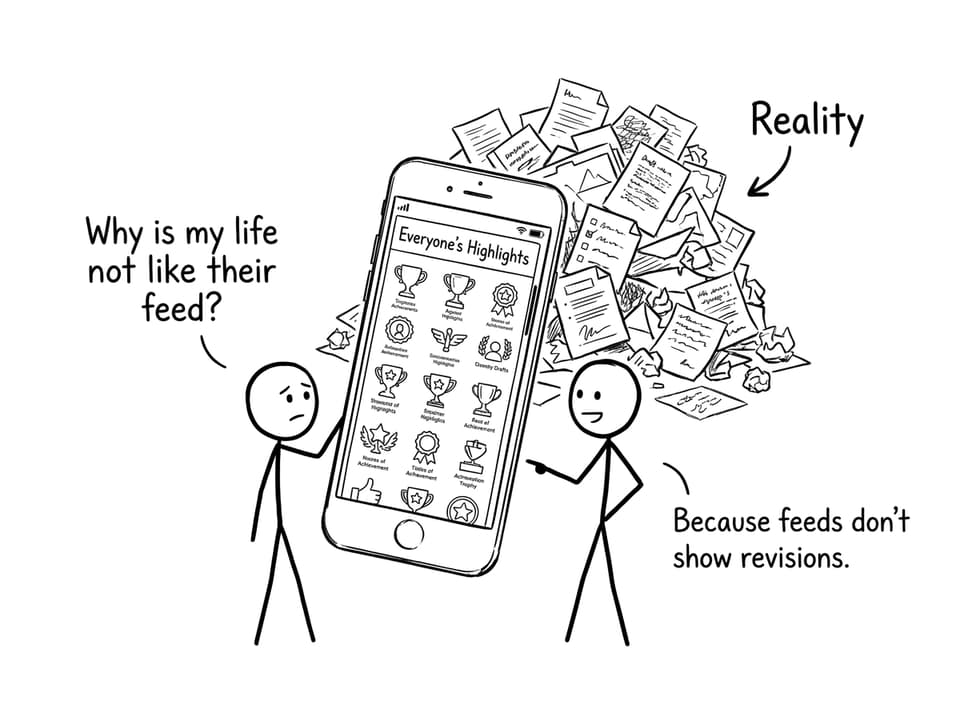
“High-achieving” is often selective evidence
Your child sees someone’s polished essay, not their messy drafts. They hear about a 7, not the tutor, the retakes, the anxiety, or the hours of revision.
Comparison feels like control
When the IB feels uncertain, comparing can feel like a way to predict the future: “If I’m behind them now, I’ll lose later.” It’s not logical. It’s protective.
What to say when your child compares themselves in IB
A helpful response has two parts: comfort, then direction.
Validate without agreeing with the story
Try: “That sounds heavy. I can see why you’d feel behind.”
Avoid: “But you’re smart!” (They’ll hear: “You shouldn’t feel this.”)
Ask for evidence, gently
Try: “What are you using to measure that? One test? One subject? One week?”
This doesn’t dismiss their worry. It slows it down. In IB stress, slowing down is often the first real win.
Move from ranking to practice
Try: “If we stop tracking them, what’s one skill we can build this week?”
Skills are measurable without being personal: timing, command terms, essay structure, weak-topic accuracy.
Turn IB pressure into a plan (the calm loop)
The antidote to comparison isn’t motivational talk. It’s evidence. That’s why the best IB students look calm: they have proof they’re improving.
A simple loop looks like this:
-
Understand one small topic using clear notes
-
Recall it daily using flashcards
-
Apply it with exam-style questions
-
Get feedback and write one “error rule”
-
Repeat 48 hours later
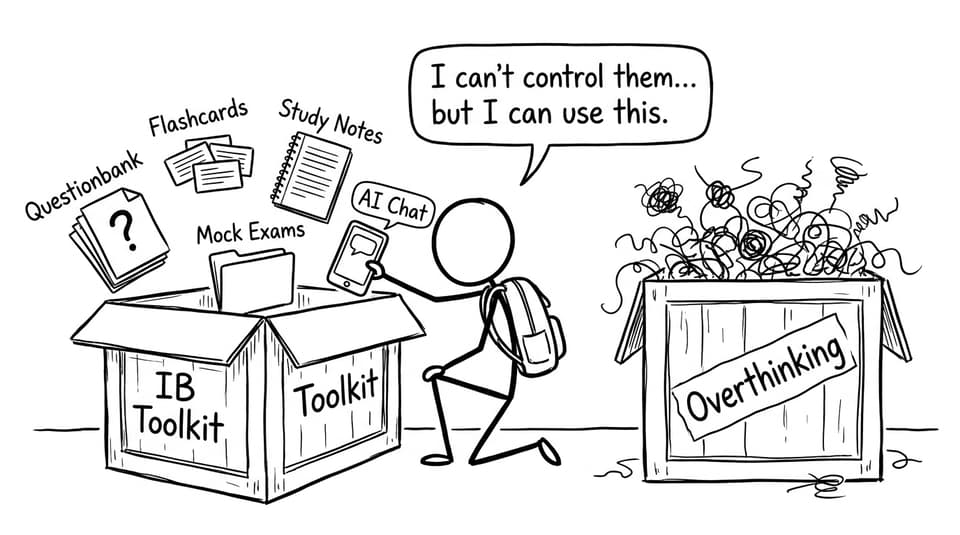
RevisionDojo is built around that loop, so your teen doesn’t have to stitch tools together while already overwhelmed.
-
Use Digital IB Study Notes to reduce the “I don’t know where to start” feeling.
-
Use the Flashcards feature for short daily recall that doesn’t depend on mood.
-
Use the Questionbank to practice what the IB actually rewards.
-
When exams feel close, add timed practice with Custom IB Mock Exams.
-
If predicted grades trigger spirals, keep perspective with IB Predicted Grades Don’t Define You.
-
For full-paper rehearsal, explore IB Predicted Papers.
What parents should avoid in the IB comparison trap
Don’t say “Stop comparing”
It lands like: “Stop feeling.” Better: “Let’s compare you to you from last month.”
Don’t outsource their confidence to outcomes
If every conversation ends at grades, your teen learns that their worth is a number. In the IB, numbers are frequent. So that lesson becomes constant.
Don’t join the ranking game
Even casual comments about “that girl who always gets 7s” fuels the mental leaderboard your child is trying to escape.
Closing: make IB comparison smaller than the work
When your child compares themselves to high-achieving IB peers, they’re often asking a deeper question: “Am I safe if I’m not the best?” The answer isn’t a speech. It’s a plan that creates proof.
Build small evidence. Stack calm repetitions. Let RevisionDojo handle the structure--so your teen can focus on becoming steady, not perfect. In the IB, steadiness is the real flex.