


When a business hires, it is rarely a simple question of “more people” or “fewer people.” It is a quiet balancing act between demand, cost, and capability. In IB Business Management, this topic shows up everywhere: human resource planning, productivity, operations, and even strategy. If you can explain why staffing levels change, you can usually explain what a business should do next.
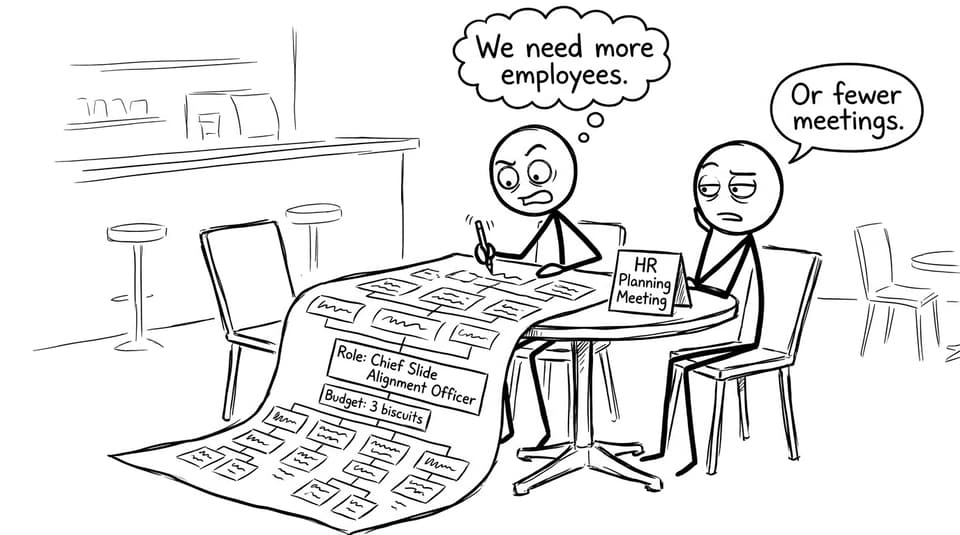
A quick IB Business Management staffing checklist
Use this as a fast structure in IB Business Management short answers and 10-markers:
-
Workload and demand patterns (including seasonality)
-
Skills and specialization required
-
Technology and automation
-
Growth plans and change (new products, new markets)
-
Budget constraints (wages, training, benefits)
-
Efficiency and productivity signals
For syllabus-aligned HR framing, start with Unit 2 HR Management hub.
Workload and demand: the most visible driver
In IB Business Management, workload is the cleanest starting point because it links directly to capacity and customer demand. If orders rise, queues grow, or service quality drops, the business is often understaffed. If employees have long periods of downtime, overstaffing becomes likely.
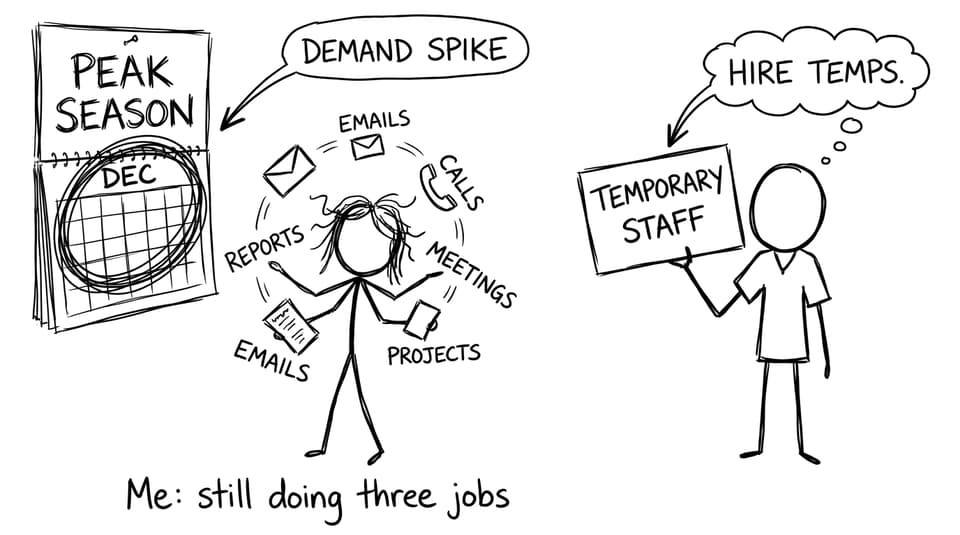
Seasonality matters too. Retailers need more workers around holidays. Tutoring companies may hire around exam periods. Tourism businesses expand during peak months and shrink when demand falls.
Skills required: fewer experts vs more general workers
Staffing is not only about how much work exists, but what kind of work it is. Specialized roles (for example, accounting, data analysis, or machine maintenance) may require fewer employees, but higher skill levels, higher wages, and longer recruitment time.
In contrast, repetitive tasks in production or basic customer service often scale through hiring more employees. This is an easy evaluation point in IB Business Management: a business can increase headcount, but if skills do not match the task, productivity may not rise.
For exam language, reviewing precise terms like “human resource planning (HRP)” helps. See IB Business Management Key Definitions.
Technology and automation: less labour, new roles
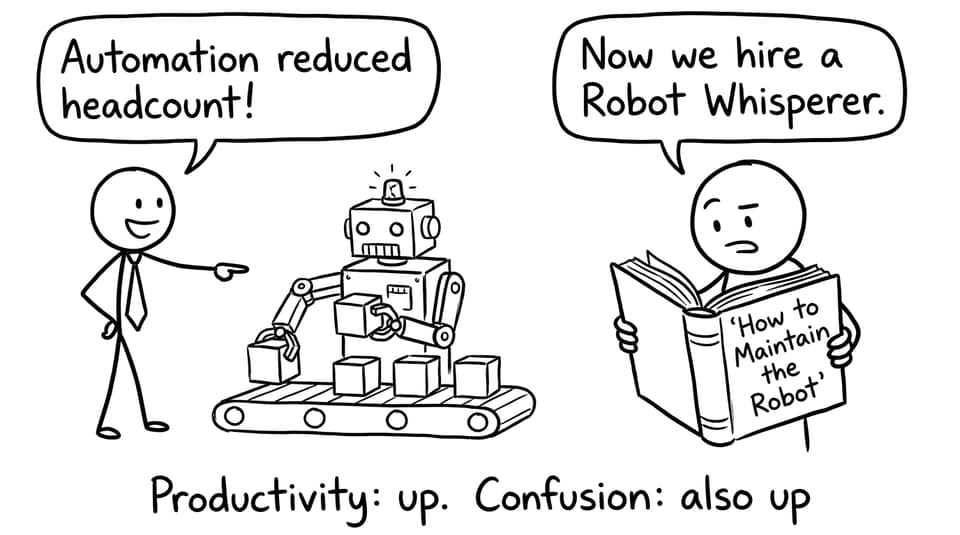
Technology can reduce the number of employees needed by speeding up processes and removing manual steps. Think self-checkouts, scheduling software, or automated machinery. But there is a twist that makes strong IB Business Management analysis: technology often replaces some jobs while creating other jobs, especially technical support and oversight.
If you want a useful link between staffing and operations, connect this to efficiency and systems: How operations management supports other business functions.
Growth plans: hiring for tomorrow, not just today
Businesses do not only staff for current demand. They staff for strategy. Expansion into a new market, opening a new location, or launching a new product often requires hiring before revenue arrives.
This is a high-quality evaluation point in IB Business Management: hiring early builds capacity and prevents service failures, but it increases short-term costs and risk if forecasts are wrong.
Budget constraints: the limit that decides everything
Even when a business needs more people, it may not afford them. Staffing decisions must fit within budgets for wages, training, and benefits. If cash flow is tight, managers may choose overtime, part-time work, outsourcing, or temporary contracts instead of permanent hiring.
This links well to HR planning content such as internal and external influences: 2.1.2 Internal and external factors influencing HRP.
Efficiency and productivity: the warning lights
In IB Business Management, productivity is often the “proof” in your argument. If quality is slipping, deadlines are missed, and labour turnover rises, the workforce may be too small or poorly deployed. If output per worker is low and supervision becomes excessive, the workforce may be too large, poorly trained, or badly motivated.
This is where human factors matter. A business can have the right number of employees and still underperform if motivation is low. For related exam-ready thinking, see How do Maslow, Herzberg, and Taylor differ in their views on motivation? and Why do strong employer-employee relationships matter?.
Final takeaway: staffing is strategy in disguise
The number of employees a business needs is shaped by workload, skills, technology, growth plans, budgets, and productivity signals. In IB Business Management, the best answers do not just list factors: they show how each factor pushes the business toward trade-offs.
If you want to turn this into marks, revise Unit 2 with RevisionDojo’s Study Notes and Flashcards, drill exam-style prompts in the Questionbank, and use the Grading tools to tighten your explanations until they sound like an examiner wrote them. For a full course overview, start here: IB Business Management resources.


