


Conflict at work rarely starts as a dramatic showdown. It usually begins as a small misunderstanding: a deadline that felt “obvious” to a manager, a comment that landed the wrong way, a rota change that made someone miss a family plan. In IB Business Management, these moments matter because they reveal the core tension of any organization: employers chase performance, employees chase fairness and security. When those pressures collide, conflict isn’t a surprise; it’s a signal.
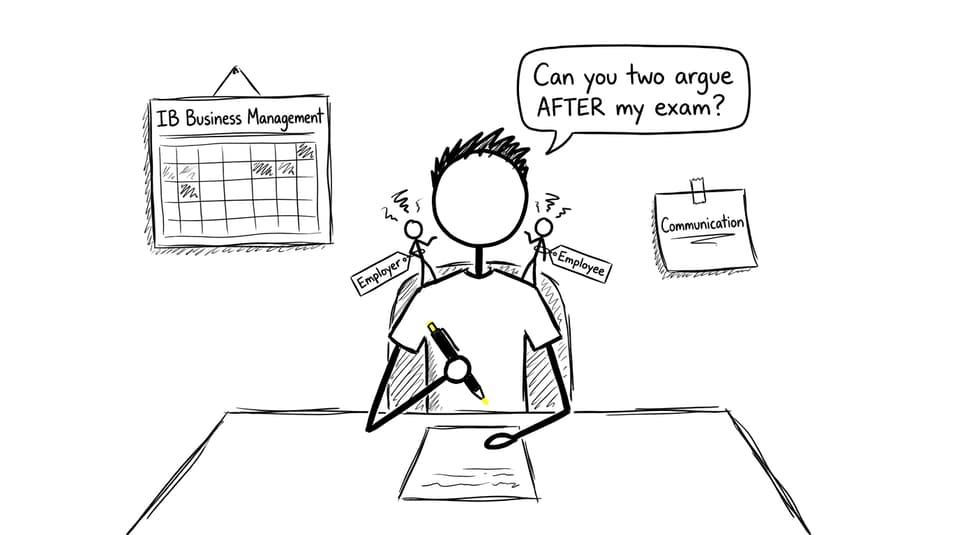
A quick IB Business Management checklist: causes of conflict
Use this as an exam-ready scan list (and a paragraph plan):
-
Communication breakdowns
-
Workload and working conditions
-
Pay, rewards, and perceived inequity
-
Different priorities (profit vs wellbeing)
-
Leadership and management style
-
Policies that feel inconsistent or unfair
For syllabus alignment, pair this list with 2.7.1 Sources of conflict in the workplace.
What causes employer and employee conflict (and how to write it in IB Business Management)
Poor communication (the silent multiplier)
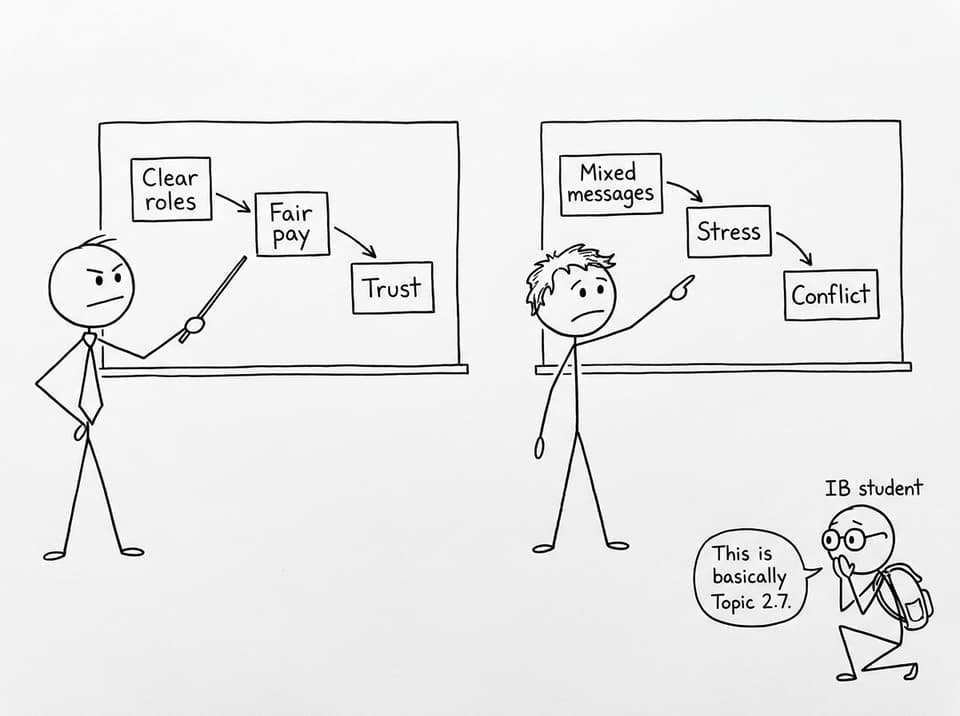
In IB Business Management, communication isn’t just “talking more.” It’s clarity of roles, expectations, and feedback. When messages are vague (“be more proactive”), employees hear judgment, while employers think they’ve offered guidance. Miscommunication also grows in tall hierarchies, where information gets filtered or delayed.
A good way to revise this is to connect conflict to HR systems: job descriptions, appraisal processes, and channels of communication. Practice explaining cause-and-effect with exam-style prompts in the IB Business Management Questionbank.
Workload pressure and stress
Workload conflict often looks like “attitude problems,” but it’s usually a mismatch between capacity and demands. Employees feel squeezed by unrealistic deadlines or understaffing; employers feel boxed in by targets, competition, and costs. The result is resentment, presenteeism, and falling motivation.
If you want a strong evaluation point: short-term productivity pushes can create long-term turnover costs (recruitment, training, lost know-how). That’s a very IB Business Management way to show balance.
Different priorities: efficiency vs equity
Employers may prioritize efficiency, flexibility, and cost control. Employees often prioritize fairness, voice, and work-life balance. Neither side is “wrong”; they’re responding to different incentives.
This is why stakeholder conflict is so common: the same decision (e.g., freezing pay) can be “responsible budgeting” to management and “broken trust” to staff. Revision tip: link it to stakeholder objectives and consequences.
Leadership style and recognition
Autocratic or inconsistent leadership can trigger conflict fast. People can handle hard work; they struggle with feeling unheard. Lack of recognition amplifies small issues into identity-level problems (“they don’t value me”). In exam terms, connect leadership style to motivation, culture, and employee engagement.
For the bigger picture, see Why do strong employer-employee relationships matter?.
How conflict can be resolved (IB Business Management tools that score marks)
Start with communication and active listening
Most workplace conflict is expensive because it’s slow. The fastest fix is structured clarity: agreed expectations, timelines, and feedback loops. Active listening matters because it converts emotion into information: what exactly feels unfair? what constraint is the employer facing?
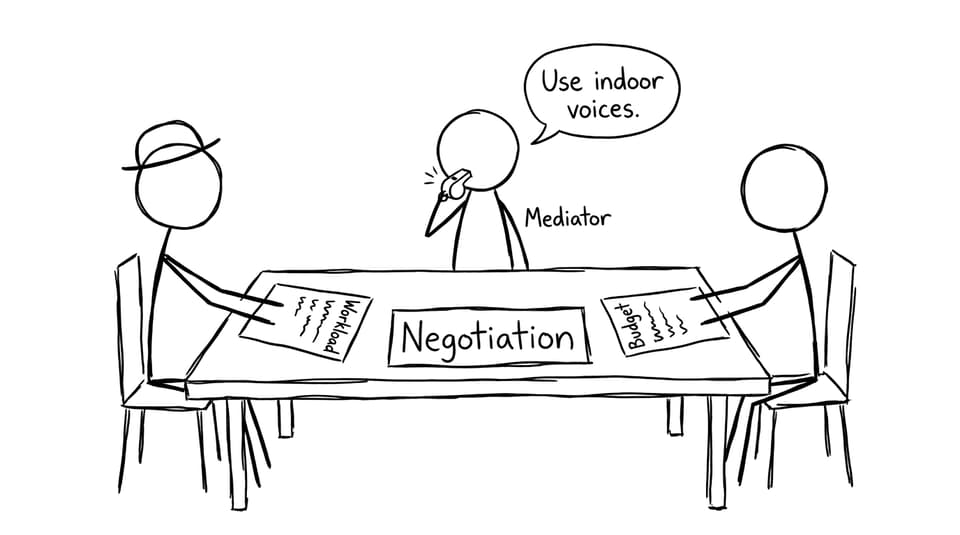
Use negotiation, conciliation, and arbitration
In IB Business Management, resolution methods are marks on the page:
-
Negotiation: direct discussion aiming for a compromise.
-
Conciliation: a neutral third party facilitates a voluntary agreement.
-
Arbitration: a neutral third party imposes a binding decision.
Revise these with 2.7.3 Approaches to conflict resolution and then test recall with the matching conflict resolution flashcards.
Prevent future conflict with systems
Prevention is quietly powerful: clear contracts, transparent pay structures, consistent policies, and fair appraisal criteria. In exam evaluation, prevention is often more cost-effective than prolonged disputes or industrial action.
To keep your notes organized by syllabus, bookmark the Industrial/employee relations (HL) notes hub and practice exam-style applications in the Industrial/employee relations Questionbank.
Closing: turn conflict into exam-ready insight
For IB Business Management, employer and employee conflict is one of those topics that looks simple until you write it under time pressure. The best answers stay calm: identify the cause, show the impact on motivation and productivity, and propose a realistic resolution method with evaluation.
If you want that structure to feel automatic, RevisionDojo helps you drill it from multiple angles: Study Notes for understanding, Flashcards for definitions, Questionbank practice for application, plus AI Chat and Grading tools to tighten your exam technique. Start with the IB Business Management resources hub and build your next mock response with confidence.


