



Introduction: the moment German stops being “a subject”
There’s a specific kind of panic that hits in the middle of a German ab initio lesson. You understand the first sentence. Maybe even the second. Then the teacher adds one small phrase, and suddenly your brain is doing mental gymnastics just to keep the meaning in view.
That feeling is normal. And it’s exactly why the objectives of IB German ab initio matter so much. In IB Languages, objectives are the quiet contract between you and the course: this is what you’re expected to be able to do, and this is how you’ll be assessed.
In this 2025 guide, we’ll unpack the objectives of IB German ab initio, what they look like in real exam tasks, and how to train them efficiently using RevisionDojo.
The objectives at a glance (save this checklist)
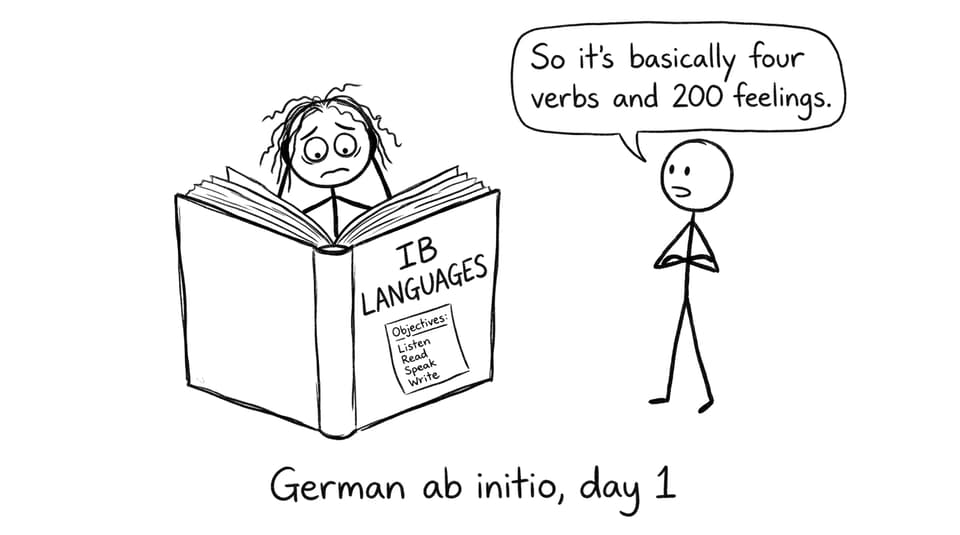
IB German ab initio objectives sit inside the wider framework of IB Languages and can be summarized in four practical skill goals:
-
Listening: understand main ideas and key details in spoken German
-
Reading: understand gist, details, and purpose in short written texts
-
Speaking: communicate clearly, sustain interaction, and use repair strategies
-
Writing: produce organized texts with appropriate vocabulary, grammar, and register
If you want a quick refresher on how these skills show up across assessments, keep this open while you review: IB German Ab Initio Exam Format (2025 Guide).
Why objectives matter in IB Languages (not just German)
Many students revise as if language is a pile of vocabulary they haven’t memorized yet. But IB Languages is closer to sport than trivia: what gets rewarded is performance under constraints.
Objectives are the blueprint for that performance.
They tell you:
-
what “good” looks like (so you don’t practice the wrong thing)
-
how to allocate time (because each skill needs a different type of training)
-
how to judge improvement (outputs like recordings and timed writing, not just hours spent)
This is also why generic apps can feel comforting but ineffective: they’re often not built around IB-style outcomes. If you’re choosing tools, this comparison is worth reading: Top Language Learning Tools for IB Students.
Listening objective: understanding meaning without needing every word
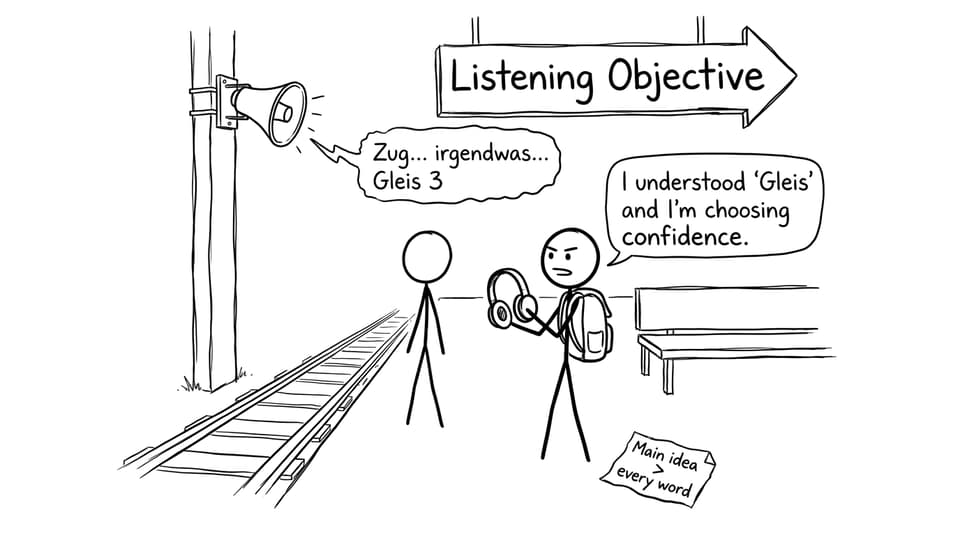
The listening objective in IB German ab initio is not “translate perfectly.” It’s closer to: track the situation, identify the main idea, pick up key details, and stay calm when you miss something.
In practice, you’re expected to:
-
identify the main message in everyday contexts (school, travel, plans)
-
catch specific details (times, prices, reasons, preferences)
-
infer basic attitude or intention when it’s clearly signposted
-
keep going even if a phrase disappears too fast
This matters across IB Languages because listening is where students often lose confidence first. The skill isn’t hearing every word. The skill is staying in the flow.
For targeted practice, RevisionDojo helps you connect listening work to real progress loops: drill weak areas, review mistakes, and repeat under time pressure using the Questionbank, AI Chat, and Mock Exams.
Reading objective: understanding what the text is trying to do
The reading objective is more than vocabulary recognition. It’s comprehension with purpose.
You’re expected to:
-
understand gist quickly (topic, audience, purpose)
-
locate details that prove an answer
-
interpret tone when it’s obvious (friendly, formal, enthusiastic, concerned)
-
work with multiple formats: emails, ads, notices, short blog posts, simple articles
A useful mindset: you’re not reading German to admire the grammar. You’re reading German to answer a question efficiently.
If you want structured topic-based practice for reading, the German hub is a good starting point: German ab initio - IB Resources. You can then move into reading-specific practice like Paper 2 Reading - IB German ab initio.
Speaking objective: staying understandable while staying human
Speaking is the objective that scares people because it feels public. But in IB German ab initio, you’re not being graded as a native speaker. You’re being graded as a communicator.
You’re expected to:
-
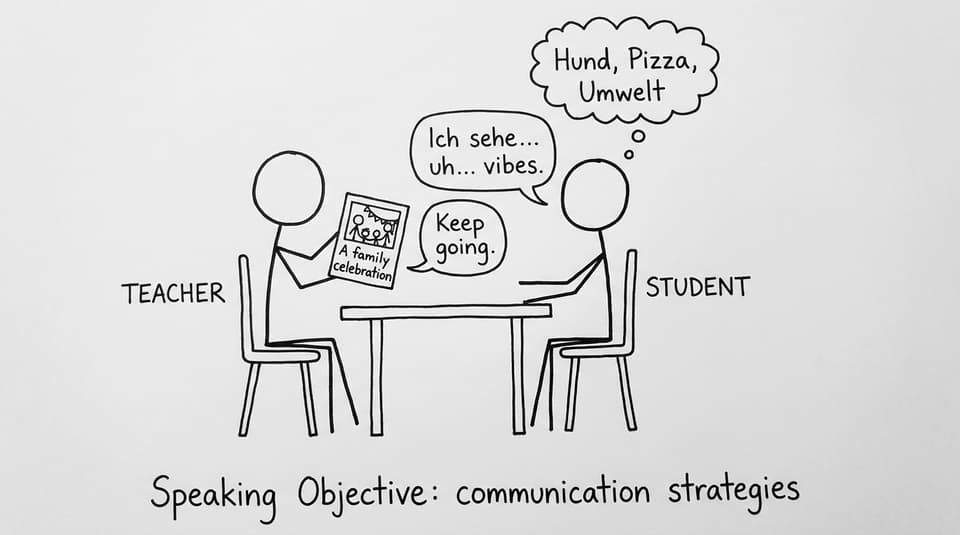
describe a visual stimulus clearly (what you see, what it suggests)
-
interact naturally on familiar topics
-
use simple but effective vocabulary and grammar
-
apply communication strategies when you get stuck (rephrasing, asking for clarification, self-correcting)
That last bullet is the hidden superpower. In IB Languages, fluency is often less about knowing more words and more about recovering smoothly when the perfect word doesn’t arrive.
RevisionDojo’s Tutors and AI Chat are especially useful here: one helps you rehearse with a real person, the other helps you generate answer frames and repair phrases on demand without losing momentum.
Writing objective: clear structure + correct register
Writing in IB German ab initio is where many students overcomplicate. They try to write “impressive German” and end up writing confusing German.
The writing objective expects you to:
-
communicate ideas with clear organization (intro, body, ending)
-
use appropriate vocabulary and grammar accurately
-
link ideas with basic connectors (first, then, however, because)
-
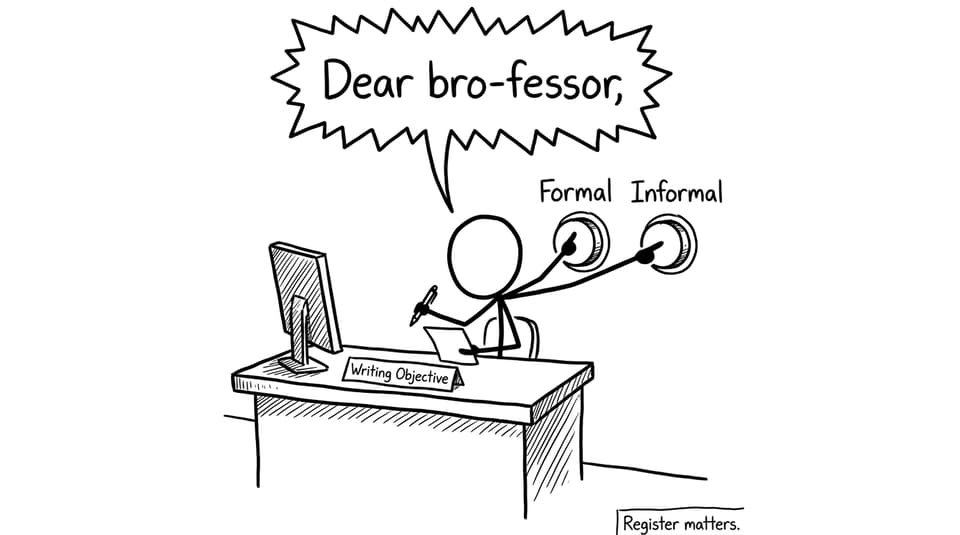
match register to purpose (formal vs informal)
The important part is reliability. In IB Languages, a simple, accurate sentence under exam timing often beats a complex sentence that collapses.
To train writing efficiently, use a tight loop:
-
Plan quickly using a text-type skeleton
-
Write with controlled grammar
-
Get feedback using RevisionDojo’s Grading tools
-
Turn repeated mistakes into Flashcards
For broader strategy across language exams, this guide connects the skills to timing and decision-making: IB Language B Exams: Format, Timing, Strategy.
The “extra” objectives: culture, themes, and learning how to learn
IB German ab initio also quietly trains objectives that don’t fit neatly into the four-skill list, but still shape your performance:
-
Intercultural understanding: noticing how habits, values, and everyday life differ across German-speaking contexts
-
Theme-based communication: building vocabulary around the five themes (Identities, Experiences, Human Ingenuity, Social Organization, Sharing the Planet)
-
Transferable learning habits: planning, spaced repetition, reflection on errors
A practical way to align this with revision is to build your vocabulary and examples by theme, not alphabetically. RevisionDojo organizes this well here: Core Themes - IB German ab initio.
A simple way to revise objectives (without burning out)
If you want a calm weekly structure that fits the objectives and the reality of school life:
-
2 sessions: reading + listening drills (short, timed, reviewed)
-
2 sessions: writing task practice + feedback (one text type each week)
-
2 micro-sessions: speaking recordings (2-4 minutes each) + one improvement target
-
1 longer session: mixed practice under timer (use Mock Exams or Predicted Papers as rehearsal, then diagnose)
For a bigger-picture schedule, this one-year approach is designed for IB Languages self-study: How to Build a Full Self-Study Language Plan for One Year.
Conclusion: learn the objectives, and the course becomes simpler
The objectives of IB German ab initio are not mysterious. They’re practical: listen, read, speak, write, and do each in a way that proves you can function as a beginner communicator. Once you see that, IB Languages becomes less about anxiety and more about training.
If you want one place to align your revision with those objectives, RevisionDojo is built for exactly that workflow: Study Notes for clarity, Flashcards for retention, Questionbank for exam-style practice, AI Chat when you’re stuck, Grading tools for feedback, Predicted Papers and Mock Exams for timed rehearsal, plus a Coursework Library and Tutors when you need deeper support.
Start here and build your plan around the objectives: IB German ab initio Revision Notes.